i Short answer
Backup power solutions, mobile data as an internet fallback, and avoiding opening new positions immediately before a scheduled outage all help manage load shedding's disruption. Worth noting the situation has genuinely improved recently, see our explainer on load shedding's 2026 turnaround.
📋 ON THIS PAGE
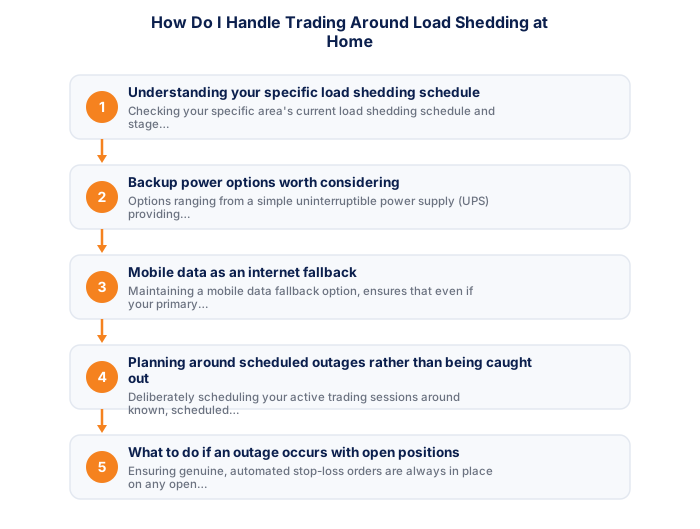
1. Understanding your specific load shedding schedule
Checking your specific area's current load shedding schedule and stage through your municipality or Eskom's published information helps you anticipate likely outage windows in advance, supporting proactive planning around your trading routine.
It's worth building a quick check of your current stage into your daily pre-trading routine, alongside checking your economic calendar and any relevant news, since load shedding stages can shift with little notice, and starting a session without checking leaves you more exposed to an unexpected, unplanned outage mid-session.
For related context, see South Africa's water crisis, water supply failures compound the Eskom economic impact.
See also: How Do I Handle Trading While Traveling or on Holiday?
2. Backup power options worth considering
Options ranging from a simple uninterruptible power supply (UPS) providing enough runtime to safely close positions and shut down equipment, to more substantial battery or generator backup solutions, provide varying levels of protection against losing power during an active trading session, with the appropriate investment depending on how seriously you weigh this risk against the cost involved.
It's worth matching your specific backup solution to your actual trading style's needs rather than assuming more is always better, a swing or position trader checking positions briefly once or twice daily has genuinely different backup power requirements than an active day trader who needs sustained connectivity throughout a live session.
- SARB economic calendar checked for the week
- Next Eskom load shedding schedule reviewed
- GNU stability news reviewed
- Stats SA data releases noted
- Credit agency review dates checked
- US/global events that move EM risk noted
3. Mobile data as an internet fallback
Maintaining a mobile data fallback option ensures that even if your primary fibre or ADSL connection loses power alongside your electricity, this fallback may still provide connectivity, provided your phone or mobile router itself has sufficient battery charge.
It's worth testing this fallback proactively before you actually need it during a real outage, confirming your mobile router or phone hotspot genuinely provides sufficient speed and reliability for your trading platform removes any uncertainty about whether this backup will actually work when you need it most.
| Event | Frequency | ZAR impact | Source |
|---|---|---|---|
| SARB MPC | 6x per year | High | resbank.co.za |
| Budget Speech | Annual (February) | Very high | treasury.gov.za |
| Credit reviews | Annual each agency | Very high | Agency sites |
| Stats SA CPI | Monthly | Medium | statssa.gov.za |
| Eskom stage | As needed | Low-medium | eskomsepush.com |
- SA context provides genuine informational edge
- ZAR pairs accessible via FSCA brokers in ZAR accounts
- Rand volatility creates larger intraday ranges
- 6 SARB meetings/year create regular macro setups
- Higher geopolitical risk than G10 pairs
- Load shedding creates unique operational disruptions
- SA rand liquidity thinner than major G10 pairs
- SA-specific news requires constant local monitoring
4. Planning around scheduled outages rather than being caught out
Deliberately scheduling your active day trading sessions around known, scheduled outage windows where practical, or specifically avoiding opening new positions shortly before a scheduled outage begins, reduces the likelihood of being caught with an unprotected open position when power and connectivity are lost.
It's worth treating scheduled outage windows with the same respect you'd give any other known scheduling constraint, avoiding opening new positions shortly before a known outage, similar to how you might avoid entering right before a major scheduled news release, discussed elsewhere on this site regarding trading around volatile events.
This peak forex liquidity window coincides with common afternoon load shedding slots. Pre-set stop-losses and a tested mobile data backup are standard operating procedure, not optional extras.
5. What to do if an outage occurs with open positions
Ensuring genuine, automated stop-loss orders are always in place on any open position provides important protection precisely for this kind of scenario, since these orders continue functioning on your broker's servers regardless of your own personal connectivity or power status.
This is worth treating as one of the strongest, most concrete arguments for never trading without protective stops in place, discussed throughout this site's risk management content, South African traders specifically face this genuine, recurring connectivity risk that traders in more stable-grid countries simply don't need to plan around as routinely.
6. A realistic approach given this ongoing challenge
Given load shedding's genuinely unpredictable, ongoing nature in South Africa, accepting some degree of disruption as a realistic operating constraint, while implementing the practical safeguards outlined above, supports a more resilient, sustainable approach than assuming uninterrupted power and connectivity will always be available.
A UPS providing enough runtime to safely close positions, alongside a reliable mobile data backup, are the two most practical preparations for trading around load shedding.
★ Why It Matters
A specific habit worth adopting: check your area's loadshedding schedule before opening any new position, not just keeping it in mind generally. An open position with no internet access during a stage 4 outage is a genuinely different risk than simply being inconvenienced.
✕ Common mistakes
- Opening new positions without checking the loadshedding schedule first. An open position during an unexpected stage escalation is a real, avoidable risk.
- Relying on a single power or internet backup source. Redundancy matters more during higher loadshedding stages.
- Assuming mobile data will always be available during an outage. Network congestion can increase during widespread power cuts.
- Not having a clear plan for what happens if a position is open during an outage. Deciding this in advance avoids panic decisions during an actual outage.
How does load shedding affect this?
It breaks connectivity rather than the market, so the risk is being unable to manage a position rather than the position itself. Trading through load shedding covers the practical setup.
Key Takeaways
- Backup power solutions, mobile data as an internet fallback, and avoiding new positions during scheduled outages help manage trading around load shedding.
- Backup power solutions, mobile data as an internet fallback, and avoiding opening new positions immediately before a scheduled outage all help manage load shedding's disruption.
- Understanding your specific load shedding schedule.
- Backup power options worth considering.
- Mobile data as an internet fallback.
Frequently asked follow-up questions
Is a UPS sufficient, or do I need a generator for trading specifically?
A UPS providing enough runtime to safely close positions or confirm protective orders are in place is often sufficient for most traders, with generators being a more substantial investment for those wanting longer-term backup capability.
Does load shedding affect my broker's own servers?
Brokers typically maintain sound infrastructure with their own backup systems, meaning the platform itself generally remains operational even when your own local power is affected.
Should I avoid day trading entirely given load shedding's unpredictability?
This is a personal choice. Many South African day traders continue trading successfully by implementing the practical safeguards outlined above rather than avoiding this trading style entirely.
