i Short answer
Some brokers offer CFDs tracking the VIX, a measure of expected near-term US market volatility.
This is often used by traders as a hedge against broader market risk or a sentiment gauge, rather than a directional bet on a specific company or currency.
📋 ON THIS PAGE
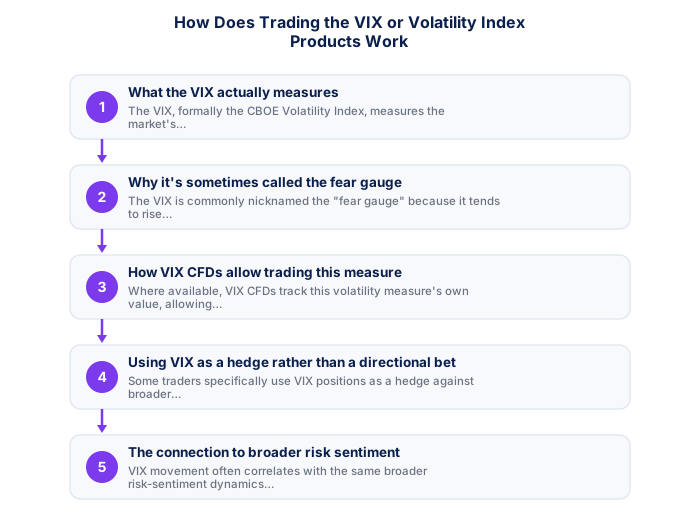
1. What the VIX actually measures
The VIX, formally the CBOE Volatility Index, measures the market's expectation of near-term volatility for US shares, derived from options pricing on a major US index, providing a single, summarised figure reflecting how much price movement market participants currently anticipate over the coming weeks.
It's worth understanding this as a genuinely forward-looking, expectation-based measure rather than a direct measurement of actual, realised price movement, the VIX reflects what options markets currently expect volatility to be, not what volatility has actually been recently, a distinction worth keeping clear when interpreting this index.
2. Why it's sometimes called the fear gauge
The VIX is commonly nicknamed the "fear gauge" because it tends to rise sharply during periods of significant market stress or uncertainty, reflecting increased anticipated volatility precisely when market participants feel most uncertain about near-term direction.
It's worth checking the VIX's historical range to appreciate what genuinely elevated readings look like, seeing actual historical spikes during past periods of major market stress gives you a concrete sense of scale that a general 'fear gauge' description alone doesn't fully convey.
- FSCA-regulated broker verified at fsca.co.za
- Demo account tested for minimum 60 days
- Trading plan written: entry, exits, position sizing
- Risk per trade defined (1-2% of account)
- Backup internet connection tested for load shedding
- Tax implications understood
3. How VIX CFDs allow trading this measure
Where available, VIX CFDs track this volatility measure's own value, allowing traders to take a position specifically on anticipated changes in market volatility itself, rather than on the direction of any specific underlying instrument, a genuinely distinct kind of trading exposure compared to the directional currency, share, or commodity trading.
It's worth checking your specific broker's VIX product availability and structure directly, since this is a genuinely specialised instrument not universally offered, and where available, the specific contract terms are worth understanding thoroughly given the index's unusual, mean-reverting behaviour compared to more typical directional instruments.
4. Using VIX as a hedge rather than a directional bet
Some traders specifically use VIX positions as a hedge against broader portfolio risk, since the VIX's tendency to rise during market stress, can provide an offsetting gain precisely when other risk assets are experiencing losses, functioning as a form of portfolio insurance rather than a primary, standalone profit-seeking position.
It's worth backtesting this hedging approach specifically before relying on it live, confirming through your own historical analysis that VIX positions have actually moved in the offsetting direction you expect during genuine periods of broader portfolio stress, rather than assuming the relationship holds reliably without verification.
| Item | Detail |
|---|---|
| Regulator | FSCA, fsca.co.za |
| Exchange control | SARB, resbank.co.za |
| Tax authority | SARS, sars.gov.za |
| JSE hours | 09:00-17:00 SAST Mon-Fri |
| Best forex session | 15:00-17:00 SAST |
| CGT annual exclusion | R50,000 (individuals) |
5. The connection to broader risk sentiment
VIX movement often correlates with the same broader risk-sentiment dynamics affecting emerging-market currencies like the Rand, making VIX awareness potentially useful broader context even for traders not directly trading this specific product themselves.
It's worth checking VIX levels as one input when assessing broader risk-on or risk-off conditions, discussed elsewhere on this site regarding emerging-market currency behaviour, an elevated VIX reading can serve as a useful, quick reference point alongside your other analysis when judging current risk sentiment.
6. Practical considerations before trading this product
Given the VIX's genuinely specialised nature and unique behaviour compared to the more straightforward directional instruments, thoroughly understanding its specific characteristics through demo practice, before committing real capital is particularly advisable for this specific, less conventional product.
They don't measure market direction.
VIX products don't track a directional bet on any specific market. They reflect the broad expected magnitude of movement, regardless of which direction that movement goes.
★ Why It Matters
Something worth understanding precisely: VIX-tracking products don't move linearly with the VIX itself over longer holding periods due to how the underlying futures contracts are structured, this is a product better understood as a short-term tool than a long-term hold.
✕ Common mistakes
- Holding VIX-tracking products over long periods expecting linear tracking. The underlying futures structure causes drift that affects long-term holds.
- Treating VIX products as a directional bet on a specific market. They reflect broad expected volatility, not a single instrument's price direction.
- Ignoring the VIX's asymmetric behaviour, spiking fast, fading slowly. This pattern affects how these products behave around volatility events.
- Not checking whether your broker offers genuine VIX exposure or a proxy. Product structures can differ meaningfully between providers.
Key Takeaways
- Some brokers offer CFDs tracking the VIX, a measure of expected US market volatility, often used as a hedge or sentiment gauge rather than a directional bet.
- Some brokers offer CFDs tracking the VIX, a measure of expected near-term US market volatility.
- This is often used by traders as a hedge against broader market risk or a sentiment gauge, rather than a directional bet on a specific company or currency.
- What the VIX actually measures.
- Why it's sometimes called the fear gauge.
For what the VIX actually measures and how it is calculated, start with what the VIX is and how it works. This page covers the tradeable products built on it.
See also: Why Is SAA Accepting Bitcoin for Flights, and What It Means.
Frequently asked follow-up questions
Do South African brokers commonly offer VIX CFDs?
Availability varies; this is a more specialised product not universally offered, making it worth checking your specific broker's instrument range directly.
Is VIX trading suitable for beginners?
Given its specialised, distinct behaviour compared to more conventional directional trading, many consider this better suited to traders with some prior experience and thorough demo testing.
Does the VIX ever fall to very low levels?
Yes, during periods of sustained market calm and low anticipated volatility, the VIX can fall to comparatively low levels, reflecting reduced near-term uncertainty among market participants.
