i Short answer
The London-New York session overlap typically offers the highest liquidity and volatility for major forex pairs, generally falling in the late afternoon in South African time.
The genuinely best time depends on your specific traded instruments.
📋 ON THIS PAGE
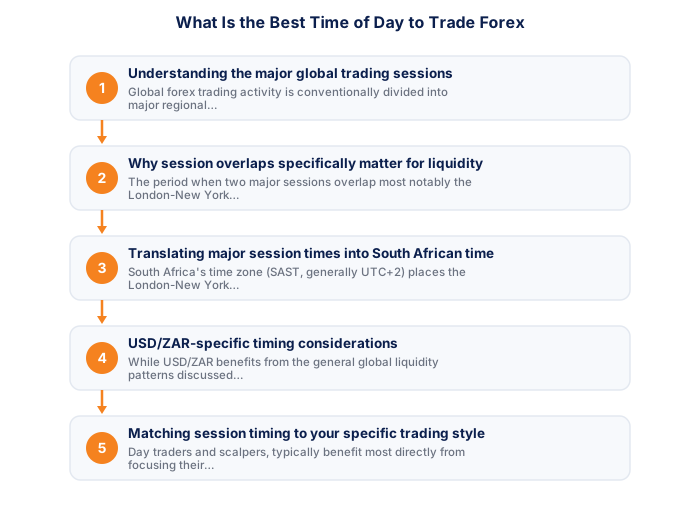
- Understanding the major global trading sessions
- Why session overlaps specifically matter for liquidity
- Translating major session times into South African time
- USD/ZAR-specific timing considerations
- Matching session timing to your specific trading style
- Quieter periods worth knowing about and generally avoiding
1. Understanding the major global trading sessions
Global forex trading activity is conventionally divided into major regional sessions based on when each region's primary financial centres are most active, the Asian session (centred on Tokyo), the European session (centred on London), and the North American session (centred on New York). While forex trading technically continues nearly continuously from Monday to Friday across these overlapping sessions, activity levels and liquidity vary considerably depending on which specific session or sessions are currently active.
Each session tends to show somewhat different characteristic behaviour, the Asian session is often comparatively quieter for major pairs not directly involving the Japanese Yen, while the London and New York sessions, and particularly their overlap, tend to show the highest overall activity and liquidity for the major currency pairs most commonly traded globally.
| Session | Approximate SAST Hours |
|---|---|
| Sydney | 23:00 to 08:00 |
| Tokyo | 01:00 to 10:00 |
| London | 09:00 to 18:00 |
| New York | 14:00 to 23:00 |
2. Why session overlaps specifically matter for liquidity
The period when two major sessions overlap, most notably the London-New York overlap, typically sees the highest combined participation from market participants across both regions simultaneously, translating into the highest liquidity, tightest spreads, and often the most significant price movement of the trading day for major currency pairs.
See also: How Do I Handle Trading While Traveling or on Holiday?
This higher liquidity and activity during overlap periods can mean more reliable order execution and tighter trading costs, but also potentially faster, more significant price movement, a double-edged consideration that traders should weigh according to their specific strategy and risk tolerance, rather than assuming higher activity is universally and unambiguously better for every trading approach.
| Lot type | Size | USD/ZAR pip value | Min recommended account |
|---|---|---|---|
| Standard | 100,000 units | ~R1.00 | R100,000+ |
| Mini | 10,000 units | ~R0.10 | R10,000+ |
| Micro | 1,000 units | ~R0.01 | R1,000+ |
| Nano | 100 units | ~R0.001 | R100+ |
- V = Pip value in account currency
- E = Current exchange rate of quote vs account currency
- L = Lot size (100,000 standard / 10,000 mini / 1,000 micro)
- USD/ZAR example = 1 pip = R1 per standard lot
- Leveraged instrument
- Long and short available
- Overnight financing applies
- No ownership of asset
- Typically unleveraged
- Physical currency received
- No daily financing
- Currency ownership
3. Translating major session times into South African time
South Africa's time zone (SAST, generally UTC+2) places the London-New York overlap, which occurs roughly during the early afternoon in London and morning in New York, into the mid-to-late afternoon window in South African local time, making this generally the most active period for major forex pairs from a South African trader's perspective, fitting reasonably well for traders checking markets after a typical working day begins winding down, though this varies somewhat by exact season given daylight saving time differences between hemispheres.
This timing is genuinely useful background context for South African traders planning when to focus their attention for major pair trading, complementing broader scheduling considerations around fitting trading around work and other commitments.
4. USD/ZAR-specific timing considerations
While USD/ZAR benefits from the general global liquidity patterns above, given its USD component, it also shows specific sensitivity to South African-specific developments and local trading activity, meaning South African business hours themselves, not just the global London-New York overlap, can show meaningful USD/ZAR activity, particularly around local economic data releases or SARB-related news.
This means South African traders focusing on USD/ZAR may find relevant activity across a somewhat broader window than traders focused purely on, say, EUR/USD, given this additional local market timing dimension layered on top of the broader global session pattern.
5. Matching session timing to your specific trading style
Day traders and scalpers typically benefit most directly from focusing their active trading around the highest-liquidity overlap periods above, since their strategies depend heavily on the tighter spreads and reliable execution this period generally provides. Swing and position traders, by contrast, are less dependent on any single specific time window, since their longer holding periods mean the specific entry timing within a given day matters considerably less to their overall strategy outcome.
This means the importance of session timing scales with how short-term and execution-sensitive your particular trading style is. Traders following longer-term approaches can reasonably treat session timing as useful background context rather than a critical, binding constraint on when they engage with the market.
6. Quieter periods worth knowing about and generally avoiding
Certain periods consistently show reduced liquidity and wider spreads worth being aware of: the period immediately after the New York session closes and before the Asian session gains momentum often shows reduced activity for many pairs, and broader holiday periods (particularly around major US and European holidays) can see reduced liquidity across global markets generally, sometimes producing less predictable, choppier price action than normal trading conditions.
Many traders reduce position size position sizes or avoid opening new positions during these known quieter periods, given the generally less reliable execution and sometimes less predictable price behaviour this reduced liquidity can produce, applying the same broader risk-awareness principle to this specific timing consideration.
The London-New York overlap, approximately 3pm to 7pm South African time, offers the highest volume and tightest spreads of any session window, making it the most favourable period for most trading styles.
★ Why It Matters
Worth checking in your own results: your win rate broken down by the hour you actually entered each trade. Many traders discover a meaningful performance gap between their best and worst hours that's invisible until results are segmented this way rather than viewed in aggregate.
✕ Common mistakes
- Assuming higher-volatility sessions automatically suit every trader's strategy. Some perform better during calmer, lower-volatility conditions.
- Choosing trading hours purely for convenience rather than tested performance. Personal results should ultimately guide this decision over generic advice.
- Treating the London-New York overlap as universally best regardless of instrument. The genuinely best time depends on which specific instruments you trade.
What is the best trading session for South African traders?
The London-New York overlap from 15:00 to 17:00 SAST provides the highest liquidity for major forex pairs. The JSE regular session from 09:00 to 17:00 SAST is best for SA shares and the JSE Top 40 index.
Key Takeaways
- The London-New York session overlap typically offers the highest liquidity and volatility, generally falling in late afternoon South African time.
- The London-New York session overlap typically offers the highest liquidity and volatility for major forex pairs, generally falling in the late afternoon in South African time.
- The genuinely best time depends on your specific traded instruments.
- Understanding the major global trading sessions.
- Why session overlaps specifically matter for liquidity.
Frequently asked follow-up questions
Does the best trading time change with daylight saving time elsewhere?
Yes, since South Africa doesn't observe daylight saving time while regions like the UK and US do, the exact local time of major session overlaps shifts slightly during certain parts of the year relative to South African time.
Is trading during quieter sessions always a bad idea?
Not necessarily bad, but it generally means lower liquidity and potentially wider spreads, which particular strategies (some range-bound or longer-term approaches) may handle better than others specifically designed for high-liquidity, high-volatility conditions.
Do these timing patterns apply to gold and other commodities too?
Broadly similar liquidity patterns tend to apply, though commodities can show their own specific timing nuances tied to relevant exchange hours and their own particular macro factors.
