i Short answer
The gambler's fallacy leads traders to expect a reversal simply because a streak of similar outcomes has continued.
This mistakenly treats genuinely independent trading events as somehow connected or due for correction.
📋 ON THIS PAGE
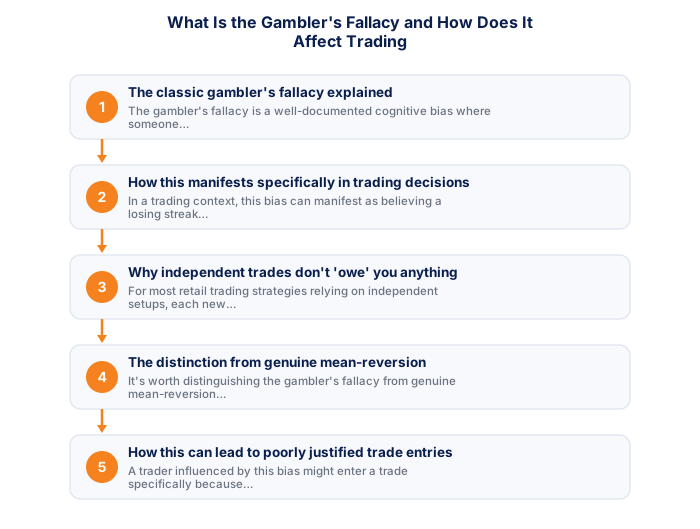
1. The classic gambler's fallacy explained
The gambler's fallacy is a well-documented cognitive bias where someone believes that if a particular outcome has occurred more frequently than expected in the recent past, the opposite outcome becomes more likely soon, even when each individual event is genuinely statistically independent, the classic example being believing a coin is more likely to land on tails after a long streak of heads, when each flip genuinely remains a 50/50 probability regardless of prior results.
It's worth understanding why this specific error feels so intuitively compelling despite being mathematically incorrect, human pattern-recognition instincts evolved to spot genuine patterns, but genuinely independent random events, like a fair coin flip, simply don't carry memory of previous outcomes.
2. How this manifests specifically in trading decisions
In a trading context, this bias can manifest as believing a losing streak makes a winning trade more likely soon, connecting to revenge trading, or believing a winning streak is somehow due to end imminently simply because it's continued for a while, even when the underlying strategy's genuine probability of success on any given trade hasn't actually changed based on recent results alone.
It's worth checking your own trading journal specifically for reasoning that implicitly assumes this fallacy, entries justified by 'this pair has moved up several times in a row, so it's due for a pullback' without any genuine technical or fundamental basis reveal this bias operating in your own decisions.
- FSCA-regulated broker verified at fsca.co.za
- Demo account tested for minimum 60 days
- Trading plan written: entry, exits, position sizing
- Risk per trade defined (1-2% of account)
- Backup internet connection tested for load shedding
- Tax implications understood
3. Why independent trades don't 'owe' you anything
For most retail trading strategies relying on independent setups, each new trade's probability of success is determined by your strategy's genuine, validated edge and current market conditions, not by how many previous trades happened to win or lose in sequence. A losing streak doesn't make the next trade more likely to win, and a winning streak doesn't make the next trade more likely to lose, purely based on this streak alone.
It's worth internalising this specifically because it connects directly to the sample size discussions throughout this site, discussed elsewhere regarding trading edge verification, your account's past results don't create any genuine statistical debt that future trades are somehow obligated to repay.
4. The distinction from genuine mean-reversion
It's worth distinguishing the gambler's fallacy from genuine mean-reversion trading. Mean-reversion involves a specific, evidence-based thesis about a particular instrument's price behaviour reverting toward an average level, based on concrete technical or statistical evidence, while the gambler's fallacy involves the unfounded belief that your own personal trading streak itself is somehow due for a change, without this kind of genuine, independent supporting evidence.
It's worth applying real scrutiny to this distinction whenever you're tempted by a reversal trade, genuine mean reversion, discussed elsewhere on this site, relies on identified technical or statistical patterns specific to that instrument, not simply the vague sense that a recent run 'has to end soon.'
| Item | Detail |
|---|---|
| Regulator | FSCA, fsca.co.za |
| Exchange control | SARB, resbank.co.za |
| Tax authority | SARS, sars.gov.za |
| JSE hours | 09:00-17:00 SAST Mon-Fri |
| Best forex session | 15:00-17:00 SAST |
| CGT annual exclusion | R50,000 (individuals) |
5. How this can lead to poorly justified trade entries
A trader influenced by this bias might enter a trade specifically because "I've lost the last four trades, so this one should win," rather than because the setup genuinely meets their predetermined strategy criteria. This is trading based on a flawed statistical belief rather than genuine, evidence-based analysis.
It's worth applying your standard entry checklist rigorously to any trade motivated even partly by this kind of 'it's due' reasoning, discussed elsewhere on this site regarding trading checklists, since this specific reasoning pattern rarely meets genuine, disciplined entry criteria on its own.
6. Countering this bias with disciplined, predetermined criteria
Consistently requiring that every trade entry meet your predetermined strategy criteria, via a trading checklist, regardless of recent streak patterns, helps ensure decisions are anchored to genuine evidence rather than this kind of statistically unfounded belief about independent events being somehow connected.
What sits behind it is loss aversion, the finding that the pain of a loss outweighs the pleasure of the same gain.
The gambler's fallacy is the belief that a losing streak makes a win more likely. In trading, each trade is statistically independent. Believing a recovery is due can lead to oversized positions and abandoned stop-losses.
★ Why It Matters
Worth checking in your own decisions: whether you've ever sized a trade larger because you "felt due" for a win after a losing streak. This behaviour, sizing based on a feeling of statistical debt rather than your actual strategy rules, is the gambler's fallacy showing up directly in your risk management.
✕ Common mistakes
- Treating independent trading events as somehow statistically connected. Each trade's outcome is independent of the ones before it, regardless of recent streaks.
- Expecting a reversal simply because a streak has continued for a while. This expectation isn't supported by how independent probability actually works.
- Not checking whether sizing decisions reference recent outcomes at all. This specific check often reveals the fallacy operating in your own decisions.
Key Takeaways
- The gambler's fallacy leads traders to expect a reversal simply because a streak has continued, mistakenly treating independent events as somehow connected.
- The gambler's fallacy leads traders to expect a reversal simply because a streak of similar outcomes has continued.
- This mistakenly treats genuinely independent trading events as somehow connected or due for correction.
- The classic gambler's fallacy explained.
- How this manifests specifically in trading decisions.
See also: How Do I Deal With Losing Streaks Without Losing Confidence?.
Frequently asked follow-up questions
Is the gambler's fallacy the same as recency bias?
They're related but distinct. Recency bias concerns overweighting recent information generally, while the gambler's fallacy specifically concerns the mistaken belief that independent events are statistically connected.
Can a losing streak ever genuinely indicate something worth addressing?
Yes, but this requires honest analysis distinguishing normal variance from genuine strategy failure, not simply assuming a reversal is statistically "due" based on streak length alone.
Does this bias affect experienced traders too?
Yes, this is a general human cognitive tendency rather than something automatically eliminated through experience, making ongoing awareness and disciplined criteria valuable regardless of experience level.
