i Short answer
Comparing current performance specifically to an unusually strong past period can create unrealistic, distorted benchmarks.
Reviewing your complete trading journal for genuine long-term progress offers a healthier comparison.
📋 ON THIS PAGE
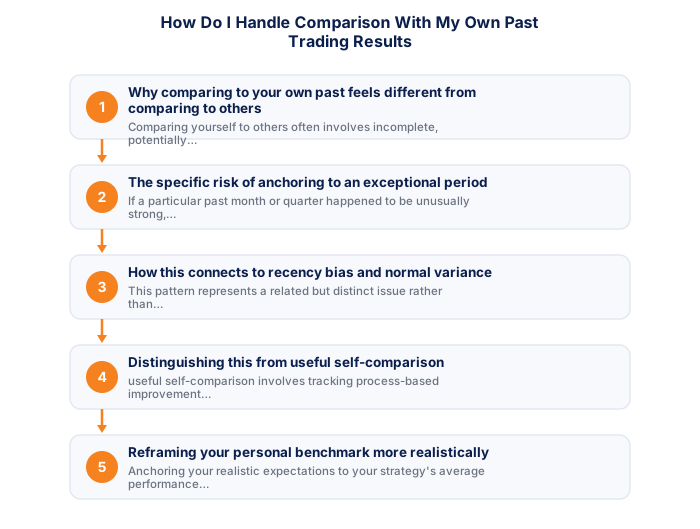
- Why comparing to your own past feels different from comparing to others
- The specific risk of anchoring to an exceptional period
- How this connects to recency bias and normal variance
- Distinguishing this from useful self-comparison
- Reframing your personal benchmark more realistically
- Using your complete history rather than a single period
1. Why comparing to your own past feels different from comparing to others
Comparing yourself to others often involves incomplete, potentially exaggerated external information, while comparing to your own past involves genuine, personally-verified data, this makes the comparison feel more legitimate and fair, even though it can still produce a similarly distorted, unhelpful benchmark if the specific past period being referenced wasn't genuinely representative.
It's worth being aware of this legitimacy trap specifically, since it's exactly what makes this particular comparison harder to dismiss than comparisons to others, the data being genuinely your own doesn't automatically mean the specific period you're comparing against was actually representative or fair to expect again.
2. The specific risk of anchoring to an exceptional period
If a particular past month or quarter happened to be unusually strong, reflecting favourable normal statistical variance rather than a sustainable, typical baseline, anchoring your ongoing expectations to that specific exceptional period creates an unrealistic benchmark that subsequent, more typical performance will inevitably and unfairly compare unfavourably against.
It's worth identifying your own strongest historical period honestly and asking directly whether the conditions that produced it were genuinely typical or unusually favourable, a strong month coinciding with an exceptionally trending, low-noise market, for example, may simply reflect conditions unlikely to repeat consistently going forward.
- FSCA-regulated broker verified at fsca.co.za
- Demo account tested for minimum 60 days
- Trading plan written: entry, exits, position sizing
- Risk per trade defined (1-2% of account)
- Backup internet connection tested for load shedding
- Tax implications understood
3. How this connects to recency bias and normal variance
As, this pattern represents a related but distinct issue, rather than overweighting recent events, this involves overweighting one specific past period, however long ago, as the genuine standard against which all subsequent performance should be judged, regardless of whether that period was actually statistically representative.
It's worth noticing which specific past period tends to anchor your own expectations, since this pattern often centres on whichever period was most emotionally significant, your best month, your first genuinely profitable stretch, rather than necessarily the period most statistically representative of your strategy's true, sustainable performance.
4. Distinguishing this from genuinely useful self-comparison
useful self-comparison involves tracking process-based improvement over time, discipline, criteria adherence, emotional regulation, rather than fixating on matching a specific historical financial result that may have reflected favourable variance rather than a sustainable, replicable baseline.
It's worth deliberately redirecting your own comparative instinct toward these process metrics specifically, since the same natural human tendency to compare current performance against a past benchmark can be genuinely productive when the benchmark itself is process-based rather than a specific, potentially unrepresentative financial outcome.
| Item | Detail |
|---|---|
| Regulator | FSCA, fsca.co.za |
| Exchange control | SARB, resbank.co.za |
| Tax authority | SARS, sars.gov.za |
| JSE hours | 09:00-17:00 SAST Mon-Fri |
| Best forex session | 15:00-17:00 SAST |
| CGT annual exclusion | R50,000 (individuals) |
5. Reframing your personal benchmark more realistically
Anchoring your realistic expectations to your strategy's average performance across a large, representative sample, rather than its best-ever specific period, provides a considerably more accurate, fair benchmark for assessing whether current performance genuinely represents a concerning deviation or simply normal variation around this realistic average.
It's worth actually calculating this average explicitly from your own trading journal data, rather than relying on a general impression, seeing your genuine, complete average performance concretely tends to be a more grounding, realistic reference point than any single, memorable exceptional period.
6. Using your complete history rather than a single period
Regularly reviewing your complete trading journal and calculating your genuine, longer-term average statistics, rather than mentally anchoring to whichever specific period happens to feel most memorable or significant, supports a more balanced, statistically sound understanding of your actual typical performance over time.
The pattern underneath is loss aversion: a loss registers more strongly than an equivalent gain, which distorts what feels reasonable.
If a particular past month happened to be unusually strong, reflecting favourable variance, anchoring expectations to that period sets an unfair benchmark against your genuine average.
★ Why It Matters
Worth checking before drawing any conclusion: whether the 'best past period' you're comparing against coincided with unusually favourable market conditions for your specific strategy, comparing your current results to an outlier period rather than your genuine average sets an unfair benchmark.
✕ Common mistakes
- Ignoring whether past conditions were unusually favourable. Market conditions, not just skill, often explain standout periods.
- Treating any decline from a peak as a sign of declining skill. Normal variance can look like decline without actually being one.
- Not reviewing your full equity curve for genuine context. A single comparison point misses the broader, more informative pattern.
Key Takeaways
- Comparing current performance to an unusually strong past period can create unrealistic benchmarks, distinct from healthy reflection on genuine progress over time.
- Comparing current performance specifically to an unusually strong past period can create unrealistic, distorted benchmarks.
- Reviewing your complete trading journal for genuine long-term progress offers a healthier comparison.
- Why comparing to your own past feels different from comparing to others.
- The specific risk of anchoring to an exceptional period.
See also: How Do I Deal With Losing Streaks Without Losing Confidence? and How Do I Deal With Jealousy Toward Other Traders' Results?.
Frequently asked follow-up questions
Is it ever useful to remember a particularly good trading period?
Yes, for motivation or understanding what specific conditions or decisions contributed to that result, though not as a fixed, ongoing performance standard.
How do I know if my past benchmark is unrealistic?
Comparing that specific period's statistics against your complete, longer-term average, reveals whether it was genuinely representative or an outlier reflecting favourable variance.
Does this issue affect experienced traders too?
Yes, this can affect traders at any experience level, particularly after a strong period that might be mistakenly treated as the new normal rather than a statistical outlier.
