i Short answer
A currency basket combines multiple currencies into a single weighted measure, similar in concept to the Dollar Index.
This provides broader, diversified exposure to general currency strength or weakness rather than tracking one pair in isolation.
📋 ON THIS PAGE
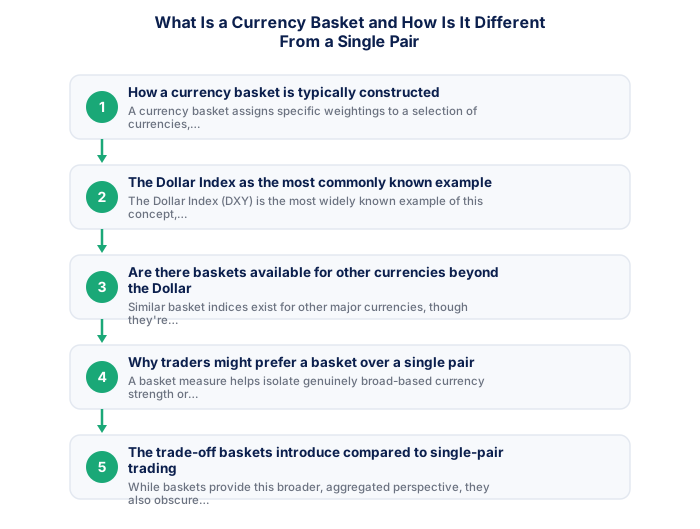
- How a currency basket is typically constructed
- The Dollar Index as the most commonly known example
- Are there baskets available for other currencies beyond the Dollar
- Why traders might prefer a basket over a single pair
- The trade-off baskets introduce compared to single-pair trading
- Accessing basket exposure through your specific broker
1. How a currency basket is typically constructed
A currency basket assigns specific weightings to a selection of currencies, then combines their movements according to these weightings into a single, aggregated measure, designed to reflect broader, general strength or weakness of either a single specific currency against this combined basket, or sometimes a regional grouping's overall currency performance together.
2. The Dollar Index as the most commonly known example
The Dollar Index (DXY) is the most widely known example of this concept, specifically measuring the US Dollar's value against a weighted basket of other major currencies, providing the broad, aggregated Dollar strength gauge.
- FSCA-regulated broker verified at fsca.co.za
- Demo account tested for minimum 60 days
- Trading plan written: entry, exits, position sizing
- Risk per trade defined (1-2% of account)
- Backup internet connection tested for load shedding
- Tax implications understood
3. Are there baskets available for other currencies beyond the Dollar
Similar basket indices exist for other major currencies, though they're generally less widely referenced in everyday trading discussion than the Dollar Index specifically, given the Dollar's outsized role as the world's primary reserve currency, making Dollar-focused analysis the most commonly emphasised basket measure across most trading education content.
4. Why traders might prefer a basket over a single pair
A basket measure helps isolate genuinely broad-based currency strength or weakness from dynamics specific to any single counterpart currency, providing a cleaner, more aggregated signal for traders specifically interested in one currency's overall direction rather than its relationship to just one particular other currency.
| Item | Detail |
|---|---|
| Regulator | FSCA, fsca.co.za |
| Exchange control | SARB, resbank.co.za |
| Tax authority | SARS, sars.gov.za |
| JSE hours | 09:00-17:00 SAST Mon-Fri |
| Best forex session | 15:00-17:00 SAST |
| CGT annual exclusion | R50,000 (individuals) |
5. The trade-off baskets introduce compared to single-pair trading
While baskets provide this broader, aggregated perspective, they also obscure the specific, potentially differing dynamics happening within individual component pairs, a basket showing overall Dollar strength might mask the Dollar actually weakening against one specific currency while strengthening more significantly against others within the basket, information a single-pair view would reveal more directly.
6. Accessing basket exposure through your specific broker
Some brokers offer CFD products providing direct exposure to specific basket indices, though many traders instead use basket measures primarily as analytical context informing their analysis of specific individual pairs, rather than necessarily trading the basket itself as a standalone instrument.
South African traders have a natural advantage when analysing ZAR-denominated instruments because they observe the domestic drivers of rand movements directly and continuously. The key analytical discipline is separating USD/ZAR movements that are driven by global USD strength from those driven by SA-specific factors. When the rand is weakening at the same time as other major EM currencies, the driver is typically global risk appetite, not a SA-specific issue. When the rand is weakening while EM peers are stable or strengthening, a domestic SA factor is at work and requires a different analytical and positioning response.
CFD and forex instruments give South African traders access to global markets from a single ZAR-denominated account without needing separate international brokerage relationships. This accessibility comes with structural characteristics that traders must understand clearly. CFDs are derivative instruments, you never own the underlying asset, and profit or loss is purely the mark-to-market difference between entry and exit prices multiplied by position size position size. The overnight financing charge applies to the full notional value of leveraged positions, not just the deposited margin. For traders holding positions for multiple days or weeks, this financing cost compounds and can meaningfully reduce the profitability of otherwise successful trades. Understanding the exact financing rates your broker applies to each instrument class before trading is fundamental preparation, not an optional detail.
A currency basket smooths exposure across several currencies by design.
A single currency pair gives undiluted exposure to one exchange rate. A currency basket smooths that exposure across several currencies, reducing single-currency risk by design.
★ Why It Matters
Something worth checking specifically: the exact weighting methodology behind any currency basket index you're using, since two baskets with similar-sounding names can weight their component currencies quite differently, producing genuinely different readings from what looks like the same underlying concept.
✕ Common mistakes
- Not checking the specific methodology before relying on a basket reading. Different baskets can produce genuinely different signals despite the apparent similarity.
- Treating a basket reading as equivalent to any single pair's behaviour. It reflects broad, aggregated currency strength rather than one specific relationship.
- Confusing a currency basket with a single, broad currency index. These serve related but distinct analytical purposes.
Does this apply to JSE shares too?
Yes, through brokers that list them. Check the financing rate before holding one for weeks. Trading JSE shares through a forex broker covers it in full.
Key Takeaways
- A currency basket combines multiple currencies into a single weighted measure, providing broader exposure than tracking any single currency pair alone.
- A currency basket combines multiple currencies into a single weighted measure, similar in concept to the Dollar Index.
- This provides broader, diversified exposure to general currency strength or weakness rather than tracking one pair in isolation.
- How a currency basket is typically constructed.
- The Dollar Index as the most commonly known example.
Frequently asked follow-up questions
Is a currency basket the same as a diversified portfolio?
They share some conceptual similarity in combining multiple elements, though a currency basket specifically aggregates currency movements rather than representing a diversified investment portfolio in the broader sense.
Can I create my own custom currency basket?
Some advanced traders do construct custom weighted combinations for specific analytical purposes, though this requires more sophisticated calculation than simply using an established index like the Dollar Index directly.
Does basket trading suit beginners?
Many beginners find single-pair trading more straightforward to understand and analyse than the more aggregated, sometimes conceptually complex basket approach.
