i Short answer
Client categorisation determines whether you're treated as a retail or professional client, affecting your applicable leverage limits and regulatory protections.
Most individual traders default to retail classification unless specifically opting otherwise.
📋 ON THIS PAGE
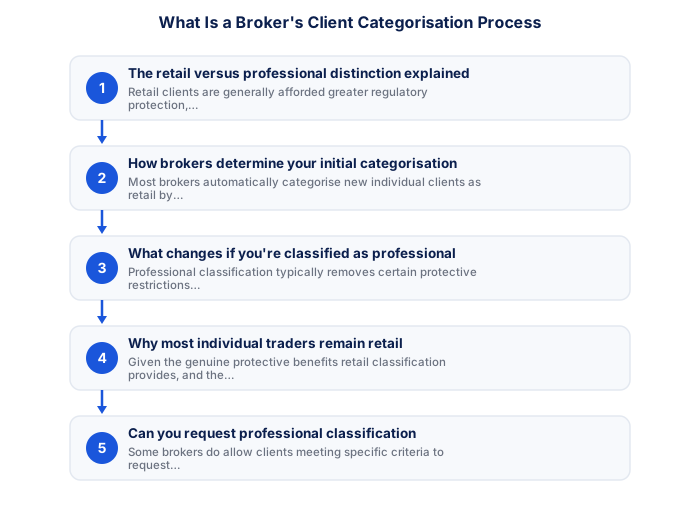
1. The retail versus professional distinction explained
Confirm what happens if a position moves past your balance. negative balance protection varies between brokers, and the terms are the only reliable source.
It's worth understanding this as a spectrum of assumed sophistication rather than a simple binary label. The regulatory framework isn't judging your actual, personal trading skill, it's applying a broad, necessarily imperfect proxy, account size, trading history, professional background, to sort clients into categories that carry meaningfully different default protections.
2. How brokers determine your initial categorisation
Most brokers automatically categorise new individual clients as retail by default, reflecting the regulatory assumption that most individual traders fall within this category absent specific evidence of professional-level trading experience or financial sophistication.
See also: My Broker Merges Brands: What Happens to My Account?
This default setting is worth appreciating rather than seeing as an inconvenience to work around immediately. Starting within the more protective retail category while you're still building genuine trading experience means the regulatory safety net remains in place during exactly the period when you're statistically most likely to make costly mistakes.
- Search FSP name or number at fsca.co.za
- Confirm licence is current and not suspended
- Check scope covers forex and CFD activity
- Confirm client funds in segregated accounts
- Read FSCA enforcement actions history
- Test customer support before depositing
- Client funds legally segregated
- FSCA complaints process available
- SA consumer protections apply
- ZAR account, no FX conversion costs
- Some offshore brokers offer wider instruments
- Regulatory overhead passed on in spreads
- Stricter position limits for retail clients
- FICA verification required before trading
- Client funds segregated
- Formal FSCA complaints process
- SA consumer protections apply
- ZAR account available
- Fund safety not guaranteed
- Overseas disputes only
- SA law does not apply
- Currency conversion costs
3. What changes if you're classified as professional
Professional classification typically removes certain protective restrictions, potentially including higher available leverage limits and removal of negative balance protection in some jurisdictions and broker structures, reflecting the regulatory assumption that professional clients can more appropriately assess and bear this additional risk themselves.
It's worth checking the specific, complete list of what changes with your particular broker, rather than assuming only leverage limits are affected. Some brokers also adjust which complaint or dispute resolution channels remain available, or how certain disclosures are handled, once a client moves into the professional category, details worth understanding fully before deciding this reclassification is right for you.
4. Why most individual traders remain retail
Given the genuine protective benefits retail classification provides, and the typically demanding criteria required for professional reclassification (often requiring demonstrated significant trading experience, portfolio size, or relevant professional background), most individual retail traders appropriately remain within this protective retail category.
This isn't a limitation to feel discouraged by. The protective framework built around retail status exists precisely because most individual traders, including those who are genuinely skilled and disciplined, benefit from having structural safeguards in place, remaining retail is the sensible default for the significant majority of traders, not a sign of insufficient ambition or ability.
| Protection | FSCA Regulated | Offshore Unregulated |
|---|---|---|
| Client fund segregation | ✓ Required | Varies by broker |
| SA complaints process | ✓ Available | ✗ Not available |
| SA consumer law applies | ✓ Yes | ✗ No |
| ZAR account available | ✓ Typically | Often USD/EUR only |
5. Can you request professional classification
Some brokers do allow clients meeting specific criteria to request professional reclassification, though this typically requires meeting defined thresholds around trading experience, financial sophistication, or portfolio size, checking your specific broker's process and criteria directly clarifies whether this option is genuinely available and appropriate for your situation.
It's worth treating this as a genuine application process with real scrutiny attached, rather than a simple preference you can select. Brokers have their own regulatory obligation to verify that reclassification requests genuinely meet the required criteria, since incorrectly classifying clients as professional carries real compliance risk for the broker itself.
6. The trade-off this reclassification involves
Before pursuing professional reclassification, carefully weighing the trade-off between gaining higher available leverage against the genuine risks leverage carries, and against losing protective safeguards like negative balance protection, supports a more informed decision than pursuing this status purely for its leverage benefit alone.
A genuinely well-regulated broker will also keep client funds in segregated accounts, separate from the company's own operating capital, so your deposited funds aren't exposed if the broker itself runs into financial difficulty.
The FSCA regulatory framework provides South African retail traders with meaningful protection that extends beyond simply verifying a broker's licence number. The requirement for FSCA-regulated brokers to maintain segregated client accounts means your deposited funds are legally separated from the broker's operating funds. In the event of broker insolvency, this segregation protects client money from creditor claims against the company. FSCA-regulated brokers must also maintain adequate financial resources, submit to regulatory oversight, and adhere to disclosure requirements covering fees, risks, and conflicts of interest. For traders considering offshore brokers outside FSCA supervision, the loss of these domestic protections is a material risk consideration, particularly for larger account balances where the downside of unregulated broker failure would be financially significant.
Professional status raises the leverage cap but removes some protections.
Retail categorisation provides the fullest set of regulatory protections automatically. Professional status requires an application, raises leverage caps, but explicitly waives some of those protections.
★ Why It Matters
Worth confirming directly with your broker which category you're currently classified under and why, rather than assuming retail status by default. This single document affects your actual leverage limits and protections more than most other onboarding paperwork.
✕ Common mistakes
- Assuming you're automatically classified in the most advantageous category. Retail classification is the default unless specifically opted otherwise.
- Requesting reclassification without understanding which protections are waived. The trade-offs should be clear before any change is requested.
- Treating classification as a one-time, unchangeable decision. It's worth reviewing periodically as your circumstances change.
Key Takeaways
- Client categorisation determines whether you're treated as a retail or professional client, affecting your applicable leverage limits and certain protections.
- Client categorisation determines whether you're treated as a retail or professional client, affecting your applicable leverage limits and regulatory protections.
- Most individual traders default to retail classification unless specifically opting otherwise.
- The retail versus professional distinction explained.
- How brokers determine your initial categorisation.
Frequently asked follow-up questions
Is professional classification the same as having a VIP account tier?
No, these are distinct concepts. Account tiers relate to service features and minimum deposits, while client categorisation specifically relates to regulatory protection status.
Does professional classification cost extra?
This isn't typically a paid feature. It depends on meeting specific eligibility criteria rather than payment.
Can I switch back to retail classification after requesting professional status?
This depends on your specific broker's policy. Checking this directly before pursuing reclassification clarifies whether this kind of reversal remains available if you later reconsider.
