i Short answer
An introducing broker refers clients to a broker in exchange for commission, typically paid by the broker out of its own revenue.
This generally doesn't affect your individual trading costs.
📋 ON THIS PAGE
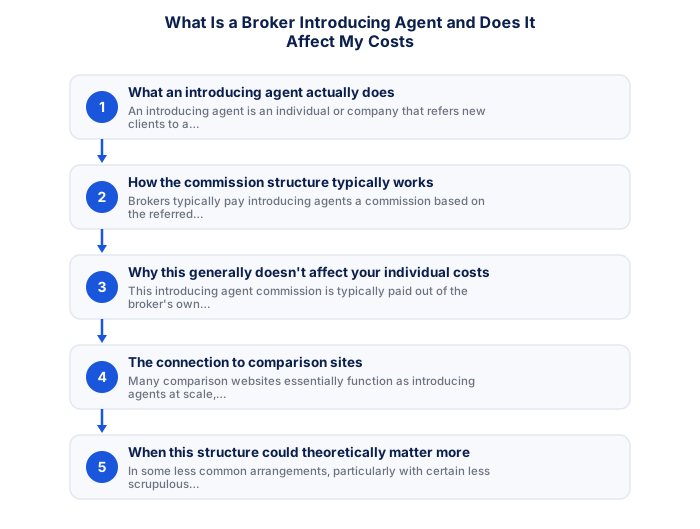
1. What an introducing agent actually does
An introducing agent is an individual or company that refers new clients to a specific broker, often through marketing, content, or personal relationships, without themselves handling client funds or providing direct trading services, they simply connect prospective clients to the broker, which then handles the actual account relationship directly.
This arrangement is worth understanding as fundamentally a marketing and referral relationship, rather than an advisory one. An introducing agent isn't typically positioned or licensed to provide personalised financial advice, their role begins and ends with the referral itself, after which the broker takes over the actual account relationship entirely.
2. How the commission structure typically works
Brokers typically pay introducing agents a commission based on the referred client's subsequent trading activity, sometimes calculated as a portion of the spread or commission the broker earns from that client, providing an ongoing incentive for the introducing agent to refer genuinely active, engaged traders rather than simply one-time sign-ups.
This ongoing, activity-linked structure is worth distinguishing from a simple one-time referral fee, since it means the introducing agent's financial interest in your continued trading doesn't end once you've opened an account, it persists for as long as you remain an active client, worth keeping in mind if that agent continues offering you guidance or content after the initial referral.
- Search FSP name or number at fsca.co.za
- Confirm licence is current and not suspended
- Check scope covers forex and CFD activity
- Confirm client funds in segregated accounts
- Read FSCA enforcement actions history
- Test customer support before depositing
- Client funds legally segregated
- FSCA complaints process available
- SA consumer protections apply
- ZAR account, no FX conversion costs
- Some offshore brokers offer wider instruments
- Regulatory overhead passed on in spreads
- Stricter position limits for retail clients
- FICA verification required before trading
- Client funds segregated
- Formal FSCA complaints process
- SA consumer protections apply
- ZAR account available
- Fund safety not guaranteed
- Overseas disputes only
- SA law does not apply
- Currency conversion costs
3. Why this generally doesn't affect your individual costs
This introducing agent commission is typically paid out of the broker's own existing revenue from your trading activity, rather than being added as an additional, separate charge specifically because you were referred through this particular channel, your spread and trading costs generally remain the same regardless of whether you signed up directly or through an introducing agent.
This is genuinely reassuring, but it's worth verifying rather than simply assuming for any specific introducing agent relationship, particularly one involving a less well-known or less transparent intermediary. Confirming directly with the broker that your spread and trading costs match their standard, publicly disclosed terms, rather than some agent-specific variation, is a reasonable, quick check.
4. The connection to comparison sites
Many comparison websites essentially function as introducing agents at scale, earning this same kind of referral commission, understanding this connection helps frame why that earlier discussion's caution about potential ranking bias applies specifically to this underlying commercial structure.
Recognising this shared underlying structure is useful precisely because it means the same evaluation approach applies to both: checking for transparent disclosure of the commercial relationship, looking for substantive rather than purely promotional content, and independently verifying any specific broker recommendation regardless of which particular introducing channel led you to it.
| Protection | FSCA Regulated | Offshore Unregulated |
|---|---|---|
| Client fund segregation | ✓ Required | Varies by broker |
| SA complaints process | ✓ Available | ✗ Not available |
| SA consumer law applies | ✓ Yes | ✗ No |
| ZAR account available | ✓ Typically | Often USD/EUR only |
5. When this structure could theoretically matter more
In some less common arrangements, particularly with certain less scrupulous introducing agents or brokers, there could theoretically be pressure toward encouraging excessive trading activity specifically to generate more referral commission, though this represents a less common, more concerning scenario than the standard, straightforward introducing agent relationship.
A reasonable safeguard against this less common but genuine risk: being appropriately sceptical of any introducing agent, or their associated content, that seems to specifically encourage more frequent trading than your own analysis and strategy would otherwise call for, regardless of how that encouragement is framed or how well-intentioned it might genuinely be.
6. Practical takeaway for choosing a broker
For most traders, whether you found your broker directly or through an introducing agent or comparison site generally shouldn't significantly affect your actual trading costs, making the broader broker evaluation factors, regulation, spreads, platform quality, considerably more important than how you specifically discovered or signed up with that broker.
Ask specifically whether your account is ring-fenced against a negative balance. negative balance protection should be stated in the agreement rather than in support chat.
An introducing agent earns a rebate from the broker funded by your trading costs. Your spread may be slightly higher to fund this. The agent must hold their own FSCA FSP or representative registration.
★ Why It Matters
Something worth asking directly if you signed up through a specific referral or affiliate link: whether your spread or commission differs at all from the broker's standard, non-referred rate, in rare cases referral arrangements quietly route through a slightly different fee structure worth confirming yourself.
✕ Common mistakes
- Assuming a referral relationship automatically changes your own costs. Most introducing broker arrangements don't affect the client's own spread or commission.
- Treating the introducing agent as your actual regulated counterparty. The underlying broker, not the introducing agent, typically holds the regulatory relationship with you.
- Ignoring how the introducing agent is compensated. Understanding this clarifies the nature of the relationship, even if it doesn't affect your costs.
Key Takeaways
- An introducing agent refers clients to a broker for commission, generally without affecting your trading costs, since this fee is typically paid by the broker.
- An introducing broker refers clients to a broker in exchange for commission, typically paid by the broker out of its own revenue.
- This generally doesn't affect your individual trading costs.
- What an introducing agent actually does.
- How the commission structure typically works.
See also: Are There Hidden Fees When Trading in South Africa?.
Frequently asked follow-up questions
Should I avoid brokers that work with introducing agents?
Not necessarily; this is a common, standard industry practice that doesn't inherently indicate any concern about the broker itself.
Can I ask my broker whether I was referred through an introducing agent?
Yes, though this information generally has limited practical relevance to your own trading costs or experience.
Does becoming an introducing agent myself require FAIS licensing?
This can depend on the specific nature and scope of the referral activity; consulting directly with the FSCA or a qualified professional clarifies your specific situation if you're considering this.
