i Short answer
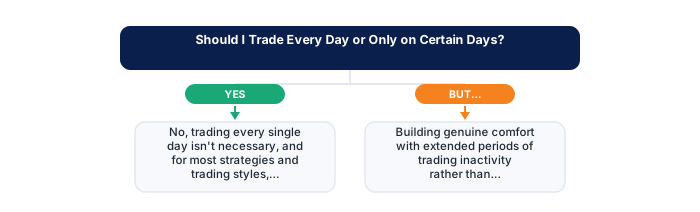
No, trading every single day isn't necessary, and for most strategies it isn't even advisable.
The quality of genuine setups matching your strategy's criteria matters more than maximising frequency; successful traders often go days without a trade.
📋 ON THIS PAGE
- Why frequency isn't the right goal in itself
- The overtrading problem specifically
- How many trades is actually typical for different styles
- The psychological pull toward constant activity
- Recognising when no trade is genuinely the right decision
- Building genuine comfort with periods of trading inactivity
1. Why frequency isn't the right goal in itself
The fundamental purpose of any sound trading strategy is identifying genuine, specific setups matching predetermined, objective criteria, not generating a particular volume of trading activity for its own sake. A strategy's profitability depends on the quality and consistency of its actual signals, not on how frequently you place trades, meaning forcing additional trades simply to maintain a feeling of constant activity directly contradicts the disciplined, criteria-based approach that sound trading actually requires.
This distinction, between genuine strategy-driven activity and activity for its own sake, is one of the more important, if sometimes counterintuitive, realisations newer traders benefit from internalising early, since the natural inclination to associate "being a trader" with constant, frequent activity often works directly against actually trading well.
It's worth internalising this reframe explicitly, since the instinct to measure trading activity, and by extension one's own dedication, by frequency alone is a natural but genuinely misleading way of thinking about what actually produces good trading outcomes.
2. The overtrading problem specifically
Overtrading, placing trades that don't genuinely meet your strategy's predetermined criteria, simply out of a felt need to be "doing something", is a well-documented, common problem among newer traders, often connecting directly to boredom, impatience, or a mistaken belief that more activity demonstrates greater skill or commitment.
Overtrading typically produces worse overall results than disciplined, criteria-based trading specifically because it introduces trades without the genuine statistical edge your tested strategy is actually designed to capture. These additional, criteria-violating trades essentially become undisciplined, gambling-like activity, diluting and undermining the genuine edge your disciplined trades might otherwise capture.
- FSCA-regulated broker verified at fsca.co.za
- Demo account tested for minimum 60 days
- Trading plan written: entry, exits, position sizing
- Risk per trade defined (1-2% of account)
- Backup internet connection tested for load shedding
- Tax implications understood
It's worth reviewing your own trading journal specifically for evidence of this pattern, comparing your actual trade frequency against genuinely available, criteria-meeting setups over the same period reveals whether your activity level reflects genuine opportunity or the felt pull toward action this section describes.
3. How many trades is actually typical for different styles
Trading frequency varies enormously by style and strategy. A day trader might place several trades within a single session, while a position trader, holding for much longer periods, might place just a handful of trades across an entire month, or even less frequently, depending on how often genuinely qualifying setups actually appear within their specific strategy's criteria.
There's no universally "correct" frequency that applies across all strategies and styles. The appropriate frequency emerges naturally from how often your specific, tested strategy's genuine criteria actually present themselves in real market conditions, which is itself revealed through backtesting and forward-testing.
4. The psychological pull toward constant activity
Several psychological factors create a pull toward more frequent trading than a strategy's genuine criteria actually warrant: boredom during quiet market periods, a mistaken association between activity and productivity or skill, FOMO (fear of missing out) when observing market movement without an open position, and sometimes simple impatience with the discipline a sound, criteria-based approach genuinely requires.
Recognising these specific psychological pulls explicitly, rather than experiencing them as a vague, unexamined urge to trade more, is the first step toward resisting them effectively.
| Item | Detail |
|---|---|
| Regulator | FSCA, fsca.co.za |
| Exchange control | SARB, resbank.co.za |
| Tax authority | SARS, sars.gov.za |
| JSE hours | 09:00-17:00 SAST Mon-Fri |
| Best forex session | 15:00-17:00 SAST |
| CGT annual exclusion | R50,000 (individuals) |
It's worth naming your own specific version of this pull explicitly, whether it's boredom, FOMO discussed elsewhere on this site, or something else entirely, knowing your own particular trigger makes it considerably easier to recognise and resist in the actual moment it arises.
5. Recognising when no trade is genuinely the right decision
A useful mental reframe involves explicitly recognising "no trade" as a legitimate, active decision in its own right, rather than simply the absence of a decision. When no setup genuinely meets your predetermined criteria, choosing not to trade is itself the correct, disciplined application of your strategy, deserving the same respect and discipline as actually placing a qualifying trade would.
Some traders find it genuinely helpful to explicitly log "no trade" days or periods in their trading journal alongside their actual trade entries. This reinforces the legitimacy of inactivity as a sound strategic choice and gives a complete record of your decision-making discipline, not just a record of the trades you actually placed.
It's worth practising this explicit reframing consistently until it genuinely feels natural, rather than a forced mental exercise, over time, treating disciplined inaction as a genuine accomplishment tends to become a more automatic, comfortable part of your overall trading mindset.
6. Building genuine comfort with periods of trading inactivity
Building genuine comfort with extended periods of trading inactivity, rather than experiencing this as uncomfortable, unproductive, or somehow a failure to be "properly" trading, is a skill that develops over time, often supported by a clearer statistical understanding of risk-reward ratios and overall strategy expectancy, which clarifies that your strategy's profitability comes from the genuine quality of the trades you do take, not from maximising the sheer volume of trades placed.
Some traders find it useful to deliberately schedule other productive activities, continued learning, strategy review, or simply non-trading-related pursuits, during periods when their strategy genuinely isn't generating qualifying setups, both to manage the psychological discomfort of inactivity above and to use this time constructively rather than experiencing it as simply unproductive waiting.
Selective session trading focuses on quality and avoids forced entry.
Trading every day creates pressure to find setups even when there are none. Selective session trading, particularly avoiding Mondays, Fridays, and major news events, focuses attention on higher quality.
★ Why It Matters
Worth checking in your own journal: your win rate specifically on days where you forced a trade despite no clean setup matching your criteria, versus days where a genuine setup appeared naturally. This comparison alone tends to be a powerful, very personal argument against trading every day regardless.
✕ Common mistakes
- Forcing a trade on days without a genuine setup. This is one of the more measurable, costly overtrading patterns.
- Treating daily trading as inherently more serious or committed. Frequency doesn't determine trading quality or seriousness.
- Assuming all strategies require daily activity to be effective. Many sound strategies naturally involve days with no qualifying setup.
Key Takeaways
- Trading every day isn't necessary or even advisable for most strategies. Quality of analysis matters more than trading frequency for most retail traders.
- No, trading every single day isn't necessary, and for most strategies it isn't even advisable.
- The quality of genuine setups matching your strategy's criteria matters more than maximising frequency; successful traders often go days without a trade.
- Why frequency isn't the right goal in itself.
- The overtrading problem specifically.
Frequently asked follow-up questions
Is it a sign of a flawed strategy if I go weeks without a qualifying trade?
Not necessarily. This depends entirely on your specific strategy's typical frequency, revealed through backtesting; many sound strategies naturally and appropriately generate infrequent signals.
Should I lower my strategy's criteria if I'm not getting enough trades?
Generally not advisable purely to increase frequency. Criteria should reflect genuine, tested signal quality, not be loosened simply to generate more frequent activity, which risks introducing the overtrading problem above.
How do I know if I'm overtrading?
Reviewing your trading journal specifically for trades that didn't genuinely meet your predetermined strategy criteria is the most reliable way to identify this pattern honestly.
