i Short answer
A stable broadband connection or solid mobile data (4G/LTE) covers the needs of most retail trading styles.
Ultra-low latency connections matter primarily for high-frequency or scalping strategies, not typical swing or position trading.
📋 ON THIS PAGE
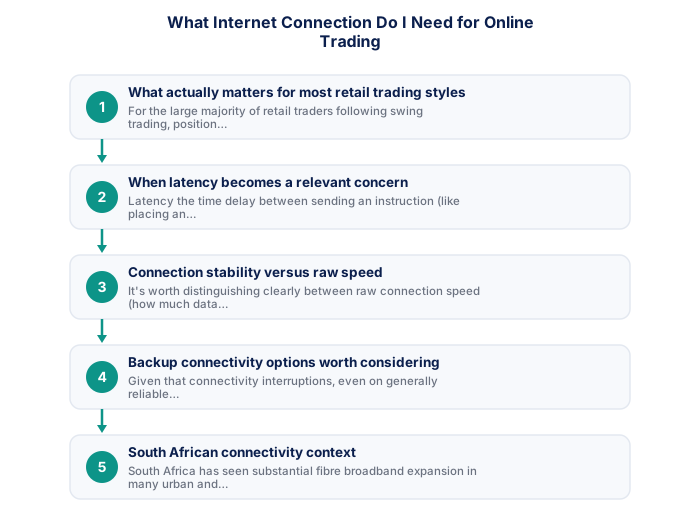
1. What actually matters for most retail trading styles
For the large majority of retail traders following swing trading, position trading, or end-of-day analysis approaches on this site, a standard, reasonably stable home broadband connection or a solid mobile 4G/LTE data connection is genuinely sufficient. These trading styles don't depend on split-second execution timing, meaning the practical difference between a very fast, low-latency specialised connection and a perfectly ordinary, stable consumer-grade internet connection is negligible for actually executing these specific trading approaches effectively.
What matters considerably more than raw connection speed for these trading styles is basic reliability, avoiding frequent dropouts or connectivity interruptions, particularly during the specific, limited windows when you're actively placing or managing orders, rather than requiring an unusually fast connection throughout the entire trading day regardless of whether you're actively trading at any given moment.
It's worth actually testing your own current connection speed and stability directly, rather than assuming based on your general internet plan, a quick speed test from your actual trading location and typical time of day gives more relevant information than the headline speed your provider advertises.
2. When latency genuinely becomes a relevant concern
Latency, the time delay between sending an instruction (like placing an order) and that instruction actually reaching and being processed by the broker's trading servers, becomes a relevant practical concern primarily for very short-term trading styles like scalping or certain forms of day trading, where positions are held for very brief periods and execution price differences of even a few milliseconds, repeated across many trades, can meaningfully affect overall results given the small profit margins typically targeted on each individual, brief trade.
For these specific, latency-sensitive trading styles, traders sometimes invest in faster, more reliable connections, or even choose to trade from server locations or using connection types specifically optimised for minimal latency to their broker's servers, but this level of connectivity optimisation is a specialised consideration relevant only to a relatively narrow subset of trading styles, not a general requirement for retail trading broadly.
- FSCA-regulated broker verified at fsca.co.za
- Demo account tested for minimum 60 days
- Trading plan written: entry, exits, position sizing
- Risk per trade defined (1-2% of account)
- Backup internet connection tested for load shedding
- Tax implications understood
3. Connection stability versus raw speed
It's worth distinguishing clearly between raw connection speed (how much data can be transferred per second, often marketed prominently by internet service providers) and connection stability (how consistently and reliably that connection remains active without interruption). For trading purposes specifically, stability matters considerably more than raw speed beyond a fairly modest baseline threshold, since trading platforms don't typically require transferring large amounts of data continuously, they require a consistent, uninterrupted connection for receiving price updates and transmitting order instructions reliably.
A connection advertised with very high raw speed but with occasional, brief dropouts or instability is genuinely more problematic for trading than a more modest-speed connection that remains consistently, reliably connected throughout your trading sessions, when evaluating your own connectivity situation for trading purposes , prioritise this practical reliability consideration over chasing the highest possible advertised speed figure.
4. Backup connectivity options worth considering
Given that connectivity interruptions, even on generally reliable connections, can occasionally occur at inconvenient moments, having a backup connectivity option, for example, mobile data as a backup if your primary home broadband connection experiences an outage, or vice versa, provides a practical safeguard specifically for moments when you have open positions requiring potential active management. Many modern mobile devices and routers support relatively smooth switching between connection types, making this kind of backup arrangement increasingly practical and low-effort to maintain.
Setting predetermined stop-losses and take-profit levels as standing orders on the broker's server, rather than depending entirely on continuous active connectivity and manual intervention, provides an additional, complementary safeguard against connectivity interruptions regardless of whether you've specifically arranged backup connectivity options.
| Item | Detail |
|---|---|
| Regulator | FSCA, fsca.co.za |
| Exchange control | SARB, resbank.co.za |
| Tax authority | SARS, sars.gov.za |
| JSE hours | 09:00-17:00 SAST Mon-Fri |
| Best forex session | 15:00-17:00 SAST |
| CGT annual exclusion | R50,000 (individuals) |
5. South African connectivity context specifically
South Africa has seen substantial fibre broadband expansion in many urban and increasingly some semi-urban areas in recent years, alongside generally solid and widely available 4G mobile data coverage across most populated areas, meaning reasonably reliable internet access suitable for the retail trading needs discussed above is genuinely accessible to most South African traders in these areas. Areas with less developed infrastructure, or during periods of load-shedding affecting both power and, indirectly, some connectivity infrastructure, may face more significant connectivity reliability challenges worth specifically planning around.
For South African traders in areas where load-shedding or infrastructure limitations create genuine connectivity reliability concerns, maintaining a charged mobile device with mobile data as a backup option, and ensuring predetermined risk management orders are always set rather than relying on continuous active monitoring, are particularly practical, relevant safeguards given this specific local infrastructure context.
It's worth factoring load shedding awareness directly into this connectivity planning, discussed elsewhere on this site, since power outages affecting your router or modem create connectivity gaps independent of your actual internet plan's quality or speed.
6. Practical recommendations by trading style
For swing and position traders specifically, a standard, stable home broadband or mobile 4G/LTE connection is genuinely sufficient, with backup connectivity options being a sensible, low-effort precaution rather than a strict necessity. For day traders or scalpers specifically, investing in a more sound, reliable primary connection, along with seriously considering a genuine backup option given the more time-sensitive nature of their specific trading style, is a more strongly warranted practical investment given how much more execution timing matters for these particular trading approaches.
Regardless of specific trading style, the broader principle holds: connection reliability and the presence of predetermined risk management orders matter considerably more for practical trading safety than chasing the highest possible raw connection speed figure in isolation.
A reliable mobile backup is the most practical loadshedding safeguard.
Stability and consistent reliability matter more than raw internet speed for trading. A mobile data backup is the most practical safeguard against unexpected connectivity drops or loadshedding.
★ Why It Matters
Something worth testing rather than assuming your connection is adequate: run a basic speed and latency test during your actual usual trading hours, not at a random time, household internet usage patterns (other devices, time of day) can meaningfully affect your real available bandwidth when it matters most.
✕ Common mistakes
- Ignoring other household device usage affecting available bandwidth. Real available bandwidth can differ from a connection's advertised maximum.
- Not having any backup connection plan for scalping or day trading . A dropped connection matters more for time-sensitive strategies.
- Underestimating latency's effect on execution-sensitive strategies. Raw speed and low latency aren't always the same thing.
Key Takeaways
- A stable broadband or solid mobile data connection is sufficient for most retail trading styles. Learn what actually matters and what doesn't.
- A stable broadband connection or solid mobile data (4G/LTE) covers the needs of most retail trading styles.
- Ultra-low latency connections matter primarily for high-frequency or scalping strategies, not typical swing or position trading.
- What actually matters for most retail trading styles.
- When latency genuinely becomes a relevant concern.
See also: Can I Trade Forex From My Phone in South Africa?.
Frequently asked follow-up questions
Do I need fibre internet specifically to trade successfully?
No, fibre offers excellent stability and speed but isn't strictly necessary for most retail trading styles; a reliable ADSL or mobile data connection is generally sufficient for swing and position trading approaches.
Can load-shedding genuinely affect my ability to trade safely?
Yes, power and connectivity interruptions during load-shedding can affect your ability to actively monitor or manage positions; ensuring predetermined stop-losses are set helps mitigate this specific risk.
Is trading over mobile data instead of WiFi a security risk?
Standard mobile data connections through your carrier are generally reasonably secure; the larger security concern is unsecured public WiFi networks, which carry more elevated interception risk than mobile data.
