i Short answer
If an FSCA-regulated broker's licence is suspended, this typically halts new client onboarding and may restrict ongoing trading activities, depending on the specific action.
Client funds held under fund segregation requirements should remain identifiable as client property, separate from the broker's own assets.
📋 ON THIS PAGE
- Why licences get suspended or withdrawn in the first place
- Immediate practical effects on your account
- Why fund segregation matters specifically in this scenario
- Steps to take immediately if this happens to your broker
- The realistic process of recovering your funds
- Reducing this risk in advance through broker selection
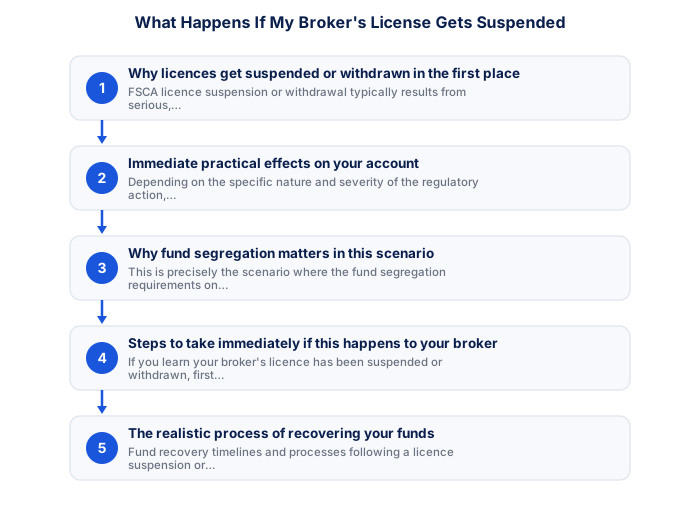
1. Why licences get suspended or withdrawn in the first place
FSCA licence suspension or withdrawal typically results from serious, sustained, or repeated compliance failures, inadequate capital reserves, failure to maintain proper fund segregation, misleading marketing practices, failure to respond adequately to regulatory inquiries, or more serious findings of misconduct or fraud. This is generally not a sudden, arbitrary action but follows from an investigation process, often triggered by specific complaints or routine regulatory audits revealing genuine problems.
Understanding this background helps frame what a suspension actually signals: it's the regulatory system functioning as designed, identifying and acting on a genuine problem, rather than an unpredictable event with no underlying cause, though from the affected client's perspective, the practical disruption remains real regardless of how justified the underlying regulatory action was.
2. Immediate practical effects on your account
Depending on the specific nature and severity of the regulatory action, immediate effects can range from a halt on new account openings while existing operations continue under close supervision, through to a more complete suspension of trading activity and withdrawal processing while the situation is investigated and resolved. The FSCA typically communicates the specific scope and conditions of any suspension publicly, which is worth checking directly if you suspect your broker may be affected.
In more serious cases involving outright licence withdrawal rather than temporary suspension, the broker may be required to wind down operations in an orderly manner, which should include facilitating the return of client funds, though the speed and smoothness of this process can vary considerably depending on the broker's actual financial and operational state at the time.
- Search FSP name or number at fsca.co.za
- Confirm licence is current and not suspended
- Check scope covers forex and CFD activity
- Confirm client funds in segregated accounts
- Read FSCA enforcement actions history
- Test customer support before depositing
- Client funds legally segregated
- FSCA complaints process available
- SA consumer protections apply
- ZAR account, no FX conversion costs
- Some offshore brokers offer wider instruments
- Regulatory overhead passed on in spreads
- Stricter position limits for retail clients
- FICA verification required before trading
- Client funds segregated
- Formal FSCA complaints process
- SA consumer protections apply
- ZAR account available
- Fund safety not guaranteed
- Overseas disputes only
- SA law does not apply
- Currency conversion costs
3. Why fund segregation matters specifically in this scenario
This is precisely the scenario where the fund segregation requirements discussed in detail elsewhere on this site demonstrate their practical value most clearly. If a broker has genuinely maintained proper segregation, keeping client funds in accounts legally distinct from its own operating capital, those client funds should remain identifiable and recoverable even if the broker itself faces serious regulatory action or financial difficulty, since they were never properly part of the broker's own asset pool in the first place.
This is also precisely why verifying a broker's fund segregation practices, not just their basic licence status, matters as part of thorough due diligence, a broker that has technically held a licence but poorly implemented genuine fund segregation presents meaningfully higher risk in exactly this kind of scenario compared to one with sound, properly audited segregation practices.
4. Steps to take immediately if this happens to your broker
If you learn your broker's licence has been suspended or withdrawn, first verify this directly through the FSCA's official communications or register status, rather than relying solely on secondhand reports or social media speculation, which can sometimes be inaccurate or exaggerated. Once confirmed, attempt to withdraw any available funds promptly if the platform still permits this, and document your account balance and any pending transactions clearly through screenshots or statements before access potentially becomes restricted further.
Contact the broker directly through official channels for specific guidance on the situation and the process for fund recovery, and if you don't receive a satisfactory response, consider escalating directly to the FSCA for guidance on the specific situation and your options as an affected client.
| Protection | FSCA Regulated | Offshore Unregulated |
|---|---|---|
| Client fund segregation | ✓ Required | Varies by broker |
| SA complaints process | ✓ Available | ✗ Not available |
| SA consumer law applies | ✓ Yes | ✗ No |
| ZAR account available | ✓ Typically | Often USD/EUR only |
5. The realistic process of recovering your funds
Fund recovery timelines and processes following a licence suspension or withdrawal vary considerably depending on the broker's specific financial state, the quality of their fund segregation practices, and whether the situation involves an orderly wind-down or a more disorderly collapse potentially involving insolvency proceedings. In cases of genuine, well-maintained fund segregation, recovery, while still potentially involving some delay and administrative process, tends to be considerably more straightforward than in cases where segregation was inadequate or funds were already commingled with company assets.
If the situation does involve formal insolvency proceedings, you may need to register as a creditor or follow whatever specific claims process the insolvency practitioner or relevant authority establishes, this is a more involved process than a simple withdrawal request, underscoring why verifying genuine fund segregation practices in advance, rather than dealing with this scenario reactively after the fact, is the more effective risk management approach.
6. Reducing this risk in advance through broker selection
While no amount of due diligence eliminates this risk entirely, several practices meaningfully reduce your exposure: choosing brokers with a longer track record of stable, compliant operation rather than newer, less-established entities; specifically confirming fund segregation practices directly with the broker rather than assuming this from licensing status alone; and avoiding concentrating disproportionately large amounts of capital with any single broker, regardless of how well-regarded they appear, simply as a general diversification principle against this kind of low-probability but high-impact scenario.
This connects to broader broker selection due diligence generally, verifying not just basic licensing but the deeper operational and financial stability indicators that correlate with lower risk of ever facing this kind of disruptive regulatory action in the first place.
If a broker's FSCA licence is suspended, client funds in segregated accounts should remain protected, but trading access is suspended. Verifying the situation on the FSCA register is the first step.
★ Why It Matters
Something worth checking immediately if this happens to your broker: the FSCA's own published notice on the suspension, which usually states the specific reason and scope, this is more reliable and detailed than relying on the broker's own communication about its own suspension.
✕ Common mistakes
- Assuming all account functions stop identically during any suspension. The specific scope of restrictions can vary by case.
- Concentrating all capital with a single broker. Diversifying reduces the impact of any single regulatory action.
- Panicking and attempting rapid, unplanned withdrawals once rumours start. Calm, informed action based on official information tends to work better.
Key Takeaways
- A licence suspension typically halts new business but existing client funds should remain protected under fund segregation rules. Learn what to do.
- If an FSCA-regulated broker's licence is suspended, this typically halts new client onboarding and may restrict ongoing trading activities, depending on the specific action.
- Client funds held under fund segregation requirements should remain identifiable as client property, separate from the broker's own assets.
- Why licences get suspended or withdrawn in the first place.
- Immediate practical effects on your account.
Frequently asked follow-up questions
Will I definitely get all my money back if my broker's licence is suspended?
Not with absolute certainty, outcomes depend significantly on how well fund segregation was actually maintained and the broker's overall financial state, though genuine segregation considerably improves the odds of recovery.
How quickly should I act if I hear about a potential licence issue?
Acting promptly to verify the situation and withdraw available funds if still possible is generally advisable, since access and processing capability can become more restricted as a regulatory situation develops further.
Does negative balance protection still apply during a suspension?
This depends on the specific circumstances and the broker's ability to continue normal operations during the suspension period; this is a further reason genuine financial stability, not just licensing, matters in broker selection.
Can a broker continue operating at all once its licence is suspended?
Generally no, a genuine suspension should mean the broker can no longer legally onboard new clients or in many cases process normal trading activity for existing clients in that specific market until the matter is resolved.
Does a suspension always mean the broker did something seriously wrong?
Not necessarily; suspensions can sometimes relate to administrative or procedural compliance gaps rather than client-harming misconduct, though either way it warrants taking the situation seriously and seeking clarity.
