i Short answer
Tourism revenue contributes to South Africa's current account and broader services trade.
Seasonal patterns and global travel trends carry modest but genuine Rand relevance alongside more dominant commodity and capital flow factors.
📋 ON THIS PAGE
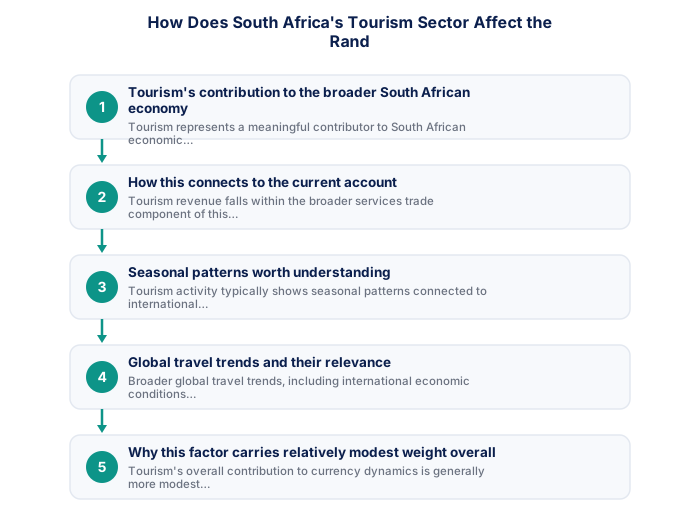
1. Tourism's contribution to the broader South African economy
Tourism represents a meaningful contributor to South African economic activity and foreign currency earnings, with international visitors bringing foreign currency that ultimately needs converting to Rand for local spending, similar in basic mechanical principle to the export revenue.
It's worth checking current tourism revenue figures periodically from official sources like Statistics South Africa or the Department of Tourism, rather than relying on general assumptions, since the sector's actual contribution can shift meaningfully based on global travel patterns and economic conditions.
2. How this connects to the current account
Tourism revenue falls within the broader services trade component of this measure, alongside the goods trade balance, contributing to the overall current account position that influences broader currency financing dynamics.
It's worth understanding this specifically as one component feeding into the broader current account measure discussed elsewhere on this site, tourism revenue alone rarely drives significant currency movement, but it contributes incrementally to the overall balance that does matter for broader Rand fundamentals.
- SARB economic calendar checked for the week
- Next Eskom load shedding schedule reviewed
- GNU stability news reviewed
- Stats SA data releases noted
- Credit agency review dates checked
- US/global events that move EM risk noted
3. Seasonal patterns worth understanding
Tourism activity typically shows seasonal patterns connected to international holiday periods and South Africa's own specific seasonal attractions, meaning tourism-related currency flows aren't evenly distributed throughout the year, potentially contributing some modest, seasonal element to broader currency dynamics during peak travel periods.
It's worth being aware of these seasonal patterns specifically if you're incorporating tourism data into your broader analysis, comparing tourism figures against the equivalent period from the previous year, rather than against a different season entirely, gives a more meaningful, like-for-like comparison.
| Event | Frequency | ZAR impact | Source |
|---|---|---|---|
| SARB MPC | 6x per year | High | resbank.co.za |
| Budget Speech | Annual (February) | Very high | treasury.gov.za |
| Credit reviews | Annual each agency | Very high | Agency sites |
| Stats SA CPI | Monthly | Medium | statssa.gov.za |
| Eskom stage | As needed | Low-medium | eskomsepush.com |
- SA context provides genuine informational edge
- ZAR pairs accessible via FSCA brokers in ZAR accounts
- Rand volatility creates larger intraday ranges
- 6 SARB meetings/year create regular macro setups
- Higher geopolitical risk than G10 pairs
- Load shedding creates unique operational disruptions
- SA rand liquidity thinner than major G10 pairs
- SA-specific news requires constant local monitoring
4. Global travel trends and their relevance
Broader global travel trends, including international economic conditions affecting discretionary travel spending and specific source-market dynamics, can affect tourism-related currency inflows independent of South Africa-specific factors alone.
It's worth watching major source-market economic conditions specifically, since a significant economic downturn in countries that typically send large numbers of tourists to South Africa can meaningfully affect this specific revenue stream independent of anything happening domestically.
5. Why this factor carries relatively modest weight overall
Tourism's overall contribution to currency dynamics is generally more modest compared to the dominant commodity export, and capital flow factors, making this a secondary rather than primary consideration for most fundamental analysis purposes.
It's worth keeping this relative weighting in mind specifically to avoid overemphasising tourism-related news in your broader analysis, while genuinely relevant as one contributing factor, it shouldn't receive the same analytical attention as the dominant commodity export and capital flow factors discussed throughout this site's economy content.
6. Incorporating this into broader fundamental awareness
While not typically a primary trading signal on its own, awareness of tourism sector trends and seasonal patterns can provide useful supplementary context within the broader, multi-factor fundamental analysis, particularly during periods when more dominant factors are relatively quiet or stable.
South Africa's macroeconomic data is closely monitored by international rating agencies and institutional investors whose assessments directly affect the rand and SA bond yields. The most useful analytical habit for ZAR traders is tracking not just the absolute level of each data release but how it compares to market consensus expectations, because it is the surprise component, not the level, that drives the immediate market reaction. The Stats SA release calendar, SARB quarterly bulletin, and National Treasury's monthly statements are the primary official sources for this data before it is summarised in financial media.
Comparing tourism data to the immediately preceding quarter gets misled by normal seasonal swings. Comparing to the same season last year gives a far more meaningful read.
★ Why It Matters
Something worth noting specifically: South African tourism shows a pronounced seasonal pattern tied to Northern Hemisphere winter holidays, so isolating any genuine Rand effect from tourism requires comparing against the same season in prior years, not against the immediately preceding quarter.
✕ Common mistakes
- Overweighting tourism's overall currency impact relative to mining or capital flows. Tourism's effect is real but considerably smaller than these larger drivers.
- Ignoring global travel trend shifts that affect visitor numbers. International travel patterns shift independently of anything South Africa does.
- Assuming tourism data moves the Rand on the same day it's released. This data tends to matter more for gradual sentiment than sharp, immediate reactions.
Key Takeaways
- Tourism revenue contributes to the current account and broader services trade, with seasonal patterns and global travel trends carrying modest Rand relevance.
- Tourism revenue contributes to South Africa's current account and broader services trade.
- Seasonal patterns and global travel trends carry modest but genuine Rand relevance alongside more dominant commodity and capital flow factors.
- Tourism's contribution to the broader South African economy.
- How this connects to the current account.
Frequently asked follow-up questions
Is tourism a major driver of Rand movement on any given day?
Generally not a primary, dominant driver compared to commodity and capital flow factors, though it contributes some modest, ongoing relevance.
Does South African tourism data get released regularly?
Statistics South Africa and tourism-specific bodies publish relevant data periodically; checking these sources provides current, specific information on this sector's performance.
Do global economic downturns typically reduce South African tourism revenue?
International discretionary travel spending can be sensitive to broader global economic conditions, potentially affecting tourism-related currency inflows during such periods.
