i Short answer
This government employment initiative affects fiscal spending and unemployment data.
It carries modest indirect relevance to broader economic sentiment rather than being a primary, direct currency driver.
📋 ON THIS PAGE
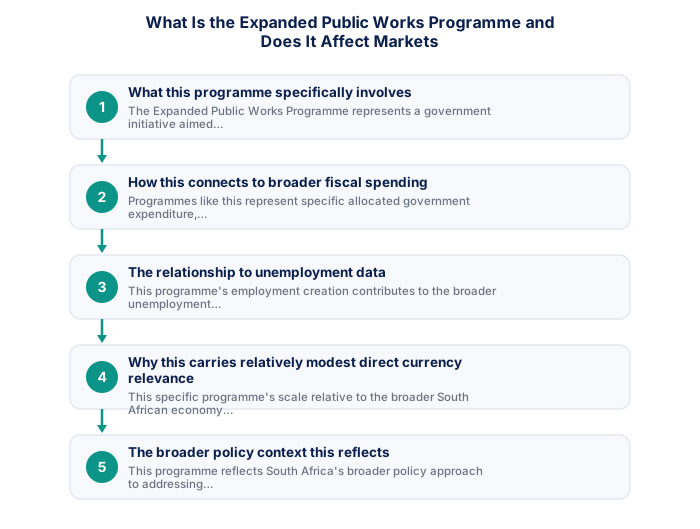
1. What this programme specifically involves
The Expanded Public Works Programme represents a government initiative aimed at creating temporary employment opportunities, particularly through infrastructure and community service projects, reflecting a specific policy approach to addressing South Africa's structurally elevated unemployment challenge.
It's worth checking current, official statistics directly from government sources if you want precise, up-to-date figures on this programme's specific scale and scope, since these details evolve over successive budget cycles.
See also: Why Does SA's Current Account Deficit Matter?
See also: How Does SA Land Reform Affect Investor Sentiment?
2. How this connects to broader fiscal spending
Programmes like this represent specific allocated government expenditure, forming part of the broader fiscal picture that Treasury, manages and reports on through the annual Budget process.
It's worth tracking this alongside the broader Budget Speech fiscal figures discussed elsewhere on this site, this programme represents one specific line item within South Africa's overall fiscal spending picture, worth understanding in that broader context rather than in isolation.
- FSCA-regulated broker verified at fsca.co.za
- Demo account tested for minimum 60 days
- Trading plan written: entry, exits, position sizing
- Risk per trade defined (1-2% of account)
- Backup internet connection tested for load shedding
- Tax implications understood
3. The relationship to unemployment data
This programme's employment creation contributes to the broader unemployment statistics, though as temporary, programme-specific employment rather than necessarily reflecting broader, sustained private-sector employment growth that might carry somewhat different economic significance.
It's worth understanding this programme's modest scale relative to South Africa's overall structurally elevated unemployment, discussed elsewhere on this site, meaning it functions as a partial mitigation measure rather than a solution capable of meaningfully shifting the broader employment statistics traders actually track.
4. Why this carries relatively modest direct currency relevance
This specific programme's scale relative to the broader South African economy and fiscal picture means its direct, isolated currency relevance is generally modest, functioning more as one component within the broader fiscal and employment data rather than a standalone significant driver itself.
It's worth keeping this relative weighting in mind specifically to avoid overemphasising this programme in your broader analysis, worth treating it as useful background context on South African social policy rather than a significant, standalone market-moving factor.
| Item | Detail |
|---|---|
| Regulator | FSCA, fsca.co.za |
| Exchange control | SARB, resbank.co.za |
| Tax authority | SARS, sars.gov.za |
| JSE hours | 09:00-17:00 SAST Mon-Fri |
| Best forex session | 15:00-17:00 SAST |
| CGT annual exclusion | R50,000 (individuals) |
5. The broader policy context this reflects
This programme reflects South Africa's broader policy approach to addressing structural unemployment challenges, with its scale, funding, and specific design sometimes evolving based on broader fiscal capacity and policy priorities reflected in the annual Budget process.
It's worth researching South Africa's broader employment and social policy environment if this specific area genuinely interests you, understanding this programme within that fuller context gives more complete insight than considering it as an isolated initiative.
6. Practical relevance for traders monitoring South African policy
South African traders following USD/ZAR specifically may encounter references to this and similar government programmes within broader Budget Speech coverage or unemployment data analysis, useful as background policy context rather than requiring dedicated, standalone tracking as a primary fundamental factor.
The underlying data itself typically comes from Stats SA (Statistics South Africa), whose release calendar is worth knowing if you want to anticipate when market-moving economic data is scheduled to land.
South Africa's macroeconomic data is closely monitored by international rating agencies and institutional investors whose assessments directly affect the rand and SA bond yields. The most useful analytical habit for ZAR traders is tracking not just the absolute level of each data release but how it compares to market consensus expectations, because it is the surprise component, not the level, that drives the immediate market reaction. The Stats SA release calendar, SARB quarterly bulletin, and National Treasury's monthly statements are the primary official sources for this data before it is summarised in financial media.
The Expanded Public Works Programme affects government spending signals and can inflate headline employment data, but is not a primary market mover for the Rand. Rating agencies note its contingent fiscal cost.
★ Why It Matters
Worth keeping in perspective: this programme's market relevance is genuinely modest compared to headline fiscal and monetary policy drivers. It's worth knowing about for completeness but shouldn't feature prominently in any practical Rand trading analysis.
✕ Common mistakes
- Treating every government employment initiative as equally market-relevant. Significance varies considerably depending on scale and fiscal impact.
- Ignoring more directly impactful data in favour of less market-moving programme details. Prioritising attention toward genuinely high-impact releases serves trading better.
- Assuming familiarity with every government programme is necessary for sound ZAR analysis. Focus on the genuinely significant drivers serves traders better than complete coverage.
Key Takeaways
- This government employment initiative affects fiscal spending and unemployment data, carrying modest indirect relevance to broader economic sentiment discussed elsewhere.
- This government employment initiative affects fiscal spending and unemployment data.
- It carries modest indirect relevance to broader economic sentiment rather than being a primary, direct currency driver.
- What this programme specifically involves.
- How this connects to broader fiscal spending.
See also: How Does South Africa's Trade Relationship With China Affect the Rand? and How Does NHI Uncertainty Affect JSE Healthcare Stocks?.
Frequently asked follow-up questions
Does this programme appear as a specific line item in the Budget Speech?
Government employment programmes are typically referenced within broader Budget documentation; checking official Treasury publications provides specific, current detail.
Should traders track this programme as a dedicated fundamental indicator?
Generally not as a standalone, dedicated indicator. It's more useful as background context within broader fiscal and unemployment analysis.
Are there similar government employment programmes worth knowing about?
Various government initiatives addressing unemployment and economic development exist; checking current government and Treasury publications provides the most complete, current picture.
