i Short answer
The repo rate is SARB's primary monetary policy tool, the rate at which it lends to commercial banks.
The prime rate is a commercial lending benchmark that adjusts in tandem, applying directly to consumer and business loans.
📋 ON THIS PAGE
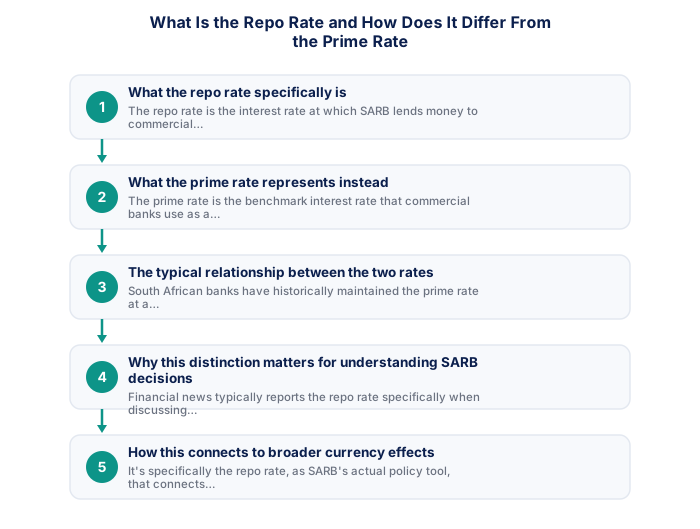
1. What the repo rate specifically is
The repo rate is the interest rate at which SARB lends money to commercial banks on a short-term, typically overnight basis, serving as SARB's primary mechanism for implementing monetary policy decisions.
It's worth understanding this as the specific rate SARB's Monetary Policy Committee actually sets and announces, discussed elsewhere on this site regarding SARB rate decisions specifically, this is the precise figure worth watching in scheduled announcements, not the broader prime rate discussed below.
See also: How Do Proprietary Trading Firms Work for South Africans?
| Feature | Repo Rate | Prime Rate |
|---|---|---|
| Set by | SARB Monetary Policy Committee | Commercial banks, based on repo rate |
| Relevance to forex traders | Direct, drives yield analysis | Indirect |
| Affects | Interbank lending | Consumer loans, mortgages |
2. What the prime rate represents instead
The prime rate is the benchmark interest rate that commercial banks use as a reference point for various consumer and business lending products, including home loans and personal credit, representing the rate that directly, practically affects ordinary borrowers' actual loan costs, rather than the more technical, interbank repo rate.
It's worth understanding why this distinction matters practically for South Africans generally, even though it's less directly relevant to forex trading specifically, prime rate is the figure that affects most consumers' actual borrowing costs, home loans, credit cards, and similar credit products.
- FSCA-regulated broker verified at fsca.co.za
- Demo account tested for minimum 60 days
- Trading plan written: entry, exits, position sizing
- Risk per trade defined (1-2% of account)
- Backup internet connection tested for load shedding
- Tax implications understood
3. The typical relationship between the two rates
South African banks have historically maintained the prime rate at a consistent margin above the repo rate, meaning when SARB changes the repo rate, the prime rate typically adjusts by the same amount shortly afterward, maintaining this consistent relationship between the two figures.
It's worth checking the current, specific spread directly from reliable sources rather than assuming a fixed relationship, while this margin tends to remain fairly stable, confirming the current figure gives you accurate, up-to-date information.
4. Why this distinction matters for understanding SARB decisions
Financial news typically reports the repo rate specifically when discussing SARB's policy decisions, while general personal finance discussion more commonly references the prime rate given its direct relevance to consumer borrowing costs. Understanding this distinction helps correctly interpret which rate different sources are actually referencing.
It's worth watching repo rate announcements specifically, rather than prime rate, when interpreting SARB policy decisions for trading purposes, discussed elsewhere on this site regarding interest rate effects on currency, the repo rate is the figure directly driving the yield-seeking dynamics relevant to Rand analysis.
| Item | Detail |
|---|---|
| Regulator | FSCA, fsca.co.za |
| Exchange control | SARB, resbank.co.za |
| Tax authority | SARS, sars.gov.za |
| JSE hours | 09:00-17:00 SAST Mon-Fri |
| Best forex session | 15:00-17:00 SAST |
| CGT annual exclusion | R50,000 (individuals) |
5. How this connects to broader currency effects
It's specifically the repo rate, as SARB's actual policy tool, that connects directly to the interest rate differential dynamics behind currency prices, rather than the prime rate, which is a derived, commercial consequence of repo rate policy.
It's worth connecting this directly to the interest rate differential discussion found throughout this site, it's specifically the repo rate, not the prime rate, that factors into the yield comparisons driving international capital flow decisions relevant to Rand strength.
6. Checking current rates accurately
SARB publishes the current repo rate directly through its official communications following each scheduled policy decision, while South African banks publish their corresponding prime rate, typically shortly after any repo rate change. Checking these official sources directly gives the most accurate, current figures for either rate.
The SARB sets the repo rate, currently charged to banks needing short-term liquidity. The prime lending rate is the repo rate plus 3.5 percentage points, adjusted automatically when SARB announces a rate change.
★ Why It Matters
Worth tracking: the gap between South Africa's repo rate and comparable US rates, since this differential, not the absolute South African rate alone, drives much of the carry-trade-related capital flow affecting the Rand.
✕ Common mistakes
- Confusing the repo rate with the prime rate as interchangeable terms. One is SARB's policy tool; the other is a commercial lending benchmark that adjusts in response.
- Assuming a repo rate change affects all borrowing costs identically and immediately. The prime rate adjustment process and timing can differ slightly from the repo decision itself.
- Not distinguishing which rate is actually relevant to a specific analysis or comparison. Mixing these up can lead to genuinely incorrect conclusions.
Key Takeaways
- The repo rate is SARB's primary policy tool, while the prime rate is a commercial lending benchmark that adjusts in tandem with repo rate changes.
- The repo rate is SARB's primary monetary policy tool, the rate at which it lends to commercial banks.
- The prime rate is a commercial lending benchmark that adjusts in tandem, applying directly to consumer and business loans.
- What the repo rate specifically is.
- What the prime rate represents instead.
See also: How Did the Constitutional Court Strike Down Part of the NHI Act?.
Frequently asked follow-up questions
What is the typical margin between repo and prime rate?
This has historically maintained a relatively consistent margin, though checking current SARB and bank publications confirms the precise current figure.
Does the prime rate change immediately after a SARB decision?
Banks typically adjust the prime rate shortly after a repo rate change, though the exact timing can vary slightly by individual bank.
Which rate should I focus on as a currency trader?
The repo rate is more directly relevant to currency analysis, given its direct connection to SARB's actual policy tool and the interest rate differential dynamics this affects.
