i Short answer
Trade balance data reflects the difference between a country's exports and imports.
Persistent deficits or surpluses influence currency value over time through their effect on overall demand for that currency.
📋 ON THIS PAGE
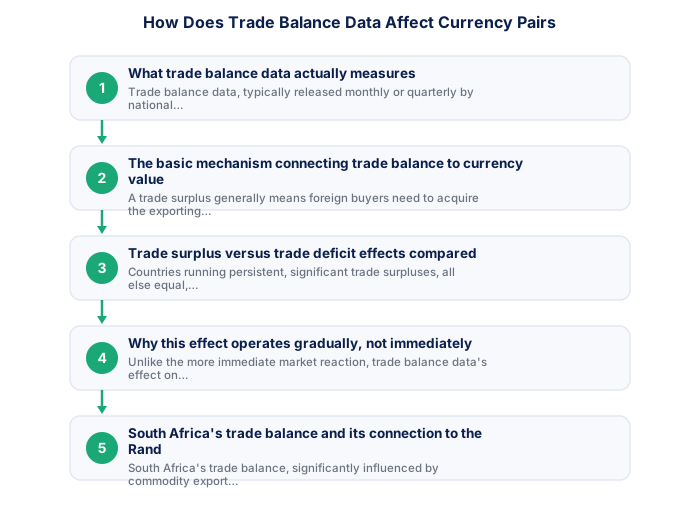
- What trade balance data actually measures
- The basic mechanism connecting trade balance to currency value
- Trade surplus versus trade deficit effects compared
- Why this effect operates gradually, not immediately
- South Africa's trade balance and its connection to the Rand
- How traders incorporate this data practically into analysis
1. What trade balance data actually measures
Trade balance data, typically released monthly or quarterly by national statistics agencies, measures the total value of a country's exports minus its imports over a specific period, a positive figure (trade surplus) means exports exceeded imports, while a negative figure (trade deficit) means imports exceeded exports.
It's worth distinguishing this measure clearly from the broader current account discussed elsewhere on this site, trade balance covers goods and services specifically, while the current account adds income flows and transfers on top, worth understanding which specific figure you're actually looking at when reviewing economic data.
2. The basic mechanism connecting trade balance to currency value
A trade surplus generally means foreign buyers need to acquire the exporting country's currency to pay for those exports, creating natural demand supporting that currency's value, while a persistent trade deficit means the importing country needs to acquire foreign currency to pay for its imports, creating natural selling pressure on its own currency relative to others.
It's worth picturing this mechanism with a concrete example, a South African mining company exporting platinum to an overseas buyer typically receives payment that eventually gets converted into Rand, meaning sustained export activity translates into genuine, ongoing Rand demand through this specific channel.
| Lot type | Size | USD/ZAR pip value | Min recommended account |
|---|---|---|---|
| Standard | 100,000 units | ~R1.00 | R100,000+ |
| Mini | 10,000 units | ~R0.10 | R10,000+ |
| Micro | 1,000 units | ~R0.01 | R1,000+ |
| Nano | 100 units | ~R0.001 | R100+ |
- V = Pip value in account currency
- E = Current exchange rate of quote vs account currency
- L = Lot size (100,000 standard / 10,000 mini / 1,000 micro)
- USD/ZAR example = 1 pip = R1 per standard lot
- Leveraged instrument
- Long and short available
- Overnight financing applies
- No ownership of asset
- Typically unleveraged
- Physical currency received
- No daily financing
- Currency ownership
3. Trade surplus versus trade deficit effects compared
Countries running persistent, significant trade surpluses, all else equal, tend to experience some structural currency support from this mechanism over time, while countries running persistent, significant trade deficits tend to experience some structural currency pressure. This is one fundamental factor among many others, rather than operating in complete isolation.
It's worth checking South Africa's current trade balance status directly from official sources rather than assuming a fixed position, since this balance can shift between surplus and deficit periods depending on commodity prices, import demand, and broader economic conditions.
4. Why this effect operates gradually, not immediately
Unlike the more immediate market reaction around interest rate decisions or major news events, trade balance data's effect on currency value tends to operate more gradually over extended periods, reflecting the accumulated effect of sustained trade patterns rather than any single month's figure typically producing dramatic, immediate currency movement on its own.
It's worth calibrating your expectations around this data release accordingly, rather than anticipating the kind of sharp, immediate reaction a surprise interest rate decision might produce, trade balance data's influence tends to accumulate gradually as part of a broader trend rather than through any single dramatic release.
5. South Africa's trade balance and its connection to the Rand
South Africa's trade balance, significantly influenced by mining export volumes and commodity prices, contributes to the broader fundamental picture relevant to USD/ZAR analysis, alongside other factors covered elsewhere in this category.
It's worth tracking this specific data alongside the commodity price trends and mining sector developments discussed elsewhere on this site, since these factors are closely interconnected, movements in one often help explain corresponding movements in the others.
6. How traders incorporate this data practically into analysis
Many traders incorporate trade balance data as a slower-moving, background fundamental input rather than a primary, immediate trading signal, tracking the general trend direction over several releases rather than reacting sharply to any single month's figure, similar to how the broader economic calendar is used for ongoing fundamental context alongside more immediately reactive scheduled events.
This data works best when combined with other fundamental factors, contributing to an overall directional view rather than serving as a standalone, sufficient basis for any specific individual trading decision.
Developed economies typically have more stable trade balances.
South Africa's trade balance can swing between surplus and deficit more dramatically than a developed economy's, given its direct exposure to commodity export prices.
★ Why It Matters
Worth checking: South Africa's trade balance can swing between surplus and deficit within the same year depending heavily on commodity export prices, making it considerably more volatile and less predictable than the trade balance of more diversified developed economies.
✕ Common mistakes
- Ignoring commodity export prices as a primary driver of this data. Price swings, not just volume changes, significantly affect the headline figure.
- Treating trade balance data as equally important across all currency pairs. Its relevance varies depending on which economies are involved.
- Not checking the data's volatility history before weighting it heavily. This series can be considerably less stable than for diversified developed economies.
Key Takeaways
- Trade balance data reflects the difference between a country's exports and imports, with persistent deficits or surpluses influencing currency value over time.
- Trade balance data reflects the difference between a country's exports and imports.
- Persistent deficits or surpluses influence currency value over time through their effect on overall demand for that currency.
- What trade balance data actually measures.
- The basic mechanism connecting trade balance to currency value.
Frequently asked follow-up questions
Does a single month's trade balance figure usually move currency significantly?
Generally not dramatically on its own, given the gradual nature of this effect, though a genuinely significant surprise relative to expectations can still produce some reaction.
Is South Africa typically a trade surplus or deficit country?
This varies over time depending on commodity prices and broader economic conditions. Checking current Statistics South Africa data gives the most accurate, current picture.
Does trade balance data matter more for some currencies than others?
Currencies of countries with significant trade exposure relative to their overall economy, including many commodity exporters, often show somewhat more sensitivity to this data than more diversified, services-heavy economies.
