i Short answer
GDP and inflation (CPI) data shape SARB policy expectations and broader investor sentiment toward South African assets.
This makes these scheduled releases genuinely relevant for traders following USD/ZAR and other Rand-denominated instruments.
📋 ON THIS PAGE
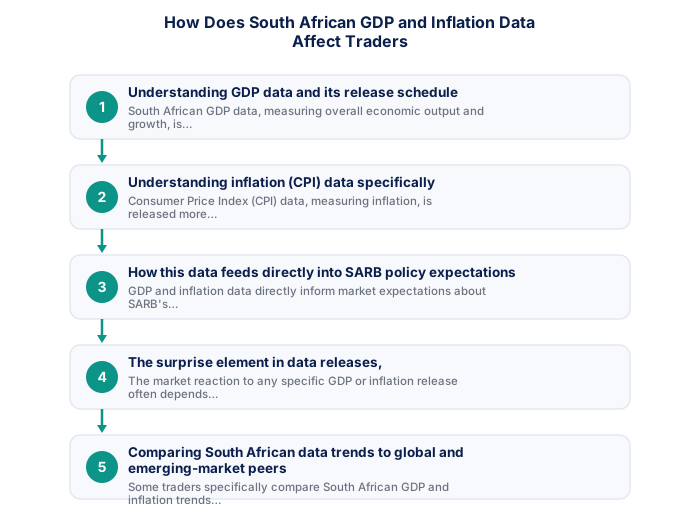
- Understanding GDP data and its release schedule
- Understanding inflation (CPI) data specifically
- How this data feeds directly into SARB policy expectations
- The surprise element in data releases
- Comparing South African data trends to global and emerging-market peers
- Practical tracking approaches for traders specifically
1. Understanding GDP data and its release schedule
South African GDP data, measuring overall economic output and growth, is released on a regular quarterly schedule by Statistics South Africa, giving a periodic, complete measure of how the broader economy is performing. Checking the scheduled release dates on an economic calendar lets traders anticipate this regularly recurring, significant data release in advance.
It's worth understanding that GDP data, unlike some other economic releases, tends to arrive with a meaningful reporting lag, the figure released today reflects economic activity from a quarter that has already ended some weeks or months earlier. This means GDP data functions more as a confirming, backward-looking check on the broader economic narrative than as fresh, forward-looking information in its own right.
2. Understanding inflation (CPI) data specifically
Consumer Price Index (CPI) data, measuring inflation, is released more frequently than GDP, typically monthly, giving more regular, ongoing insight into price pressure within the South African economy. Given SARB's inflation-targeting mandate, this more frequent data release schedule means CPI data often receives particularly close attention from traders anticipating likely SARB policy direction.
This monthly cadence means CPI data offers a more continuous stream of information for gradually updating your view on likely SARB direction, compared to GDP's more occasional, quarterly snapshot. Traders specifically focused on anticipating rate decisions often weight recent CPI trends more heavily in their analysis precisely because of this more frequent, timely release schedule.
- SARB economic calendar checked for the week
- Next Eskom load shedding schedule reviewed
- GNU stability news reviewed
- Stats SA data releases noted
- Credit agency review dates checked
- US/global events that move EM risk noted
3. How this data feeds directly into SARB policy expectations
GDP and inflation data directly inform market expectations about SARB's likely future policy decisions, tied to SARB's inflation-targeting mandate. Persistently high or rising inflation data increases the perceived likelihood of future rate hikes, while weak growth data can create competing pressure on SARB to balance inflation control against supporting broader economic activity.
This tension between competing priorities, controlling inflation versus supporting growth, is worth understanding as an ongoing balancing act rather than a simple, mechanical formula. SARB's actual decision in any given period reflects how the Committee weighs these sometimes-conflicting pressures at that specific moment, which is exactly why the accompanying policy statement discussed elsewhere often matters as much as the data itself for anticipating future direction.
| Event | Frequency | ZAR impact | Source |
|---|---|---|---|
| SARB MPC | 6x per year | High | resbank.co.za |
| Budget Speech | Annual (February) | Very high | treasury.gov.za |
| Credit reviews | Annual each agency | Very high | Agency sites |
| Stats SA CPI | Monthly | Medium | statssa.gov.za |
| Eskom stage | As needed | Low-medium | eskomsepush.com |
- SA context provides genuine informational edge
- ZAR pairs accessible via FSCA brokers in ZAR accounts
- Rand volatility creates larger intraday ranges
- 6 SARB meetings/year create regular macro setups
- Higher geopolitical risk than G10 pairs
- Load shedding creates unique operational disruptions
- SA rand liquidity thinner than major G10 pairs
- SA-specific news requires constant local monitoring
4. The surprise element in data releases
The market reaction to any specific GDP or inflation release often depends more on how the actual figure compares to prior market expectations than on the absolute figure itself in isolation. A release significantly missing or beating expectations typically produces more significant Rand movement than one closely matching what was already broadly anticipated.
This is worth internalising as a general principle across all scheduled economic data, not just GDP and inflation specifically: checking the consensus forecast figure before a release, available through most economic calendars, gives you a meaningful reference point for judging whether an actual result is likely to move markets significantly or pass with comparatively little reaction.
5. Comparing South African data trends to global and emerging-market peers
Some traders compare South African GDP and inflation trends against broader emerging-market peer trends to assess whether South Africa-specific data represents a genuinely unique domestic development or reflects broader regional or emerging-market trends affecting many similar economies simultaneously.
This comparison matters because it helps distinguish two genuinely different trading situations: a South Africa-specific development, worth analysing on its own local merits, versus a broader emerging-market or global trend simply showing up in South African data as one example among many, which might call for a different analytical response given its more widespread underlying cause.
6. Practical tracking approaches for traders specifically
Practically, incorporating South African GDP and CPI release dates into your broader economic calendar tracking, alongside comparing actual results against forecast figures upon release, supports more informed, timely reaction to these scheduled events relevant to USD/ZAR and broader Rand-denominated instrument trading.
This connects directly to the SARB's Monetary Policy Committee (MPC), which meets several times a year to set the repo rate, decisions that ripple through borrowing costs, the Rand, and market sentiment well beyond the immediate announcement.
A high CPI print that's still within SARB's target range often produces a smaller reaction than expected. A print genuinely outside that range tends to move markets more.
★ Why It Matters
Worth knowing: SARB's own stated inflation target range matters more for predicting policy reaction than the headline CPI number alone. A CPI print that's high but still within the target band tends to produce a much smaller market reaction than one that breaches it.
✕ Common mistakes
- Reacting to a high CPI print without checking SARB's target range. A high but within-range print often produces a smaller reaction than expected.
- Ignoring per-capita GDP growth in favour of the headline figure alone. Growth barely above population growth implies little real prosperity improvement.
- Assuming GDP data always produces an immediate, sharp Rand reaction. GDP is typically a slower-moving, less immediately reactive release than CPI.
- Not tracking the gap between actual and expected data. Surprises relative to forecasts tend to matter more than the absolute figures.
Key Takeaways
- GDP and inflation data shape SARB policy expectations and broader investor sentiment, making these scheduled releases genuinely relevant for USD/ZAR traders.
- GDP and inflation (CPI) data shape SARB policy expectations and broader investor sentiment toward South African assets.
- This makes these scheduled releases genuinely relevant for traders following USD/ZAR and other Rand-denominated instruments.
- Understanding GDP data and its release schedule.
- Understanding inflation (CPI) data specifically.
See also: How Did the Constitutional Court Strike Down Part of the NHI Act?.
Frequently asked follow-up questions
Where can I find official South African GDP and CPI data?
Statistics South Africa publishes this data officially. Economic calendars also aggregate and display these scheduled releases conveniently.
Does weak GDP data always weaken the Rand?
Not always immediately or mechanically, given the expectations dynamic and other simultaneous factors that can override or compound with this general tendency.
How quickly does the market typically react to these releases?
Reaction is often immediate upon release, particularly for significant surprises relative to expectations, though broader directional effects can continue developing over subsequent hours or days.
