i Short answer
SARB rate decisions directly affect the Rand's relative yield appeal to international capital and domestic borrowing costs throughout the economy.
This makes SARB decisions among the most significant scheduled events South African currency traders need to track closely, sometimes pushing USD/ZAR toward key psychological price levels in the process.
📋 ON THIS PAGE
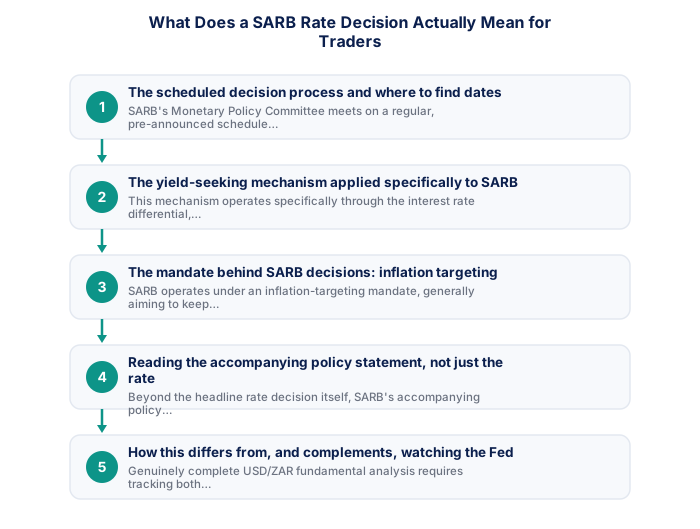
- The scheduled decision process and where to find dates
- The yield-seeking mechanism applied specifically to SARB
- The mandate behind SARB decisions: inflation targeting
- Reading the accompanying policy statement, not just the rate
- How this differs from, and complements, watching the Fed
- Practical trading considerations around SARB decisions
1. The scheduled decision process and where to find dates
SARB's Monetary Policy Committee meets on a regular, pre-announced schedule throughout the year, with specific decision dates publicly available well in advance through SARB's own official communications and through economic calendars. Checking these scheduled dates and incorporating them into your broader trading planning ensures you're not caught unaware by an upcoming significant decision.
It's worth building this into a recurring habit rather than a one-off check, adding SARB's published meeting dates for the year to whatever calendar or planning system you already use for your trading routine. Since these dates are known well in advance, there's little reason to be caught genuinely unprepared for one, unlike some other market-moving events that arrive with far less warning.
The Currency and Exchanges Act treats unauthorised offshore transfers as a serious violation. Penalties include forfeiture, fines, and potential criminal prosecution.
2. The yield-seeking mechanism applied specifically to SARB
A SARB rate hike, all else equal, makes Rand-denominated assets relatively more attractive to international yield-seeking capital, potentially supporting Rand strength, while a rate cut has the opposite tendency. This mechanism operates specifically through the interest rate differential comparing SARB's rate level against other major central banks, particularly the US Federal Reserve.
This mechanism helps explain a pattern that can otherwise seem counterintuitive: a rate hike, often associated with a slowing domestic economy and tighter financial conditions, can still coincide with Rand strength in the currency market, precisely because the higher yield on offer is what's driving international capital flow into Rand-denominated assets, a separate dynamic from how the rate hike affects the domestic economy itself.
3. The mandate behind SARB decisions: inflation targeting
SARB operates under an inflation-targeting mandate, generally aiming to keep inflation within a specific target range through its interest rate decisions. Understanding this underlying mandate helps traders anticipate likely SARB decisions based on current and forecast inflation data. Rising inflation pressure typically increases the likelihood of a rate hike, while well-contained or falling inflation reduces this likelihood.
Following the specific inflation data releases that precede each scheduled SARB decision, rather than only paying attention on the decision day itself, gives you a meaningfully better sense of what the Committee is likely to do before it's actually announced. Markets frequently price in a widely expected decision ahead of time, which is part of why the surprise element, not the decision itself, tends to drive the sharpest price reactions.
| Type | Annual limit | Tax clearance | Reset |
|---|---|---|---|
| Single Discretionary | R2,000,000 | Not required | 1 January |
| Foreign Investment | R10,000,000 | SARS compliance status required | 1 January |
| Above both limits | No fixed limit | Treasury approval required | Case by case |
4. Reading the accompanying policy statement, not just the rate
Beyond the headline rate decision itself, SARB's accompanying policy statement and the Governor's press conference commentary often provide important additional context about the Committee's broader economic assessment and likely future policy direction. This forward guidance can sometimes move markets as significantly as the headline rate decision itself, particularly if it shifts expectations about future decisions.
This is worth watching for specifically because it can produce a counterintuitive market reaction: a rate decision that matches expectations exactly can still move the Rand meaningfully if the accompanying commentary signals a more hawkish or dovish future stance than the market had anticipated, since markets tend to react to new information about the future path of policy, not just the single data point of today's decision.
- Calculate transfers made this calendar year to date
- Confirm remaining allowance before proceeding
- Obtain SARS tax clearance if using foreign investment allowance
- Contact bank FX desk with transfer details
- Retain all confirmation documents
- Record transfer in personal allowance tracker
5. How this differs from, and complements, watching the Fed
SARB decisions matter specifically for the South Africa-specific side of the interest rate differential equation, complementing rather than replacing the importance of tracking Federal Reserve decisions and policy stance. Genuinely complete USD/ZAR fundamental analysis requires tracking both institutions together, rather than focusing on either in isolation.
A practical way to keep both in view without becoming overwhelmed: track the relative direction of policy, whether SARB and the Fed are moving toward or away from each other in rate terms, rather than trying to memorise every specific rate level in isolation. It's this relative differential, not either rate viewed alone, that most directly drives the yield-seeking dynamic behind USD/ZAR movement.
6. Practical trading considerations around SARB decisions
Many traders adjust their approach around SARB decision days, some avoiding new positions immediately before the announcement given the elevated volatility and spread-widening risk, others specifically positioning to capitalise on the anticipated movement, depending on individual strategy and risk tolerance.
The SARB exchange control framework has been substantially liberalised since 2021, moving from a transaction-approval model to an outcomes-based approach. South African residents can now move meaningful amounts offshore annually through the allowance structure without requiring prior SARB approval. However, the banking system retains reporting obligations, and SARS has increasingly integrated tax compliance status into the offshore transfer process. South African traders should maintain clear records of all offshore transfers across the calendar year, both for managing cumulative allowance usage and for demonstrating compliance if either SARB or SARS requests documentation. Your bank's foreign exchange desk can confirm current limits and required documentation before any significant international transfer.
Their relative rate trajectories matter more than either in isolation.
Both SARB and Federal Reserve rate decisions directly affect USD/ZAR. The relative rate trajectory between the two matters more for currency direction than either decision viewed in isolation.
★ Why It Matters
Worth watching for beyond the headline rate itself: the SARB statement's forward guidance language, since the market often reacts more to hints about the *next* decision than to the decision that was just announced and already broadly expected.
✕ Common mistakes
- Reacting only to the rate change, ignoring forward guidance language. The hints about future decisions often move markets more than the announced one.
- Assuming a widely expected decision will still produce a significant Rand move. Expected outcomes are often already priced in beforehand.
- Treating every SARB decision as equally significant for trading. Genuine market impact depends on how it compares to prior expectations.
- Not tracking the gap between market expectation and the actual decision. This gap is usually more informative than the decision in isolation.
Does this need tax clearance?
Not below R2 million in a calendar year, which is the single discretionary allowance. Above it, SARS approval through the AIT process. Tax clearance for offshore funding covers the thresholds.
Does the SARB allowance reset at the start of each year?
Yes. Both the single discretionary allowance and the foreign investment allowance reset on 1 January each year. Amounts used in one year do not reduce the following year's limit.
Key Takeaways
- SARB rate decisions directly affect Rand yield appeal and borrowing costs domestically, making them among the most significant scheduled events for ZAR traders.
- SARB rate decisions directly affect the Rand's relative yield appeal to international capital and domestic borrowing costs throughout the economy.
- This makes SARB decisions among the most significant scheduled events South African currency traders need to track closely.
- The scheduled decision process and where to find dates.
- The yield-seeking mechanism applied specifically to SARB.
See also: How Does NHI Uncertainty Affect JSE Healthcare Stocks?.
Frequently asked follow-up questions
How often does SARB's Monetary Policy Committee meet?
SARB holds regularly scheduled meetings throughout the year; checking SARB's official publications or an economic calendar gives the current specific schedule.
Does a SARB rate hike always strengthen the Rand?
Not always or immediately, given the expectations dynamic and other factors that can override or compound with this general tendency.
Where can I find SARB's official policy statements?
SARB publishes these directly through its own official website and communications, providing the most authoritative, complete source for this information.
