i Short answer
Silver CFDs work mechanically the same way as gold CFDs, you trade price movement without owning physical metal, using the same leveraged structure.
Silver typically shows higher volatility relative to its price than gold, so risk management calibrated for gold often needs adjustment.
📋 ON THIS PAGE
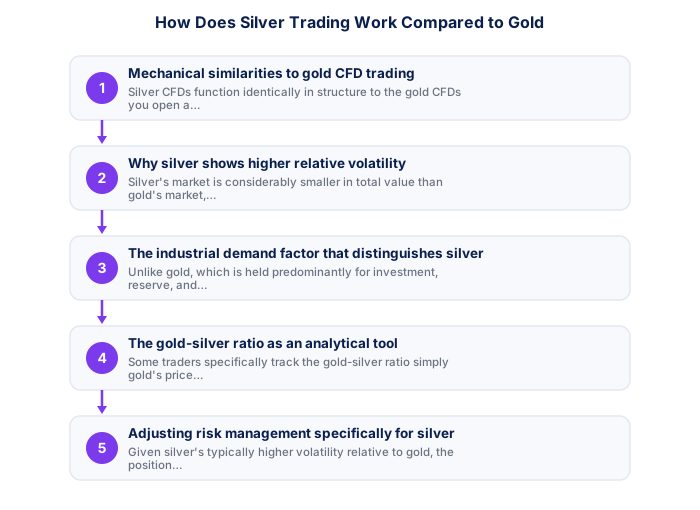
1. Mechanical similarities to gold CFD trading
Silver CFDs function identically in structure to gold CFDs, you open a position tracking silver's live price, using margin and leverage exactly as you would with gold or any other commodity CFD, with the ability to go long or short depending on your analysis. The underlying trading platform mechanics, order types, and risk management tools apply identically regardless of which specific precious metal you're trading.
This means traders already familiar with gold CFD trading mechanics can apply that same foundational understanding directly to silver, with the main adjustments needed relating specifically to silver's different volatility and market characteristics rather than any difference in the underlying trading mechanism itself.
It's worth confirming your specific broker's silver-specific spread and leverage terms directly rather than assuming they exactly mirror gold's, since even with identical underlying mechanics, brokers sometimes apply somewhat different specific terms to each individual precious metal instrument.
2. Why silver shows higher relative volatility
Silver's market is considerably smaller in total value than gold's market, meaning a given amount of buying or selling pressure tends to move silver's price by a larger percentage than the same relative pressure would move gold's price. This smaller market size, combined with silver's dual role as both a precious metal and an industrial commodity discussed next, contributes to silver's reputation for showing meaningfully higher percentage volatility than gold over comparable periods.
This higher volatility cuts both ways for traders, it can create more frequent, larger trading opportunities for those specifically seeking this characteristic, but it also means the same leverage and position sizing that feels appropriately calibrated for gold can produce disproportionately larger swings when applied without adjustment to silver specifically.
- FSCA-regulated broker verified at fsca.co.za
- Demo account tested for minimum 60 days
- Trading plan written: entry, exits, position sizing
- Risk per trade defined (1-2% of account)
- Backup internet connection tested for load shedding
- Tax implications understood
It's worth checking current, concrete volatility figures for both metals using a tool like the volatility calculator discussed elsewhere on this site, rather than relying on the general 'silver is more volatile' principle alone, seeing the actual, current numeric gap gives you a more precise basis for adjusting your risk management accordingly.
| Characteristic | Gold (XAU/USD) | Silver (XAG/USD) |
|---|---|---|
| Primary driver | Safe-haven demand, USD strength, real rates | Industrial demand + safe-haven flows |
| Typical daily volatility | Lower: more stable range | Higher: can move 3-5× gold's % move |
| Liquidity | Extremely high | Good but thinner than gold |
| Spread at most brokers | Very tight | Slightly wider |
| Correlation with equities | Negative (risk-off) | Mixed: partly positive in risk-on |
| ZAR sensitivity | High: South Africa is major producer | Moderate |
| Industrial use component | ~10% of demand | ~50% of demand |
| CFD pip value | Typically USD per 0.01 move | Typically USD per 0.01 move (smaller) |
3. The industrial demand factor that distinguishes silver
Unlike gold, which is held predominantly for investment, reserve, and jewellery purposes with relatively limited industrial use, silver has substantial industrial demand, used extensively in electronics, solar panel manufacturing, and various other industrial applications. This means silver's price responds not just to the investment-demand and safe-haven factors relevant to gold, but also to genuine industrial demand cycles tied to global manufacturing and technology trends.
This dual demand driver (investment plus industrial) makes silver's price behaviour somewhat more complex to analyse than gold's more purely investment-driven price action, since traders need to consider both the macro, safe-haven-style factors relevant to gold and the more industrial-cycle-driven factors specific to silver's broader demand base.
It's worth following industrial demand trends, particularly related to electronics and renewable energy technology given silver's use in these sectors, as part of your broader silver analysis, this adds a genuinely distinct research dimension beyond what gold analysis alone typically requires.
4. The gold-silver ratio as an analytical tool
Some traders specifically track the gold-silver ratio, simply gold's price divided by silver's price, as an analytical tool for assessing relative valuation between the two metals and informing trading decisions about which metal might be relatively more attractively priced at a given point. Historically, this ratio has fluctuated within certain ranges, and some traders use significant deviations from historical norms as a signal worth investigating further, though, like any single technical or analytical signal, this shouldn't be relied upon in isolation without broader context.
This ratio-based approach represents one specific analytical technique some precious metals traders use, illustrating how trading multiple related instruments, silver and gold together, in this case, can sometimes open up additional analytical approaches beyond what's available when focusing on a single instrument in isolation.
| Item | Detail |
|---|---|
| Regulator | FSCA, fsca.co.za |
| Exchange control | SARB, resbank.co.za |
| Tax authority | SARS, sars.gov.za |
| JSE hours | 09:00-17:00 SAST Mon-Fri |
| Best forex session | 15:00-17:00 SAST |
| CGT annual exclusion | R50,000 (individuals) |
It's worth tracking this ratio's historical range over time before drawing conclusions from any single current reading, understanding where the ratio has typically sat historically gives you useful context for judging whether a current reading genuinely represents an unusual extreme worth acting on.
5. Adjusting risk management specifically for silver
Given silver's typically higher volatility relative to gold, position sizing calculations require specific recalculation for silver rather than simply applying the same position size you might use for a comparable gold trade. A stop-loss distance that felt appropriately calibrated based on gold's typical movement may be triggered considerably more often, or may represent disproportionately larger monetary risk, if applied without adjustment to silver's typically larger percentage swings.
This is a specific, practical illustration of a broader principle: risk management calculations need to be performed individually for each specific instrument based on its own particular volatility characteristics, rather than assuming a single risk approach transfers directly and safely across genuinely different instruments.
It's worth recalculating your position size explicitly for silver each time, rather than applying a rough mental adjustment based on your gold position sizing habits, a specific, deliberate calculation using silver's own current volatility figures protects against the kind of miscalibrated risk that carrying over assumptions from a different instrument can produce.
6. Why some traders specifically prefer trading silver
Despite, or sometimes specifically because of, its higher volatility, some traders prefer silver precisely for the more frequent, larger trading opportunities this characteristic can create, provided their risk management is properly calibrated to account for it. Others are drawn to silver's relatively lower absolute price per unit compared to gold, which can make certain position sizing calculations feel more intuitive, though this is more a matter of personal preference than a genuine analytical advantage.
Whether silver or gold (or both) suits your specific trading approach depends on your personal risk tolerance, your interest in the additional industrial-demand analytical dimension silver introduces, and your broader strategy's compatibility with each metal's distinct volatility profile, there's no universally correct choice between them, making this a matter of individual fit rather than one metal being objectively superior to the other.
Gold is primarily a store-of-value asset. Silver carries that same role but also has real industrial demand, a genuine driver gold doesn't share.
★ Why It Matters
A ratio worth knowing: the gold-silver ratio (how many ounces of silver equal one ounce of gold) has historically moved in a fairly defined range, some traders watch for it reaching an extreme as a signal that one metal may be statistically overextended relative to the other.
✕ Common mistakes
- Applying gold-calibrated risk management directly to silver. Silver typically shows higher volatility relative to its price than gold.
- Ignoring industrial demand as a price driver for silver specifically. Unlike gold, silver has meaningful industrial use cases affecting demand.
- Assuming the gold-silver ratio behaves identically across all market conditions. This relationship can shift meaningfully during different market regimes.
- Sizing silver positions the same as gold without adjustment. Different volatility profiles warrant different position sizing.
Key Takeaways
- Silver CFDs work similarly to gold CFDs but typically show higher volatility relative to price. Learn the key differences South African traders should know.
- Silver CFDs work mechanically the same way as gold CFDs, you trade price movement without owning physical metal, using the same leveraged structure.
- Silver typically shows higher volatility relative to its price than gold, so risk management calibrated for gold often needs adjustment.
- Mechanical similarities to gold CFD trading.
- Why silver shows higher relative volatility.
See also: Why Is SAA Accepting Bitcoin for Flights, and What It Means.
Frequently asked follow-up questions
Is silver riskier than gold to trade?
Silver typically shows higher percentage volatility, which generally translates to higher practical risk if position sizing isn't specifically adjusted to account for this characteristic.
Does the same economic news affect both gold and silver similarly?
There's significant overlap given shared precious-metal investment demand drivers, though silver's additional industrial demand component means it can also respond to manufacturing and technology-sector news that doesn't affect gold in the same way.
Can I trade the gold-silver ratio directly as an instrument?
Some platforms or specialised products may offer this directly, though most retail traders approximate this analytically by tracking both individual instruments and trading each separately based on their own analysis.
