i Short answer
Signs of spending too much time on trading include regularly exceeding your own planned time limits, neglecting other responsibilities or relationships, and compulsively checking charts outside scheduled windows.
📋 ON THIS PAGE
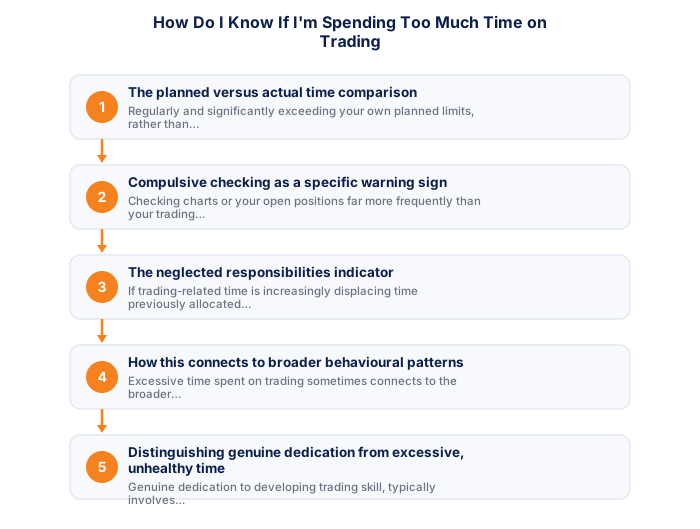
- The planned versus actual time comparison
- Compulsive checking as a specific warning sign
- The neglected responsibilities indicator
- How this connects to broader behavioural patterns
- Distinguishing genuine dedication from excessive, unhealthy time
- Practical steps if you recognise these signs in yourself
1. The planned versus actual time comparison
Comparing the time you actually spend on trading-related activity against the time you originally planned or intended provides a concrete, honest benchmark. Regularly and significantly exceeding your own planned limits, rather than occasionally going slightly over during a particularly active period, suggests a genuine pattern worth examining.
It's worth actually tracking this concretely for a week or two, rather than relying on a general impression, a simple log of when you actually engage with trading-related activity, compared honestly against your intended schedule, often reveals a larger gap than most people initially assume exists.
2. Compulsive checking as a specific warning sign
Checking charts or your open positions far more frequently than your trading style's genuine monitoring needs require, particularly if this checking feels difficult to resist rather than a deliberate, considered choice, represents a specific, recognisable warning sign distinct from simply being an engaged, attentive trader.
It's worth noticing the specific feeling that precedes an urge to check, if it's driven by genuine, scheduled monitoring need, that's different from a restless, anxiety-driven impulse to check simply for the sake of checking, the second pattern is worth treating as the more concerning signal.
- FSCA-regulated broker verified at fsca.co.za
- Demo account tested for minimum 60 days
- Trading plan written: entry, exits, position sizing
- Risk per trade defined (1-2% of account)
- Backup internet connection tested for load shedding
- Tax implications understood
3. The neglected responsibilities indicator
If trading-related time is increasingly displacing time previously allocated to work responsibilities, family relationships, or other important personal commitments, this displacement itself represents a meaningful indicator that trading time has grown disproportionate relative to its place within your broader life priorities.
It's worth asking people close to you honestly whether they've noticed this pattern, sometimes an outside perspective catches a gradual drift that's harder to see clearly from inside your own daily experience, worth being genuinely open to their observation rather than dismissing it defensively.
4. How this connects to broader behavioural patterns
Excessive time spent on trading sometimes connects to the broader psychological patterns, using trading as an emotional escape, or experiencing the kind of compulsive checking behaviour that can resemble patterns seen in other behavioural concerns, making this worth taking seriously rather than dismissing as simply enthusiasm or dedication.
It's worth being honest with yourself about which specific pressures or discomforts trading might be helping you avoid, if this pattern genuinely describes your situation, since recognising the underlying function this excessive engagement serves is often the necessary first step toward genuinely addressing it.
| Item | Detail |
|---|---|
| Regulator | FSCA, fsca.co.za |
| Exchange control | SARB, resbank.co.za |
| Tax authority | SARS, sars.gov.za |
| JSE hours | 09:00-17:00 SAST Mon-Fri |
| Best forex session | 15:00-17:00 SAST |
| CGT annual exclusion | R50,000 (individuals) |
5. Distinguishing genuine dedication from excessive, unhealthy time
Genuine dedication to developing trading skill, typically involves structured, time-bounded study and practice that respects other life priorities, while excessive, unhealthy time investment typically involves the kind of boundary violations and compulsive elements, representing a meaningfully different pattern despite both potentially involving substantial total time.
It's worth checking this distinction against your own written time boundaries specifically, discussed elsewhere on this site, genuine dedication respects the boundaries you've deliberately set for yourself, while the unhealthy pattern tends to involve consistently exceeding them despite your own stated intentions.
6. Practical steps if you recognise these signs in yourself
If you recognise these signs in your own trading-related behaviour, revisiting and more strictly enforcing the time boundaries, openly discussing the pattern with family or trusted friends, and considering whether the broader psychological factors might be contributing, represent reasonable, constructive responses worth taking seriously.
In South African time (SAST, which is GMT+2 year-round), the London session typically opens around 09:00-10:00 and the New York session around 15:00-16:00, so the overlap between roughly 15:00 and 17:00 SAST tends to bring the highest liquidity and volatility for major forex pairs.
Comparing the time you actually spend on trading-related activity against your originally planned budget is the most direct way to spot whether it's quietly grown beyond intentions.
★ Why It Matters
A test worth applying honestly: would you describe your chart-checking as something you choose to do, or something you feel you have to do, that distinction between deliberate engagement and compulsive checking is often a clearer signal than the raw number of hours involved.
✕ Common mistakes
- Estimating screen time from memory rather than checking objectively. Most traders underestimate their actual time once it's measured directly.
- Treating compulsive checking as simple diligence. There's a meaningful difference between deliberate engagement and compulsive checking.
- Not setting any explicit time boundary to measure against. Without a boundary, it's hard to recognise when it's been crossed.
Key Takeaways
- Signs include trading time exceeding planned limits regularly, neglecting other responsibilities, and checking charts compulsively outside scheduled windows.
- Signs of spending too much time on trading include regularly exceeding your own planned time limits, neglecting other responsibilities or relationships, and compulsively checking charts outside scheduled windows.
- The planned versus actual time comparison.
- Compulsive checking as a specific warning sign.
- The neglected responsibilities indicator.
Frequently asked follow-up questions
Is spending several hours daily on trading always excessive?
Not necessarily. This depends on your specific trading style, and whether this time aligns with your own planned, deliberate allocation rather than indicating loss of control.
Should I feel guilty about time spent learning to trade?
Time spent on genuine, structured learning is different from the excessive, compulsive patterns discussed in this piece, and guilt isn't necessarily warranted for dedicated study.
Can excessive trading time affect my physical health?
Yes, prolonged screen time and disrupted sleep or activity patterns can have genuine physical health effects, making this an additional consideration alongside the psychological factors above.
