i Short answer
A completion certificate confirms you finished a specific course, not that the underlying content was genuinely high-quality or that the issuing body carries meaningful authority.
📋 ON THIS PAGE
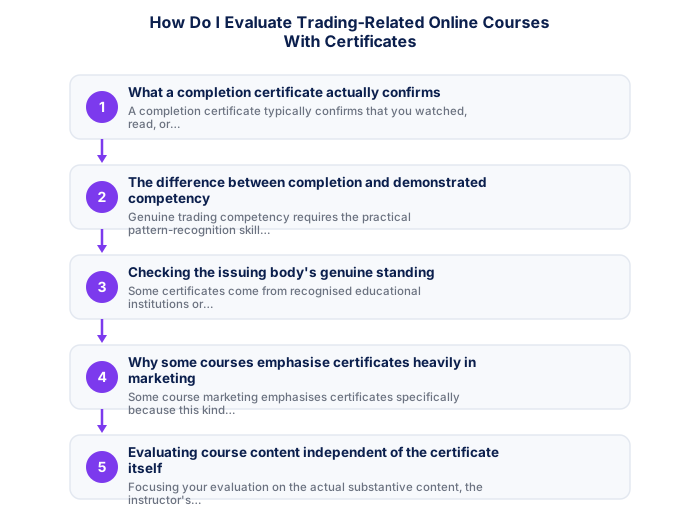
- What a completion certificate actually confirms
- The difference between completion and demonstrated competency
- Checking the issuing body's genuine standing
- Why some courses emphasise certificates heavily in marketing
- Evaluating course content independent of the certificate itself
- A practical approach to certificate-bearing courses
1. What a completion certificate actually confirms
A completion certificate typically confirms that you watched, read, or otherwise progressed through a course's specific content to its end, sometimes including passing a basic quiz or assessment, this confirms engagement and completion, but doesn't independently verify that you've genuinely retained or can effectively apply the material in real trading conditions.
It's worth being clear-eyed about this distinction specifically because a certificate can create a false sense of accomplishment that doesn't match your actual, practical trading readiness, finishing a course and genuinely being able to apply its content skilfully under real market conditions are two different achievements worth evaluating separately.
| Aspect | What It Confirms | What It Doesn't Confirm |
|---|---|---|
| Course completion | Yes | Genuine competency |
| Issuing body standing | Only if genuinely reputable | Automatic credibility |
| Practical skill | No | Requires demonstrated trading discipline |
2. The difference between completion and demonstrated competency
Genuine trading competency requires the practical pattern-recognition skill and psychological discipline, which a course completion certificate, by its nature, cannot directly verify or guarantee, regardless of how much content was covered.
It's worth building your own, more meaningful evidence of competency after completing any course, accumulated demo trading results applying what you learned, or a documented trading journal showing consistent application of the concepts, gives you considerably more genuine confirmation of actual skill than the certificate itself ever could.
- Search FSP name or number at fsca.co.za
- Confirm licence is current and not suspended
- Check scope covers forex and CFD activity
- Confirm client funds in segregated accounts
- Read FSCA enforcement actions history
- Test customer support before depositing
- Client funds legally segregated
- FSCA complaints process available
- SA consumer protections apply
- ZAR account, no FX conversion costs
- Some offshore brokers offer wider instruments
- Regulatory overhead passed on in spreads
- Stricter position limits for retail clients
- FICA verification required before trading
- Client funds segregated
- Formal FSCA complaints process
- SA consumer protections apply
- ZAR account available
- Fund safety not guaranteed
- Overseas disputes only
- SA law does not apply
- Currency conversion costs
3. Checking the issuing body's genuine standing
Some certificates come from genuinely recognised educational institutions or industry bodies, carrying more meaningful external weight, while others are issued by the course provider itself without any broader, independent recognition, checking whether the issuing body has genuine standing beyond simply being the same entity selling the course provides useful additional context.
It's worth doing a quick, independent search on the issuing body itself before assuming a certificate carries meaningful external weight, a genuinely recognised institution has a verifiable public reputation and history, while a certificate issued purely by the course provider under an impressive-sounding name warrants more scepticism.
4. Why some courses emphasise certificates heavily in marketing
Some course marketing emphasises certificates specifically because this kind of tangible credential feels appealing to prospective students, even when the certificate itself carries limited genuine external recognition or practical value beyond confirming course completion.
It's worth noticing when a course's marketing leads with the certificate rather than the substantive skills you'll actually develop, that emphasis itself is a useful signal worth paying attention to, since genuinely valuable educational content tends to be marketed primarily on its content, not on the credential attached to finishing it.
| Protection | FSCA Regulated | Offshore Unregulated |
|---|---|---|
| Client fund segregation | ✓ Required | Varies by broker |
| SA complaints process | ✓ Available | ✗ Not available |
| SA consumer law applies | ✓ Yes | ✗ No |
| ZAR account available | ✓ Typically | Often USD/EUR only |
5. Evaluating course content independent of the certificate itself
Focusing your evaluation on the actual substantive content, the instructor's verifiable credibility, and independent reviews, provides more meaningful information about a course's genuine value than the presence or absence of an accompanying completion certificate alone.
It's worth applying the same evaluation criteria used for any other trading educator discussed throughout this site's education content, verifiable instructor background, balanced discussion of risk, substantive rather than hype-driven content, regardless of whether a certificate happens to be attached to the course in question.
6. A practical approach to certificate-bearing courses
Treating any accompanying certificate as a minor, secondary feature rather than a primary reason for choosing a specific course, while applying the same substantive content and credibility evaluation as the genuinely important factor, supports more informed course selection decisions.
A completion certificate confirms you progressed through material, not genuine trading competency. Substantive content and instructor credibility matter far more than the certificate itself.
★ Why It Matters
Worth checking directly: search whether the certifying body itself is recognised by any independent financial education or industry association, a surprising number of trading 'certifications' are issued by the same company selling the course, with no external accreditation at all.
✕ Common mistakes
- Assuming any certificate implies external accreditation. Many are issued by the same company selling the course, with no outside body involved.
- Not checking whether the certifying body has independent recognition. This single check clarifies a certificate's real-world weight.
- Valuing the certificate over the actual skills developed. Practical competence matters more than a credential for trading outcomes.
- Choosing a course based on certificate prestige rather than content quality. The two aren't reliably linked in this particular industry.
Key Takeaways
- A completion certificate confirms you finished a course, not that the content was genuinely high-quality or that the issuing body carries meaningful authority.
- A completion certificate confirms you finished a specific course, not that the underlying content was genuinely high-quality or that the issuing body carries meaningful authority.
- What a completion certificate actually confirms.
- The difference between completion and demonstrated competency.
- Checking the issuing body's genuine standing.
See also: What Is the Value of Trading Certifications? and Are Paid Trading Courses Worth It? and What Is the Value of Paper Trading Competitions?.
Frequently asked follow-up questions
Can a trading course certificate help with employment applications?
This depends on the issuing body's genuine recognition within the relevant industry context; checking this directly with potential employers or industry standards provides clearer guidance for your specific situation.
Should I avoid courses that don't offer a certificate?
No, certificate presence or absence shouldn't be a primary selection factor. Substantive content and credibility evaluation matter considerably more.
Does a certificate from a well-known platform carry more weight than from an individual instructor?
This can vary; some individual instructors carry significant genuine credibility despite not issuing certificates through a larger platform, making independent evaluation more useful than platform reputation alone.
