i Short answer
Distinguishing genuine mistakes from normal statistical variance, then deliberately addressing specific identified causes through your trading journal, supports building genuine resilience over time.
📋 ON THIS PAGE
- Distinguishing genuine mistakes from normal variance
- Conducting an honest post-mortem review of recent mistakes
- Identifying specific patterns rather than vague self-criticism
- Making concrete process adjustments based on this review
- Rebuilding confidence through small, demonstrated wins
- When to consider a more significant pause or reset
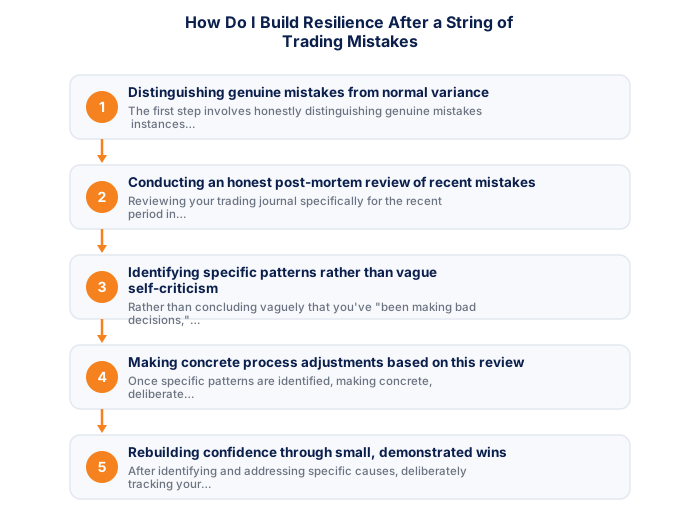
1. Distinguishing genuine mistakes from normal variance
The first step involves honestly distinguishing genuine mistakes, instances where you deviated from your predetermined strategy criteria or risk management rules, from losses that occurred despite correctly following your tested process, which represent normal variance rather than genuine error.
This distinction is worth applying with real rigour, since it's tempting to label every loss a mistake purely because it hurt, or conversely to excuse every genuine deviation as 'just normal variance' to avoid uncomfortable self-scrutiny. Neither shortcut serves you well; the honest, sometimes uncomfortable middle ground is what this review process is actually for.
2. Conducting an honest post-mortem review of recent mistakes
Reviewing your trading journal specifically for the recent period in question, with genuine honesty about what happened and why, rather than either excessive self-criticism or minimising what occurred, provides the necessary foundation for the constructive analysis that follows.
It's worth doing this review at a scheduled, deliberate time rather than in the immediate emotional aftermath of the mistakes themselves, giving yourself a short period to settle before conducting the review tends to produce a more balanced, genuinely useful analysis than one conducted while still feeling the sting of recent losses.
- FSCA-regulated broker verified at fsca.co.za
- Demo account tested for minimum 60 days
- Trading plan written: entry, exits, position sizing
- Risk per trade defined (1-2% of account)
- Backup internet connection tested for load shedding
- Tax implications understood
3. Identifying specific patterns rather than vague self-criticism
Rather than concluding vaguely that you've "been making bad decisions," identifying specific, concrete patterns, perhaps consistently entering before your full criteria were met, or specifically struggling with discipline during a particular time of day or market condition, provides considerably more actionable information than generalised self-criticism alone.
It's worth writing these specific patterns down explicitly rather than simply noting them mentally, a concrete, written pattern, 'I entered early on three of my last five trades, all during Friday afternoon sessions,' is something you can actually track and address, while a vague sense of 'making bad decisions' gives you nothing specific to work with.
4. Making concrete process adjustments based on this review
Once specific patterns are identified, making concrete, deliberate adjustments, strengthening a specific checklist item, adjusting your trading schedule to avoid a particularly difficult time period, or building in an additional structural safeguard, translates this honest review into genuine, forward-looking improvement.
It's worth making these adjustments genuinely specific and testable, rather than vague resolutions like 'be more careful,' an adjustment like 'add a mandatory five-minute pause before confirming any entry' gives you something concrete to actually implement and later verify whether you're following consistently.
| Item | Detail |
|---|---|
| Regulator | FSCA, fsca.co.za |
| Exchange control | SARB, resbank.co.za |
| Tax authority | SARS, sars.gov.za |
| JSE hours | 09:00-17:00 SAST Mon-Fri |
| Best forex session | 15:00-17:00 SAST |
| CGT annual exclusion | R50,000 (individuals) |
5. Rebuilding confidence through small, demonstrated wins
After identifying and addressing specific causes, deliberately tracking your adherence to these adjusted process rules over a subsequent series of trades, rather than focusing purely on financial outcomes during this rebuilding period, helps demonstrate genuine, measurable improvement that supports rebuilding confidence on a more solid, evidence-based foundation.
It's worth being patient with this rebuilding process rather than expecting confidence to return immediately once you've identified what went wrong, genuine trust in your own discipline rebuilds gradually through accumulated evidence, discussed in more detail regarding self-trust elsewhere on this site, not through insight alone however clear that insight might be.
6. When to consider a more significant pause or reset
If this honest review reveals a more fundamental, persistent pattern rather than a few isolated lapses, considering a more significant pause, to more thoroughly rebuild discipline, perhaps returning temporarily to demo trading, before resuming live trading, reflects appropriately serious, proportionate response to a more substantial underlying issue.
Honestly distinguishing genuine mistakes, where you deviated from your own rules, from normal statistical variance is the first step toward building real resilience.
★ Why It Matters
A useful filter we'd suggest: before reacting to a losing streak, check whether your win rate and average loss size over that stretch are actually outside your strategy's normal historical range, or just at the unlucky end of a range you'd already accepted.
✕ Common mistakes
- Reacting to a losing streak before checking if it's statistically normal. Many losing streaks fall within a sound strategy's expected range.
- Treating every loss as a fundamental flaw in your approach. This conflates normal variance with genuine strategy failure.
- Avoiding the journal during difficult periods. This is exactly when journaling provides the most useful information.
- Making major strategy changes based on a small sample of losses. Reactive changes after a short stretch rarely improve long-term results.
Key Takeaways
- Distinguishing genuine mistakes from normal variance, then deliberately addressing specific identified causes, supports genuine resilience over time.
- Distinguishing genuine mistakes from normal statistical variance, then deliberately addressing specific identified causes through your trading journal, supports building genuine resilience over time.
- Distinguishing genuine mistakes from normal variance.
- Conducting an honest post-mortem review of recent mistakes.
- Identifying specific patterns rather than vague self-criticism.
See also: How Do I Deal With Losing Streaks Without Losing Confidence? and What Is the Endowment Effect, and Does It Apply to Trading?.
Frequently asked follow-up questions
How do I know if I'm being too hard on myself about mistakes?
If your self-assessment focuses on vague, global judgements rather than specific, addressable patterns, this may indicate excessive self-criticism rather than constructive analysis.
Should I expect to never make trading mistakes again after this process?
No, occasional mistakes remain a normal part of trading. The goal is reducing their frequency and severity through genuine, ongoing learning, not eliminating them entirely.
Is it normal to feel less confident after a string of mistakes?
Yes, this is a common, understandable reaction. The resilience-building process outlined above is specifically designed to help rebuild confidence on a more solid, evidence-based foundation over time.
