i Short answer
Self-trust grows through consistently honouring predetermined commitments to yourself over time, rather than through any single trade's outcome or a fleeting feeling of confidence.
📋 ON THIS PAGE
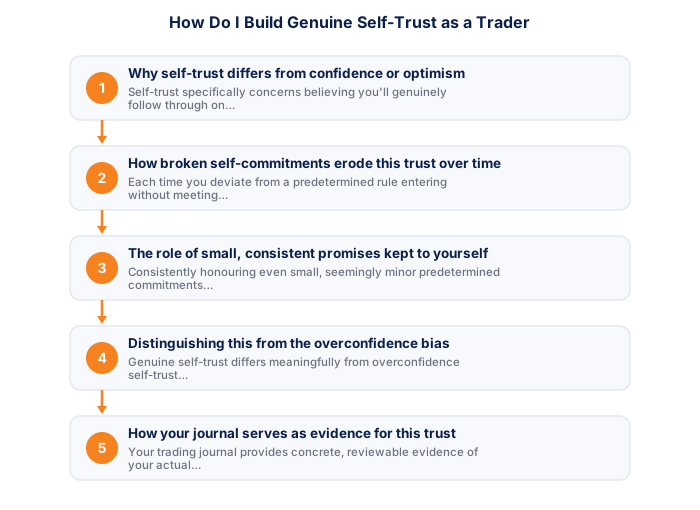
- Why self-trust differs from confidence or optimism
- How broken self-commitments erode this trust over time
- The role of small, consistent promises kept to yourself
- Distinguishing this from overconfidence bias
- How your journal serves as evidence for this trust
- Rebuilding self-trust after a significant discipline lapse
1. Why self-trust differs from confidence or optimism
Self-trust specifically concerns believing you'll genuinely follow through on your own predetermined commitments and rules, distinct from general confidence or optimism about trading outcomes. You can feel confident about a strategy's potential while genuinely doubting your own ability to consistently execute it with discipline, and this specific gap is what self-trust addresses.
This distinction is worth applying as a genuine diagnostic tool for yourself: if you notice hesitation or anxiety before trades despite genuinely believing your strategy has merit, that gap often points specifically to self-trust rather than strategy confidence, a subtly different problem requiring a different solution than simply reviewing your strategy's statistics again.
2. How broken self-commitments erode this trust over time
Each time you deviate from a predetermined rule, entering without meeting your checklist criteria, ignoring a predetermined stop-loss, genuinely erodes this internal trust, similar to how repeatedly breaking promises to another person would erode their trust in you specifically.
It's worth noticing how this erosion tends to compound quietly rather than dramatically, a single rule violation rarely feels catastrophic in the moment, but a pattern of repeated small violations accumulates into a genuine, felt sense that your own commitments aren't reliable, exactly the outcome this section is describing.
- FSCA-regulated broker verified at fsca.co.za
- Demo account tested for minimum 60 days
- Trading plan written: entry, exits, position sizing
- Risk per trade defined (1-2% of account)
- Backup internet connection tested for load shedding
- Tax implications understood
3. The role of small, consistent promises kept to yourself
Consistently honouring even small, seemingly minor predetermined commitments, sticking to your daily trade limit, completing your journal entry every time, gradually builds this internal trust through accumulated, demonstrated evidence rather than through any single, dramatic act of discipline.
It's worth starting with commitments genuinely small enough that keeping them consistently feels achievable, rather than immediately attempting large, demanding commitments that are more likely to be broken, building this trust incrementally through consistently kept smaller promises tends to be more reliable than attempting to leap straight to major, more difficult ones.
4. Distinguishing this from overconfidence bias
Genuine self-trust differs meaningfully from overconfidence. Self-trust concerns believing you'll honour your own process and rules, while overconfidence concerns overestimating your predictive accuracy about market outcomes themselves, a genuinely different claim with different, separate evidence requirements.
It's worth holding both awareness simultaneously, working to build genuine self-trust in your process while remaining appropriately humble about your predictive accuracy regarding actual market outcomes, since strengthening one without corresponding awareness of the other risks inadvertently drifting from healthy self-trust into the overconfidence this distinction is meant to guard against.
| Item | Detail |
|---|---|
| Regulator | FSCA, fsca.co.za |
| Exchange control | SARB, resbank.co.za |
| Tax authority | SARS, sars.gov.za |
| JSE hours | 09:00-17:00 SAST Mon-Fri |
| Best forex session | 15:00-17:00 SAST |
| CGT annual exclusion | R50,000 (individuals) |
5. How your journal serves as evidence for this trust
Your trading journal gives concrete, reviewable evidence of your actual track record honouring predetermined commitments, giving self-trust a genuine, evidence-based foundation rather than relying on a vague, unverified sense of your own discipline.
It's worth reviewing this evidence specifically during moments of self-doubt, rather than only during routine review sessions, pulling up your actual track record of kept commitments during a moment of genuine hesitation gives concrete, reassuring evidence considerably more persuasive than trying to simply talk yourself into confidence abstractly.
6. Rebuilding self-trust after a significant discipline lapse
Rebuilding self-trust after a significant lapse requires the same kind of gradual, evidence-based process, consistently honouring commitments again over a meaningful subsequent period, rather than expecting trust to return instantly simply through good intentions alone.
The mechanism is loss aversion: the two outcomes are not weighted equally, even when the amounts are.
Consistent adherence to your own rules is what rebuilds it.
Each deviation from a predetermined rule erodes self-trust, while consistently following your own checklist criteria is what gradually rebuilds it.
★ Why It Matters
Worth noting: self-trust seems to grow faster from honouring small, low-stakes commitments to yourself, like a predetermined session end time, than from any single well-executed high-stakes trade. Consistency in small things appears to generalise.
✕ Common mistakes
- Tying self-trust entirely to your most recent trade's outcome. A single result is a poor foundation for ongoing confidence.
- Expecting self-trust to arrive before taking any action. It tends to develop through repeated, honoured commitments over time.
- Not reviewing your own track record of following through on rules. This record is the actual evidence self-trust should be based on.
Key Takeaways
- Self-trust grows through consistently honouring predetermined commitments to yourself over time, rather than through any single trade's outcome or feeling of confidence.
- Self-trust grows through consistently honouring predetermined commitments to yourself over time, rather than through any single trade's outcome or a fleeting feeling of confidence.
- Why self-trust differs from confidence or optimism.
- How broken self-commitments erode this trust over time.
- The role of small, consistent promises kept to yourself.
See also: How Do I Build Discipline as a New Trader? and How Do I Build Resilience After a String of Trading Mistakes?.
Frequently asked follow-up questions
Can self-trust be rebuilt quickly after a significant lapse?
Generally not instantly. This requires the same gradual, evidence-based process, consistently honouring commitments again over a meaningful subsequent period.
Does high self-trust mean I'll never break a predetermined rule again?
Not necessarily perfectly, though genuine self-trust reflects a strong, demonstrated track record overall, rather than requiring absolute, flawless perfection.
How is this different from simply having a positive mindset?
Self-trust is specifically grounded in demonstrated, evidence-based behaviour, rather than purely a positive feeling or mindset disconnected from actual track record.
