i Short answer
Civil law addresses financial disputes seeking compensation between private parties.
Criminal law addresses genuine fraud or theft prosecuted by the state, with different processes and potential penalties.
📋 ON THIS PAGE
1. The fundamental purpose difference between these systems
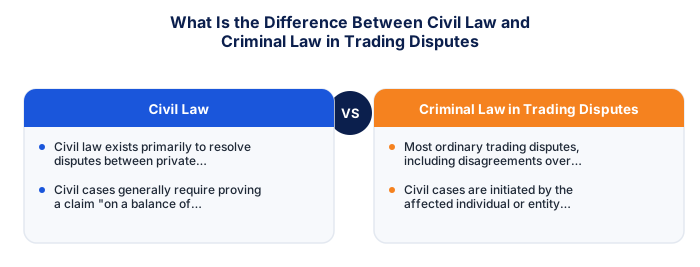
Civil law exists primarily to resolve disputes between private parties and provide compensation for genuine loss, while criminal law exists to punish conduct the state considers a genuine offence against society broadly, with imprisonment or fines payable to the state representing the typical outcome rather than direct compensation to the affected individual.
It's worth keeping this fundamental purpose distinction in mind whenever considering legal action, criminal law addresses society's broader interest in punishing wrongdoing, while civil law addresses your specific, personal interest in being made financially whole again.
See also: How Has Load Shedding Affected the Rand?
| Feature | Civil Law | Criminal Law |
|---|---|---|
| Purpose | Compensate the affected party | Punish wrongdoing on society's behalf |
| Who brings the case | You, the affected trader | The state |
| Burden of proof | Balance of probabilities (lower) | Beyond reasonable doubt (higher) |
| Typical trading scenario | Service failure, ordinary dispute | Deliberate fraud, market manipulation |
| Possible outcome | Financial compensation | Fines, imprisonment |
2. When a trading dispute might involve criminal conduct
Most ordinary trading disputes, including disagreements over execution quality or contract interpretation, remain firmly within civil law's domain. Criminal conduct specifically arises in more serious circumstances, genuine fraud, theft of client funds, or deliberate market manipulation, representing a meaningfully higher threshold than typical service disagreements.
It's worth understanding that most ordinary trading disputes, a disagreement about execution quality or a service failure, generally remain within civil territory, criminal conduct typically requires something more deliberate and serious, like genuine fraud, discussed elsewhere on this site regarding scam patterns.
- FSCA-regulated broker verified at fsca.co.za
- Demo account tested for minimum 60 days
- Trading plan written: entry, exits, position sizing
- Risk per trade defined (1-2% of account)
- Backup internet connection tested for load shedding
- Tax implications understood
3. The different burden of proof standards
Civil cases generally require proving a claim "on a balance of probabilities," a comparatively lower threshold, while criminal cases require proof "beyond reasonable doubt," a considerably higher standard reflecting the serious consequences criminal conviction carries, this difference partly explains why some conduct might fail to result in criminal prosecution while still supporting a successful civil claim.
It's worth understanding why this distinction matters practically, the higher criminal standard means criminal cases can be harder to successfully bring, while the civil standard's lower bar makes civil action a more accessible route for many genuine trading disputes.
4. Who initiates each type of case
Civil cases are initiated by the affected individual or entity themselves, typically through their own attorney, while criminal cases are initiated by the state, through bodies like the South African Police Service and the National Prosecuting Authority, following a report or investigation into the alleged criminal conduct.
It's worth understanding this distinction clearly if you're considering reporting potentially criminal conduct, you can report suspected fraud to relevant authorities, but the decision to actually prosecute rests with the state, not with you as the individual affected trader.
| Item | Detail |
|---|---|
| Regulator | FSCA, fsca.co.za |
| Exchange control | SARB, resbank.co.za |
| Tax authority | SARS, sars.gov.za |
| JSE hours | 09:00-17:00 SAST Mon-Fri |
| Best forex session | 15:00-17:00 SAST |
| CGT annual exclusion | R50,000 (individuals) |
5. Can the same conduct trigger both processes
Yes, genuinely serious misconduct, a broker fraudulently misappropriating client funds, for example, could potentially trigger both a criminal investigation and prosecution by the state, and a separate civil claim by affected clients seeking direct compensation, since these two legal systems operate independently and address different questions and remedies.
It's worth understanding that pursuing one path doesn't automatically preclude the other, the same underlying broker misconduct could genuinely trigger both a civil claim for your financial recovery and separate criminal proceedings pursued by the state.
6. Practical implications for South African traders
For most traders experiencing a dispute, the regulatory and civil avenues remain the more directly relevant paths, with criminal prosecution being a less common, more exceptional response reserved specifically for genuinely serious, deliberate misconduct rather than ordinary service disagreements or execution quality concerns.
It's also worth knowing that any FSCA-regulated broker operating in South Africa is bound by POPIA (the Protection of Personal Information Act), which governs how your personal and financial data must be collected, stored, and protected.
Criminal law handles fraud and misconduct prosecuted by the state.
Most trading disputes are civil matters, resolved through courts or the FSCA process with financial remedies as the outcome. Outright fraud can become criminal, prosecuted by the state with criminal conviction as the outcome.
★ Why It Matters
Worth understanding precisely: a broker dispute over a withdrawal delay is virtually always a civil matter, not a criminal one, criminal trading-related cases in South Africa are comparatively rare and reserved for genuine fraud, this distinction helps set realistic expectations about which avenue actually applies to most disputes.
✕ Common mistakes
- Expecting a criminal prosecution outcome from what is genuinely a civil dispute. Different processes and potential outcomes apply to each category.
- Not understanding which legal avenue actually fits your specific situation. This affects realistic expectations about process and outcome from the outset.
- Treating all broker disputes as comparable in severity and legal category. Genuine fraud and a standard service dispute sit in different legal categories entirely.
Key Takeaways
- Civil law addresses financial disputes seeking compensation, while criminal law addresses genuine fraud or theft prosecuted by the state with different penalties.
- Civil law addresses financial disputes seeking compensation between private parties.
- Criminal law addresses genuine fraud or theft prosecuted by the state, with different processes and potential penalties.
- The fundamental purpose difference between these systems.
- When a trading dispute might involve criminal conduct.
See also: What Is the Difference Between Civil and Regulatory Recourse Against a Broker?.
Frequently asked follow-up questions
Should I report a trading dispute to the police?
This is generally appropriate only for genuinely suspected fraud or theft, rather than ordinary service disagreements better addressed through regulatory complaints or civil recourse.
Can I pursue a civil claim if a criminal case doesn't proceed?
Yes, these processes are independent. A decision not to prosecute criminally doesn't prevent pursuing a separate civil claim.
Does the FSCA handle criminal prosecution itself?
No, the FSCA's enforcement powers are distinct from criminal prosecution, which falls under police and prosecuting authorities specifically.
Can a civil court order someone to pay damages even without a criminal conviction?
Yes, since the lower civil burden of proof means a civil claim can succeed even where the same conduct didn't meet the higher threshold needed for criminal conviction.
Is it worth getting a lawyer's opinion before deciding which route to pursue?
For anything beyond a minor, straightforward dispute, a brief consultation with an attorney can help clarify which avenue suits your specific situation before you commit time and effort to either process.
