i Short answer
Sustained periods of higher load shedding stages have historically coincided with Rand weakness, primarily through the channel of reduced economic growth expectations and investor concern about infrastructure reliability, rather than through any direct mechanical link between electricity supply and currency value.
The relationship is correlational rather than a precise, tradeable formula, since load shedding severity typically moves alongside several other economic factors simultaneously, making it difficult to isolate as a single clean driver.
📋 ON THIS PAGE
- The indirect mechanism connecting load shedding to the Rand
- What the historical pattern actually shows
- Why single-day stage changes rarely move the Rand directly
- The role of Eskom-specific news beyond stage levels
- How improving load shedding has historically affected sentiment
- How to think about this as a trading input, not a formula
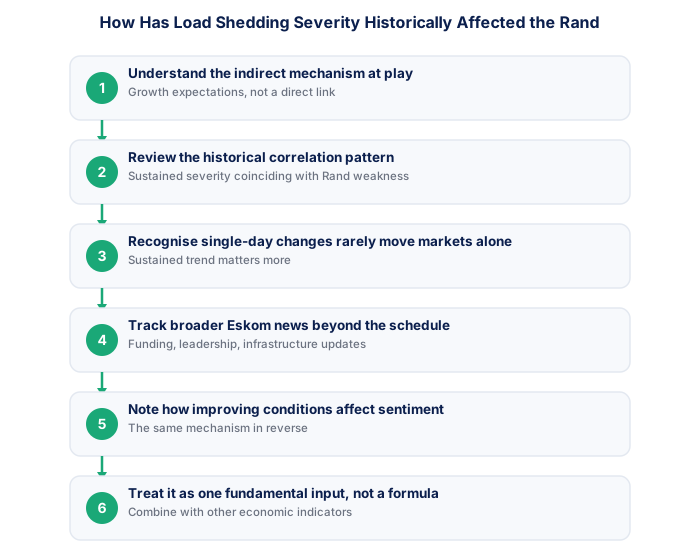
1. The indirect mechanism connecting load shedding to the Rand
Load shedding does not affect the Rand through any direct market mechanism, there is no rate or index that mechanically links electricity supply to currency value. Instead, the connection runs through economic growth expectations: sustained higher-stage load shedding constrains industrial output, business operating costs, and overall GDP growth forecasts, which investors then factor into their broader assessment of South African assets.
This means the relationship is indirect and works with a lag, markets do not typically react to a single day's stage announcement the way they might react to a scheduled economic data release, but sustained periods of severe load shedding do show up in revised growth forecasts, which markets do respond to.
2. What the historical pattern actually shows
Periods of sustained Stage 4 and above load shedding, particularly extended periods without meaningful improvement, have historically coincided with periods of Rand underperformance and downward growth forecast revisions from institutions like the SARB and major ratings agencies.
It's important to be precise about causation here: these periods often coincide with other negative developments simultaneously, weaker commodity prices, political uncertainty, or global risk-off sentiment, making it difficult to isolate load shedding alone as the specific cause of any particular Rand move during these periods.
- SARB economic calendar checked for the week
- Next Eskom load shedding schedule reviewed
- GNU stability news reviewed
- Stats SA data releases noted
- Credit agency review dates checked
- US/global events that move EM risk noted
3. Why single-day stage changes rarely move the Rand directly
A single announcement moving from Stage 2 to Stage 4, for example, typically does not produce an immediate, isolated Rand reaction the way a surprise interest rate decision might, since markets are usually already aware of the underlying structural electricity supply situation and do not treat each individual stage announcement as significant new information.
What does tend to matter more is a sustained change in trend, several consecutive weeks or months of meaningfully worse or meaningfully better load shedding than the recent pattern, since this is what actually feeds into revised growth expectations rather than any single day's stage level.
| Event | Frequency | ZAR impact | Source |
|---|---|---|---|
| SARB MPC | 6x per year | High | resbank.co.za |
| Budget Speech | Annual (February) | Very high | treasury.gov.za |
| Credit reviews | Annual each agency | Very high | Agency sites |
| Stats SA CPI | Monthly | Medium | statssa.gov.za |
| Eskom stage | As needed | Low-medium | eskomsepush.com |
- SA context provides genuine informational edge
- ZAR pairs accessible via FSCA brokers in ZAR accounts
- Rand volatility creates larger intraday ranges
- 6 SARB meetings/year create regular macro setups
- Higher geopolitical risk than G10 pairs
- Load shedding creates unique operational disruptions
- SA rand liquidity thinner than major G10 pairs
- SA-specific news requires constant local monitoring
4. The role of Eskom-specific news beyond stage levels
Beyond the daily stage schedule itself, specific Eskom-related news, major unit breakdowns, funding or debt restructuring developments, leadership changes, or progress updates on the broader energy transition plan, can carry independent market relevance beyond what the current stage level alone conveys.
These developments often provide more forward-looking information about the trajectory of the electricity supply situation than the current stage number does on its own, which is part of why financial media coverage of Eskom extends well beyond simply reporting the daily schedule.
5. How improving load shedding has historically affected sentiment
Periods of sustained improvement, extended stretches without load shedding or at consistently lower stages than recent history, have historically coincided with improved growth forecasts and generally more supportive conditions for the Rand, following the same indirect mechanism in reverse.
This has sometimes produced a period of improved sentiment that extends somewhat beyond what the electricity situation alone would fully justify, as markets partly price in optimism about broader structural improvement, which is a distinct dynamic from the underlying electricity data itself.
6. How to think about this as a trading input, not a formula
Given the indirect, lagged, and multi-causal nature of this relationship, load shedding severity is best treated as one input into a broader fundamental view of South African economic conditions, rather than as a direct, tradeable signal in its own right with any precise, reliable correlation to specific Rand movements.
Tracking the general trend alongside other fundamental indicators, rather than reacting to individual daily stage announcements, is a more grounded approach than attempting to trade the stage schedule as if it were a scheduled economic release with a predictable market reaction.
★ Why It Matters
Worth watching for sustained multi-week trend changes in load shedding severity, improving or worsening, rather than reacting to any single day's stage announcement, since it is the sustained trend that has historically shown up in revised growth expectations and broader market sentiment.
✕ Common mistakes
- Trading individual daily stage announcements as if they were scheduled economic data releases. Single-day changes rarely produce an isolated, direct Rand reaction.
- Treating load shedding as the sole explanation for a Rand move during a difficult period. Multiple factors typically coincide, making isolated causation difficult to establish.
- Ignoring broader Eskom news beyond the daily stage schedule. Funding, leadership, and infrastructure developments often carry independent forward-looking relevance.
- Expecting a precise, reliable formula linking stage level to currency movement. The relationship is genuinely correlational and indirect, not a clean, tradeable mechanism.
How do the outages affect trading conditions, not only the rand?
Severity moves sentiment and the currency; the stage you are on decides whether you can manage an open position at all. Load shedding and your trading day covers the practical side.
Key Takeaways
- Sustained periods of higher load shedding stages have historically coincided with Rand weakness, primarily through the channel of reduced economic growth expectations and investor concern about infrastructure reliability, rather than through any direct mechanical link between electricity supply and currency value.
- The indirect mechanism connecting load shedding to the Rand.
- What the historical pattern actually shows.
- Why single-day stage changes rarely move the Rand directly.
- The role of Eskom-specific news beyond stage levels.
Frequently asked follow-up questions
How do the outages affect trading conditions, not just the rand?
Severity moves sentiment and the currency; the stage you are on decides whether you can manage a position at all. Trading through load shedding covers the practical side.
How do the outages affect trading conditions, not only the rand?
Severity moves sentiment and the currency; the stage you are on decides whether you can manage an open position. Load shedding and your trading day covers the practical side.
How do I track the broader Eskom situation beyond the daily schedule?
South African financial media provide ongoing coverage of Eskom's operational and financial situation beyond the daily stage announcement, which is generally more useful for understanding the broader trajectory.
