i Short answer
A carry trade involves holding a short position in a low-interest-rate currency to fund a long position in a higher-interest-rate currency.
The aim is to profit from the interest rate differential, plus any gain if the higher-yielding currency also appreciates, though this strategy also underlies why the Rand tends to weaken every August as positions unwind. Try our free Interest Rate Differential Calculator to work through the numbers yourself.
📋 ON THIS PAGE
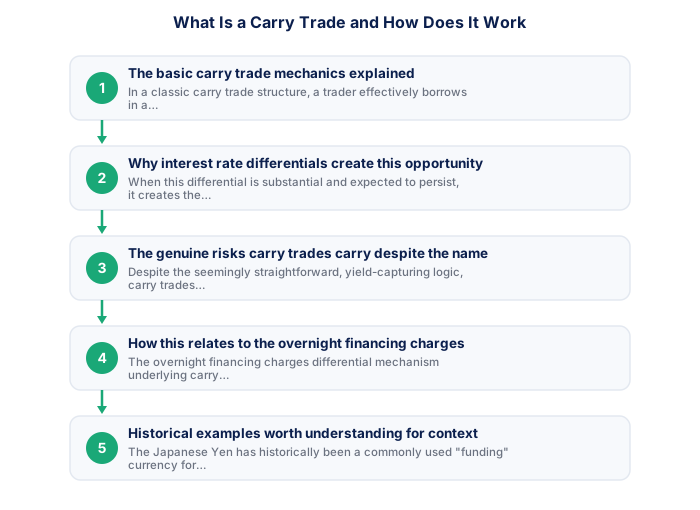
- The basic carry trade mechanics explained
- Why interest rate differentials create this opportunity
- The genuine risks carry trades carry despite the name
- How this relates to overnight financing charges
- Historical examples worth understanding for context
- Is carry trading relevant to South African traders specifically
1. The basic carry trade mechanics explained
In a classic carry trade structure, a trader effectively borrows in a currency with a low interest rate (paying a low cost to hold this short position) and invests in a currency with a meaningfully higher interest rate (earning this higher rate on the long position). The trader profits from this interest rate differential as an ongoing, accumulating return, separate from and in addition to any profit or loss from the underlying exchange rate movement between the two currencies over the holding period.
It's worth understanding this as fundamentally a yield-seeking strategy, closely related to the interest rate differential dynamics discussed elsewhere on this site regarding currency movement generally, the carry trade simply makes this yield-seeking behaviour the explicit, primary basis for the trade itself.
2. Why interest rate differentials create this opportunity
Different central banks set genuinely different interest rate levels based on their own specific economic circumstances and policy objectives. When this differential is substantial and expected to persist, it creates the specific opportunity carry trades are designed to capture, earning the rate difference as essentially a yield-based return, independent of any directional currency view.
See also: How Has Load Shedding Affected the Rand?
It's worth checking current, actual rate differentials directly before assuming a specific carry trade opportunity exists, since these relationships shift as central banks adjust policy, discussed elsewhere on this site regarding interest rate decisions, worth confirming the current picture rather than relying on outdated assumptions.
- FSCA-regulated broker verified at fsca.co.za
- Demo account tested for minimum 60 days
- Trading plan written: entry, exits, position sizing
- Risk per trade defined (1-2% of account)
- Backup internet connection tested for load shedding
- Tax implications understood
3. The genuine risks carry trades carry despite the name
Despite the seemingly straightforward, yield-capturing logic, carry trades carry genuine risk specifically because exchange rate movements can easily overwhelm the interest rate differential being captured, if the higher-yielding currency depreciates significantly against the lower-yielding one during the holding period, this currency loss can exceed, sometimes substantially, the interest differential gain, producing an overall loss despite the carry trade's seemingly favourable yield logic.
This risk becomes particularly pronounced during periods of broader market stress, when carry trades, often built using leverage to amplify the otherwise modest interest differential into a more meaningful return, can unwind rapidly and simultaneously across many market participants, sometimes producing sharp, self-reinforcing currency moves as this unwinding occurs.
4. How this relates to overnight financing charges
Overnight financing charges for holding leveraged positions past daily rollover are directly related to the interest rate differential mechanism underlying carry trades. A position effectively benefiting from the carry trade dynamic (long the higher-yielding currency) may actually receive a financing credit rather than paying a charge, while a position structured the opposite way would pay the financing charge instead.
Understanding this connection helps clarify why overnight financing isn't simply an arbitrary broker fee, but reflects this genuine underlying interest rate differential mechanism that carry trades are specifically designed to capture deliberately, as their core, central strategy logic.
| Item | Detail |
|---|---|
| Regulator | FSCA, fsca.co.za |
| Exchange control | SARB, resbank.co.za |
| Tax authority | SARS, sars.gov.za |
| JSE hours | 09:00-17:00 SAST Mon-Fri |
| Best forex session | 15:00-17:00 SAST |
| CGT annual exclusion | R50,000 (individuals) |
5. Historical examples worth understanding for context
The Japanese Yen has historically been a commonly used "funding" currency for carry trades, given Japan's long history of very low interest rates relative to many other major economies, with traders historically borrowing in Yen to fund positions in higher-yielding currencies. Periods of sudden, broad carry trade unwinding, sometimes triggered by unexpected shifts in risk sentiment or interest rate expectations, have historically produced some of the more dramatic, rapid currency movements observed in forex markets.
6. Is carry trading relevant to South African traders specifically
Given South Africa's historically relatively higher interest rates compared to some major developed economies, the Rand has, at various points, been considered on the higher-yielding side of potential carry trade structures from the perspective of international traders, though this specific dynamic is more typically discussed from the perspective of larger international institutional flows than as a primary retail trading strategy specifically marketed to South African traders themselves.
For South African retail traders, understanding the carry trade concept is more valuable as broader context for understanding certain Rand-relevant capital flow dynamics than as a primary trading strategy most South African retail traders would specifically construct and execute themselves.
A carry trade earns the interest rate differential between two currencies. The Rand's higher rates can create a positive carry when long ZAR, but a sharp Rand depreciation can wipe far more than the accumulated interest.
★ Why It Matters
Worth understanding: a carry trade's interest rate gain can be entirely wiped out, and then some, by a single adverse currency move. The strategy's apparent steady income tends to mask a real, sometimes underappreciated exchange-rate risk sitting underneath it.
✕ Common mistakes
- Assuming carry trades are low-risk because the income feels steady. The strategy's apparent stability masks real, sometimes underappreciated exchange-rate risk.
- Not sizing carry positions with the same discipline as directional trades. The underlying currency risk doesn't disappear just because there's an interest differential.
- Ignoring how shifting interest rate expectations affect the trade's ongoing viability. Central bank policy changes can alter the carry trade's attractiveness over time.
Key Takeaways
- A carry trade involves borrowing in a low-interest currency to invest in a higher-interest currency, profiting from the rate differential plus potential appreciation.
- A carry trade involves holding a short position in a low-interest-rate currency to fund a long position in a higher-interest-rate currency.
- The aim is to profit from the interest rate differential, plus any gain if the higher-yielding currency also appreciates.
- The basic carry trade mechanics explained.
- Why interest rate differentials create this opportunity.
Frequently asked follow-up questions
Can retail traders execute carry trades directly through CFDs?
Yes, technically a leveraged position held to capture overnight financing differentials reflects similar underlying logic, though most retail traders focus on shorter-term price movement rather than this specific yield-capturing strategy.
Is carry trading considered a beginner-friendly strategy?
Generally not specifically recommended for beginners, given the genuine risks above and the more typically institutional scale at which this strategy is traditionally executed.
Does leverage make carry trades more or less risky?
Leverage amplifies both the interest differential gain and any adverse currency movement loss, generally increasing overall risk despite potentially increasing the otherwise modest interest differential return.
