i Short answer
A white label broker operates under its own distinct brand name while using another company's underlying trading infrastructure and liquidity connections.
This structure requires its own independent regulatory verification, rather than assuming the technology provider's status extends to it.
📋 ON THIS PAGE
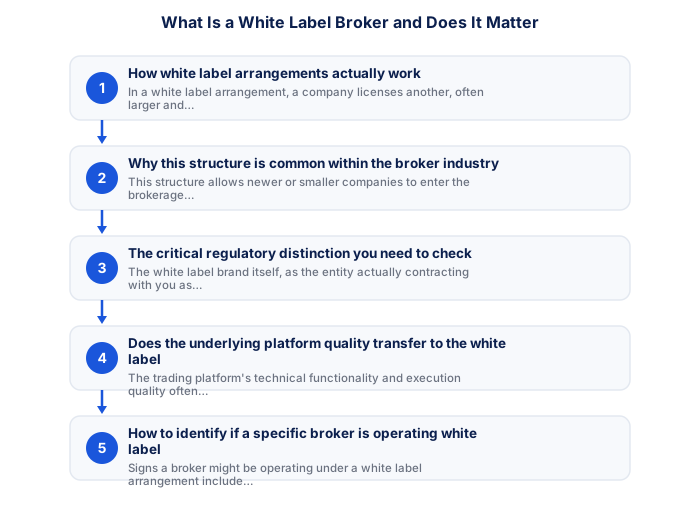
- How white label arrangements actually work
- Why this structure is common within the broker industry
- The critical regulatory distinction you need to check
- Does the underlying platform quality transfer to the white label
- How to identify if a specific broker is operating white label
- Practical due diligence specifically for white label brokers
1. How white label arrangements actually work
In a white label arrangement, a company licenses another, often larger and more established, broker's trading technology, liquidity connections, and sometimes back-office infrastructure, then presents this technology under its own distinct brand name and client-facing identity. The underlying trading mechanics may be largely identical to the original provider's own platform, but the client-facing brand and legal entity are genuinely separate.
It's worth understanding this as a genuinely common, legitimate business model across many industries, not something unique or suspicious to trading specifically, licensing existing technology under a new brand happens across financial services and beyond, worth recognising this as a standard commercial arrangement rather than automatically a warning sign.
2. Why this structure is common within the broker industry
This structure allows newer or smaller companies to enter the brokerage market without building their own trading infrastructure from scratch, instead leveraging an established provider's proven technology while focusing their own efforts on marketing, client relationships, and their own specific brand identity within a particular market or client segment.
It's worth appreciating why this arrangement genuinely benefits smaller or newer brokers, building genuinely reliable trading infrastructure from scratch requires substantial time and technical investment, licensing proven technology lets a broker focus their resources on service, marketing, and client relationships instead.
- Search FSP name or number at fsca.co.za
- Confirm licence is current and not suspended
- Check scope covers forex and CFD activity
- Confirm client funds in segregated accounts
- Read FSCA enforcement actions history
- Test customer support before depositing
- Client funds legally segregated
- FSCA complaints process available
- SA consumer protections apply
- ZAR account, no FX conversion costs
- Some offshore brokers offer wider instruments
- Regulatory overhead passed on in spreads
- Stricter position limits for retail clients
- FICA verification required before trading
- Client funds segregated
- Formal FSCA complaints process
- SA consumer protections apply
- ZAR account available
- Fund safety not guaranteed
- Overseas disputes only
- SA law does not apply
- Currency conversion costs
3. The critical regulatory distinction you need to check
The white label brand itself, as the entity actually contracting with you as a client, needs its own independent, verifiable FSCA licence, the underlying technology provider's own separate regulatory standing doesn't automatically extend to or cover the white label brand you're actually depositing funds with.
It's worth treating this specific check as absolutely essential, regardless of how established or polished the underlying technology provider appears, discussed throughout this site's legal content, the white label brand itself, not its technology provider, is what needs to hold genuine, current FSCA authorisation for your specific account.
4. Does the underlying platform quality transfer to the white label
The trading platform's technical functionality and execution quality often does largely transfer from the underlying provider, since the white label brand is typically using the same core technology. However, this technical similarity doesn't substitute for confirming the white label brand's own independent regulatory and financial standing, which can differ meaningfully from the underlying technology provider's own situation.
It's worth testing the actual platform yourself through a demo account rather than assuming quality based on the underlying technology's general reputation, execution quality and support can genuinely differ between white label operators using identical underlying technology.
| Protection | FSCA Regulated | Offshore Unregulated |
|---|---|---|
| Client fund segregation | ✓ Required | Varies by broker |
| SA complaints process | ✓ Available | ✗ Not available |
| SA consumer law applies | ✓ Yes | ✗ No |
| ZAR account available | ✓ Typically | Often USD/EUR only |
5. How to identify if a specific broker is operating white label
Signs a broker might be operating under a white label arrangement include platform interfaces that closely resemble another well-known broker's offering, terms and conditions referencing a different underlying company name for certain technical or liquidity services, or relatively recent brand establishment despite seemingly sophisticated, mature trading technology. Directly asking the broker about their specific corporate structure and regulatory licensing is the most reliable way to clarify this.
It's worth researching this specifically if you're curious, though ultimately what matters most for your own protection is the specific broker's own regulatory status, discussed elsewhere on this site, rather than which particular technology provider they've licensed their platform from.
6. Practical due diligence specifically for white label brokers
For any broker you suspect might be operating under a white label structure, applying the same independent FSCA licence verification to that brand's own legal entity, rather than to any underlying technology provider that might appear referenced in their platform or marketing materials, ensures you're genuinely protected by that specific entity's own regulatory standing.
The FSCA regulatory framework provides South African retail traders with meaningful protection that extends beyond simply verifying a broker's licence number. The requirement for FSCA-regulated brokers to maintain segregated client accounts means your deposited funds are legally separated from the broker's operating funds. In the event of broker insolvency, this segregation protects client money from creditor claims against the company. FSCA-regulated brokers must also maintain adequate financial resources, submit to regulatory oversight, and adhere to disclosure requirements covering fees, risks, and conflicts of interest. For traders considering offshore brokers outside FSCA supervision, the loss of these domestic protections is a material risk consideration, particularly for larger account balances where the downside of unregulated broker failure would be financially significant.
FSCA status verification matters equally regardless of the model.
White-label brokers license their platform from a parent broker but must hold their own independent FSCA licence. The same verification process, checking the FSP register, applies equally to both models.
★ Why It Matters
Something worth checking directly: search the FSCA register for the white label brand's own specific name, not just the underlying technology provider's name, a legitimate underlying infrastructure provider doesn't automatically mean the specific branded entity you're dealing with holds its own valid licence.
✕ Common mistakes
- Assuming underlying infrastructure licensing extends to the white label brand. The specific branded entity needs its own independent regulatory verification.
- Not searching the specific brand name on the FSCA register separately. This single check clarifies whether the entity you're dealing with is genuinely licensed.
- Treating a polished, professional-looking platform as proof of regulatory status. Presentation quality says nothing about licensing.
- Assuming all white label arrangements carry equivalent risk. The underlying technology provider's reputation doesn't guarantee the branded entity's own compliance.
Key Takeaways
- A white label broker operates under its own brand using another company's underlying trading infrastructure, requiring its own independent regulatory check.
- A white label broker operates under its own distinct brand name while using another company's underlying trading infrastructure and liquidity connections.
- This structure requires its own independent regulatory verification, rather than assuming the technology provider's status extends to it.
- How white label arrangements actually work.
- Why this structure is common within the broker industry.
Frequently asked follow-up questions
Is trading through a white label broker inherently riskier?
Not inherently, provided the white label brand itself holds genuine, verified FSCA regulation; the structure itself isn't the risk factor, but verification remains equally important.
How can I find out who provides the underlying technology?
Sometimes this is disclosed in terms and conditions or platform branding; if unclear, asking the broker directly is a reasonable, straightforward approach.
Does a white label relationship affect fund segregation?
Fund segregation depends on the specific white label entity's own regulatory compliance, not automatically on the underlying technology provider's practices.
