i Short answer
Session overlaps occur when two major trading centres are simultaneously active, typically producing increased liquidity and volatility.
The London-New York overlap is particularly significant and conveniently timed for South African day traders.
📋 ON THIS PAGE
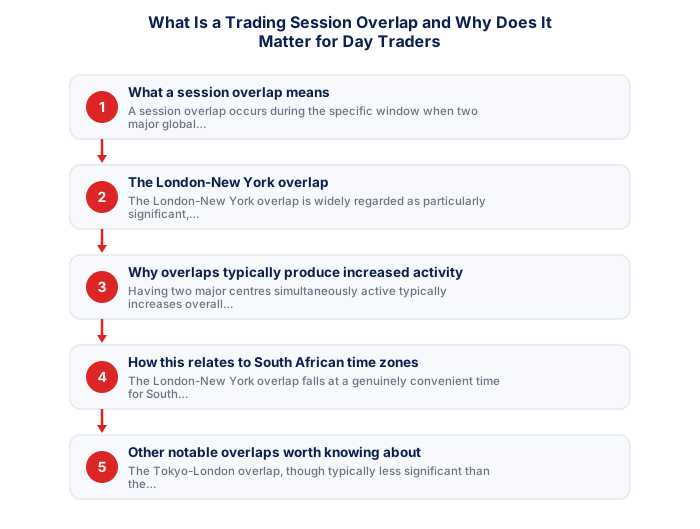
1. What a session overlap specifically means
A session overlap occurs during the specific window when two major global trading centres, such as London and New York, are simultaneously open and actively trading, rather than one session having already closed before the next opens, creating a period of combined participation from both regions.
It's worth picturing this concretely: two major financial centres, each with their own active traders, institutions, and order flow, operating simultaneously means genuinely more market participants are active during this specific window than during either session alone.
2. The London-New York overlap specifically
The London-New York overlap is widely regarded as particularly significant, given these two centres' combined share of overall global forex trading volume during this specific window.
It's worth appreciating why this particular overlap carries such outsized importance, London and New York together represent the two largest forex trading centres globally, meaning their combined active hours capture a genuinely dominant share of total daily forex market activity.
- FSCA-regulated broker verified at fsca.co.za
- Demo account tested for minimum 60 days
- Trading plan written: entry, exits, position sizing
- Risk per trade defined (1-2% of account)
- Backup internet connection tested for load shedding
- Tax implications understood
3. Why overlaps typically produce increased activity
Having two major centres simultaneously active typically increases overall trading volume and liquidity during this specific window, often producing more pronounced price movement than during single-session periods with less combined participation.
It's worth connecting this directly to the practical trading implications discussed elsewhere on this site regarding spreads and liquidity, increased activity during overlap periods generally translates into tighter spreads and more reliable execution, genuinely favourable conditions for active trading.
4. How this relates to South African time zones
The London-New York overlap falls at a genuinely convenient time for South African traders, given the relatively modest time difference between South Africa and the UK specifically.
It's worth building this specific time conversion into your permanent trading routine, discussed elsewhere on this site regarding session timing, having the London-New York overlap's South African time clearly memorised removes any need to recalculate it each time you're planning your trading day.
| Item | Detail |
|---|---|
| Regulator | FSCA, fsca.co.za |
| Exchange control | SARB, resbank.co.za |
| Tax authority | SARS, sars.gov.za |
| JSE hours | 09:00-17:00 SAST Mon-Fri |
| Best forex session | 15:00-17:00 SAST |
| CGT annual exclusion | R50,000 (individuals) |
5. Other notable overlaps worth knowing about
The Tokyo-London overlap, though typically less significant than the London-New York overlap, also produces some increased activity, worth understanding if your specific instruments or strategy relate more closely to Asian market dynamics.
It's worth researching each additional overlap's specific South African time conversion if you trade during Asian session hours, discussed elsewhere on this site regarding session timing challenges, since these earlier overlaps involve genuinely different, often less convenient timing for South African traders specifically.
6. Planning your day trading schedule around overlaps
Many day traders specifically structure their active trading window around the London-New York overlap, given its combination of convenient South African timing and typically elevated liquidity and volatility.
Volume in South African time concentrates late in the day, during the hours London and New York share.
Day trading from South Africa has a specific time zone structure that suits active traders. SAST means the European session opens at 09:00 SAST and the New York session opens at approximately 15:30 SAST in summer. The highest-liquidity window for major forex pairs falls during the London-New York overlap between roughly 15:00 and 17:00 SAST. South African day traders can therefore conduct pre-session analysis in the morning, participate in the JSE session during local business hours, and then trade the European-American overlap in the late afternoon, all within a normal working day without requiring antisocial trading hours. The key operational risk is that this 15:00-17:00 window coincides with common afternoon load shedding slots, making pre-set stop-losses and mobile data backup standard pre-session preparation rather than optional precautions.
The London-New York overlap, approximately 3pm to 7pm South African time, offers the deepest combined liquidity of any session window. Spreads are often tightest and volatility typically highest during this period.
★ Why It Matters
Worth testing directly: compare your own results during the London-New York overlap versus your results during quieter, single-session windows, some strategies that work well in the higher volatility overlap period perform notably worse, not better, during calmer single-session conditions.
✕ Common mistakes
- Assuming every strategy performs better during higher-volatility overlap periods. Some perform notably worse during the increased volatility of overlapping sessions.
- Not testing your own results specifically segmented by session. This comparison often reveals which session conditions actually suit your approach.
- Treating all session overlaps as equally significant. The London-New York overlap typically carries more liquidity and impact than other combinations.
- Trading the overlap period by default without verifying it suits your strategy. Default assumptions don't always match your specific approach's actual strengths.
Key Takeaways
- Session overlaps occur when two major trading centres are simultaneously active, typically producing increased liquidity and volatility worth understanding.
- Session overlaps occur when two major trading centres are simultaneously active, typically producing increased liquidity and volatility.
- The London-New York overlap is particularly significant and conveniently timed for South African day traders.
- What a session overlap specifically means.
- The London-New York overlap specifically.
Frequently asked follow-up questions
Does trading during an overlap guarantee better results?
No, increased liquidity and volatility doesn't guarantee favourable outcomes, since this still requires sound strategy and risk management regardless of session timing.
Is volatility during an overlap always a good thing for day traders?
This depends on your specific strategy; some approaches benefit from this increased movement, while others might find this volatility makes precise entries more challenging.
Does every instrument benefit equally from session overlaps?
Major forex pairs, typically show this overlap effect most clearly, while other instruments may follow somewhat different activity patterns.
Should beginners specifically focus on trading during overlap periods?
This can be a reasonable starting point given typically improved liquidity, though beginners should still prioritise developing sound risk management regardless of specific session timing.
Does daylight saving time affect when these overlaps actually occur locally?
Yes, the specific local time of these overlaps can shift seasonally, worth checking periodically.
