i Short answer
Liquidation refers to a position being automatically closed, typically by the broker rather than the trader's own decision.
This is most commonly connected to the stop-out mechanism for insufficient margin.
📋 ON THIS PAGE
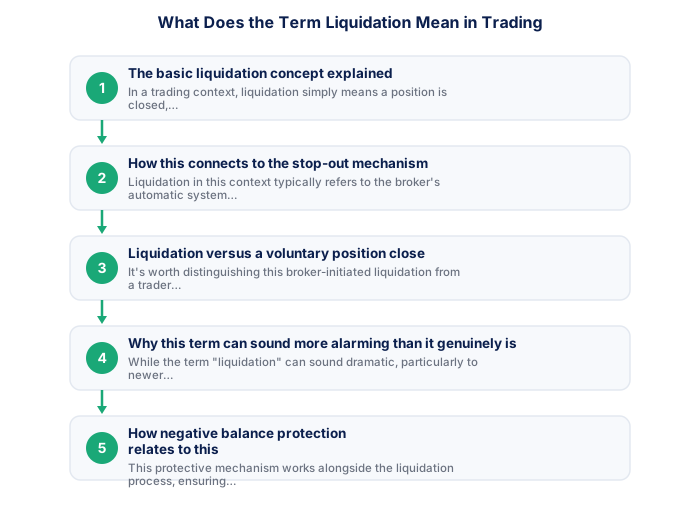
1. The basic liquidation concept explained
In a trading context, liquidation simply means a position gets closed, turning it from an open, ongoing exposure into a final, realised outcome. The term shows up across various financial contexts, but in retail forex and CFD trading specifically, it most commonly refers to a broker-initiated, automatic closure rather than the trader's own choice.
It's worth understanding this as an automated safeguard rather than a punitive measure, the broker's system isn't acting against your interests, it's specifically preventing your losses from extending beyond a critical threshold that could otherwise threaten your entire remaining account balance.
2. How this connects to the stop-out mechanism
Liquidation in this context typically means the broker's automatic system closing one or more open positions once margin level falls to the stop-out threshold, protecting both the trader and the broker from the position deteriorating further into a larger loss.
It's worth knowing your own broker's specific stop-out level explicitly, rather than assuming a generic figure applies, this single number tells you precisely how much adverse movement your account can absorb before this automated process actually triggers.
- FSCA-regulated broker verified at fsca.co.za
- Demo account tested for minimum 60 days
- Trading plan written: entry, exits, position sizing
- Risk per trade defined (1-2% of account)
- Backup internet connection tested for load shedding
- Tax implications understood
3. Liquidation versus a voluntary position close
It's worth telling this broker-initiated liquidation apart from a trader voluntarily closing their own position, whether at a profit or loss. Liquidation specifically means the closure happened automatically, due to the margin-related circumstances above, rather than reflecting the trader's own predetermined exit decision.
It's worth treating this distinction as a genuine motivator for proactive risk management, a trader who closes their own positions deliberately, based on their own analysis and criteria, retains meaningfully more control over the outcome than one who lets circumstances force an automated closure.
4. Why this term can sound more alarming than it genuinely is
While the term "liquidation" can sound dramatic, especially to newer traders encountering it for the first time, it describes the same stop-out mechanism above, a protective measure, not a punitive one, built to stop a position from racking up losses beyond what your account's available equity can actually support.
It's worth remembering this mechanical, protective framing specifically if the term ever feels intimidating, understanding liquidation as a built-in safeguard rather than a looming threat helps you engage with risk management concepts more calmly and rationally.
| Item | Detail |
|---|---|
| Regulator | FSCA, fsca.co.za |
| Exchange control | SARB, resbank.co.za |
| Tax authority | SARS, sars.gov.za |
| JSE hours | 09:00-17:00 SAST Mon-Fri |
| Best forex session | 15:00-17:00 SAST |
| CGT annual exclusion | R50,000 (individuals) |
5. How negative balance protection relates to this
Negative balance protection works alongside the liquidation process above, making sure that even in extreme, fast-moving conditions where liquidation might not happen precisely at the intended threshold due to slippage, your total loss still stays capped at your deposited balance.
It's worth appreciating these two mechanisms as working together as a genuine, layered system, discussed elsewhere on this site, liquidation aims to prevent the most severe outcomes before they occur, while negative balance protection serves as the final backstop for the rare cases where even that isn't quite fast enough.
6. Avoiding liquidation through disciplined risk management
Keeping a sensible risk percentage per trade through disciplined position sizing and avoiding excessive leverage relative to your account size keeps your margin level at a healthy distance from the liquidation threshold under normal conditions, making this scenario genuinely avoidable through sound, ongoing risk management.
Liquidation occurs when losing positions have consumed equity to the point where the broker closes all open positions. Stop-out typically triggers first at a specific margin level as a warning mechanism.
★ Why It Matters
Worth checking with your own broker: the exact margin level percentage that triggers automatic liquidation. This figure varies between brokers, and traders are sometimes surprised to find their broker's threshold is tighter than they'd assumed.
✕ Common mistakes
- Assuming liquidation only happens in extreme, rare circumstances. It can occur whenever margin requirements aren't met, which happens more often than traders expect.
- Treating liquidation as a broker error rather than an automated safeguard. It's typically a protective mechanism, not arbitrary action.
- Ignoring how multiple open positions affect overall liquidation risk. Combined exposure, not just one trade, determines this risk.
Key Takeaways
- Liquidation refers to a position being automatically closed by the broker, typically connected to the stop-out mechanism discussed elsewhere regarding margin.
- Liquidation refers to a position being automatically closed, typically by the broker rather than the trader's own decision.
- This is most commonly connected to the stop-out mechanism for insufficient margin.
- The basic liquidation concept explained.
- How this connects to the stop-out mechanism.
Frequently asked follow-up questions
Will I be notified before liquidation occurs?
Most brokers send a margin call warning before liquidation actually triggers, though in extremely fast-moving conditions that warning period may be brief.
Can liquidation happen to just one position or my entire account?
This depends on your broker's policy. Some liquidate the single most unprofitable position first, others may close several positions depending on how severe the margin shortfall is.
Is liquidation the same as a margin call?
Related but distinct. A margin call is typically an earlier warning, while liquidation is the more severe, automatic closure action that happens at a lower threshold.
