i Short answer
Bullish describes an expectation that an instrument's price will rise, while bearish describes an expectation that price will fall.
These terms can describe either broad market sentiment or a specific trader's directional view.
📋 ON THIS PAGE
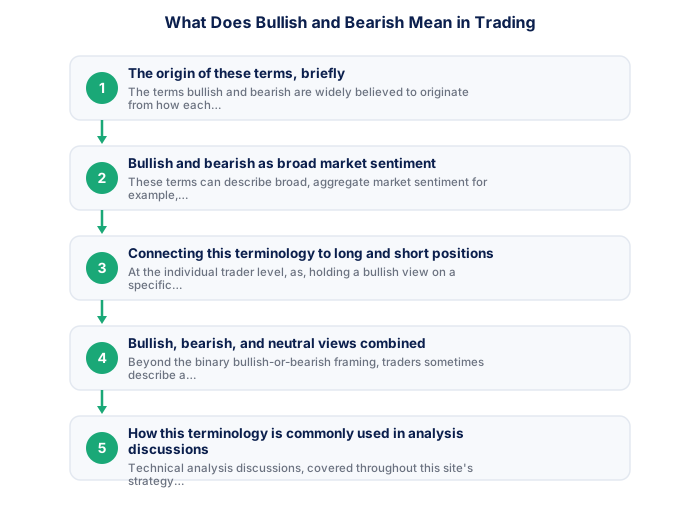
1. The origin of these terms, briefly
The terms bullish and bearish are widely believed to originate from how each animal attacks, a bull thrusts its horns upward, suggesting rising prices, while a bear swipes its claws downward, suggesting falling prices. While the precise historical origin is debated among different sources, these terms have become deeply embedded, standard vocabulary across virtually all financial markets discussion, including forex and CFD trading.
Regardless of the precise historical origin, understanding and correctly using this terminology is genuinely important for engaging with trading-related discussion, analysis, and news coverage, since these terms appear constantly across financial media, broker commentary, and trader community discussion.
It's worth simply accepting these terms as standard, universal trading vocabulary at this point, regardless of the specific historical origin, since fluent, comfortable use of this terminology is genuinely necessary for engaging with virtually any trading education content, news, or discussion you'll encounter.
| Sentiment | Expectation | Typical Position |
|---|---|---|
| Bullish | Price will rise | Long |
| Bearish | Price will fall | Short |
| Neutral | No clear directional view | No position, or range-bound strategy |
2. Bullish and bearish as broad market sentiment
These terms can describe broad, aggregate market sentiment, for example, "the market is broadly bullish on gold" describes a general expectation among many market participants that gold's price will rise, reflecting an aggregate view rather than any single specific trader's individual position. This broader sentiment usage connects to fundamental analysis generally, since fundamental developments often drive shifts in this kind of aggregate market sentiment.
Financial news and analysis commentary frequently uses this sentiment-level framing, discussing whether a market or instrument is "turning bullish" or "showing bearish signals" based on various fundamental or technical developments that might be shifting broader trader expectations in one direction or the other.
- FSCA-regulated broker verified at fsca.co.za
- Demo account tested for minimum 60 days
- Trading plan written: entry, exits, position sizing
- Risk per trade defined (1-2% of account)
- Backup internet connection tested for load shedding
- Tax implications understood
It's worth distinguishing this broad, aggregate sentiment from your own personal, specific trading view, since the two don't always align, general market sentiment being bullish doesn't automatically mean your own specific analysis or strategy criteria point in the same direction for any given trade.
3. Connecting this terminology to long and short positions
At the individual trader level, holding a bullish view on a specific instrument typically translates into opening a long position, since you're positioning to profit from the price rise you're expecting. Conversely, holding a bearish view typically translates into opening a short position, positioning to profit from an expected price decline.
This direct connection means "I'm bullish on USD/ZAR" and "I'm going long on USD/ZAR" essentially describe the same underlying directional view and corresponding trading decision, just expressed through slightly different but closely related vocabulary commonly used interchangeably across trading discussion.
It's worth practising expressing your own trading ideas using both framings interchangeably until it feels genuinely natural, since trading discussion and content moves fluidly between describing sentiment and describing actual position direction, comfort with both makes engaging with that content considerably easier.
4. Bullish, bearish, and neutral views combined
Beyond the binary bullish-or-bearish framing, traders sometimes describe a "neutral" view, indicating no strong directional expectation in either direction, this might correspond to choosing not to trade a specific instrument at a given time, since "no trade" is itself a legitimate decision, or to using strategies specifically designed to profit from low volatility or range-bound conditions regardless of clear directional movement.
Recognising that a genuine, sound trading approach doesn't require having a strong bullish or bearish view on every instrument at every moment, sometimes the most disciplined position is simply no directional view and no corresponding trade, connects to the broader discipline needed to avoid the overtrading pattern.
| Item | Detail |
|---|---|
| Regulator | FSCA, fsca.co.za |
| Exchange control | SARB, resbank.co.za |
| Tax authority | SARS, sars.gov.za |
| JSE hours | 09:00-17:00 SAST Mon-Fri |
| Best forex session | 15:00-17:00 SAST |
| CGT annual exclusion | R50,000 (individuals) |
It's worth genuinely embracing this neutral option as a legitimate, common state rather than something to avoid, many experienced traders spend considerable time without a strong directional view on any given instrument, waiting patiently, discussed elsewhere on this site, for genuine conviction to develop before taking a position.
5. How this terminology is commonly used in analysis discussions
Technical analysis discussions frequently describe specific chart patterns or indicator readings as "bullish signals" or "bearish signals", for example, a moving average crossover might be described as a "bullish crossover" if it suggests an emerging uptrend. This usage applies the bullish-bearish framing specifically to individual technical signals, rather than to overall market sentiment or a complete trading position.
Becoming familiar with this specific usage pattern helps in reading and understanding technical analysis discussion and educational content more fluently, since this terminology appears constantly throughout virtually all technical analysis commentary and discussion.
CFDs allow you to express either view through going long or short.
Bullish means expecting a price to rise, bearish means expecting it to fall. CFDs allow traders to express either view directly, by going long when bullish and short when bearish.
★ Why It Matters
Worth noticing in yourself: how quickly your own bullish or bearish bias on an instrument shifts after a single trade outcome. Traders' stated market view sometimes tracks their own recent position more than any objective change in the underlying instrument.
✕ Common mistakes
- Letting your own recent trade outcome dictate your stated market view. Bias can shift based on personal results rather than genuine analysis.
- Assuming bullish or bearish sentiment applies uniformly across all timeframes. A market can be bullish short-term and bearish long-term simultaneously.
- Avoiding short positions due to unconscious directional comfort bias. Some traders unknowingly limit themselves to one direction only.
- Confusing personal hope for a direction with objective market analysis. These are very different things that can easily blur together.
Key Takeaways
- Bullish describes an expectation that price will rise; bearish describes an expectation that price will fall. Learn the origin and practical usage of these terms.
- Bullish describes an expectation that an instrument's price will rise, while bearish describes an expectation that price will fall.
- These terms can describe either broad market sentiment or a specific trader's directional view.
- The origin of these terms, briefly.
- Bullish and bearish as broad market sentiment.
See also: What Does Going Long or Short Mean in Trading?.
Frequently asked follow-up questions
Can the same trader be bullish on one instrument and bearish on another simultaneously?
Yes, these views are instrument-specific and can differ across the different instruments a trader follows, reflecting independent analysis of each specific market.
Does being bullish mean I should always go long immediately?
Not necessarily. A bullish view establishes directional bias, but the specific entry timing should still follow your strategy's defined criteria, rather than acting on sentiment alone.
Is there a term for being unsure about a market's direction?
"Neutral" is commonly used, alongside more specific terms like "range-bound" expectations, depending on the specific context and analytical framework being discussed.
