i Short answer
Quoted price is what you see displayed before placing an order, while execution price is what you actually receive once the order fills.
Any difference between these two figures represents slippage.
📋 ON THIS PAGE
1. What quoted price specifically represents
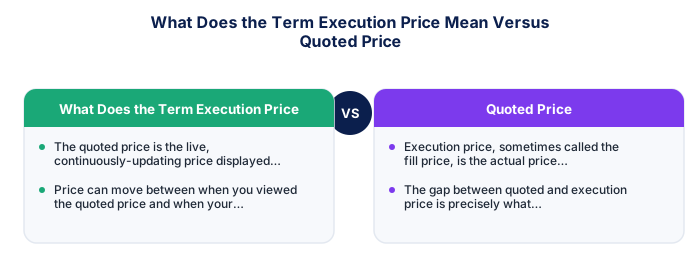
The quoted price is the live, continuously-updating price displayed on your platform's chart or order entry screen before you actually submit your order, representing the market's price at that specific viewing moment, though this figure can change in the brief interval between viewing and actually submitting your order.
It's worth treating a quoted price as a genuine snapshot rather than a firm commitment, since that's essentially what it is, an accurate reflection of the market at the exact moment it displayed, with no guarantee it remains valid by the time you actually act on it.
2. What execution price actually confirms
Execution price, sometimes called the fill price, is the actual price at which your order genuinely completed once processed by your broker's system, representing the definitive, confirmed price your trade actually entered or exited at, which becomes the figure used for calculating your actual profit or loss.
It's worth checking this confirmed figure specifically after every trade, rather than assuming it matched your intended entry, building this quick verification habit catches any meaningful discrepancy early, before it accumulates unnoticed across many trades.
- FSCA-regulated broker verified at fsca.co.za
- Demo account tested for minimum 60 days
- Trading plan written: entry, exits, position sizing
- Risk per trade defined (1-2% of account)
- Backup internet connection tested for load shedding
- Tax implications understood
- Predictable cost per trade
- Widens less during news
- Better for news traders
- Slightly wider average
- Very low in calm markets
- Widens during high-impact news
- Lower average cost
- Better for swing traders
| Scenario | Quoted Price | Execution Price | Gap Cause |
|---|---|---|---|
| Normal conditions | 1.0850 | 1.0850 | None: instant fill |
| Fast market (news release) | 1.0850 | 1.0853 | Slippage: moved before fill |
| Low liquidity (Asian session) | 1.0850 | 1.0855 | Wide spread + slippage combined |
| Large position size | 1.0850 | 1.0851–1.0854 | Partial fills at different levels |
| Market order at open | 1.0850 | 1.0858 | Gap open: no fill at prior close |
3. Why these two figures can genuinely differ
Price can move between when you viewed the quoted price and when your order actually processes, particularly during periods of rapid market movement or thinner liquidity, meaning the execution price can differ from what you initially saw quoted.
It's worth understanding this gap as a normal, expected feature of trading rather than a broker error, discussed in more detail regarding slippage elsewhere on this site, even the fastest, most reliable execution still involves some processing time during which price can shift.
4. How this connects directly to slippage
The gap between quoted and execution price is precisely what constitutes slippage, a favourable gap represents positive slippage, while an unfavourable gap represents negative slippage, with the slippage tolerance setting specifically governing how much negative deviation your platform will accept before rejecting the order entirely.
It's worth tracking both directions of this gap in your own trading journal, not just the unfavourable instances, seeing the genuine balance between positive and negative slippage over time gives a more accurate picture than remembering only the frustrating cases.
| Item | Detail |
|---|---|
| Regulator | FSCA, fsca.co.za |
| Exchange control | SARB, resbank.co.za |
| Tax authority | SARS, sars.gov.za |
| JSE hours | 09:00-17:00 SAST Mon-Fri |
| Best forex session | 15:00-17:00 SAST |
| CGT annual exclusion | R50,000 (individuals) |
5. Checking execution price on your own platform
Most platforms display your confirmed execution price directly within your trade history or open positions list, providing a clear, definitive record distinct from whatever price you might have initially seen quoted before submitting your order.
It's worth familiarising yourself with exactly where this information appears on your specific platform before you need it urgently, locating your confirmed execution price quickly matters most precisely when a fast-moving trade has you wanting immediate clarity.
6. Why this distinction matters for accurate record-keeping
Accurate journaling, recording your actual execution price, rather than the quoted price you initially intended, in your trading journal ensures your records genuinely reflect what actually happened, supporting more accurate analysis of your real trading performance over time.
The execution price is what you actually get, which can differ.
The quoted price is what you see before entry. The execution price is what you actually get. Slippage, either positive or negative, is the difference between the two.
★ Why It Matters
Worth tracking specifically in your own journal: the average gap between your quoted and executed price across your trades, persistent negative slippage in one direction only is worth raising with your broker, since it shouldn't be systematically biased against you if execution is fair.
✕ Common mistakes
- Assuming quoted and executed price will always match exactly. The difference, slippage, is normal, especially during fast-moving conditions.
- Treating any slippage as evidence of broker misconduct. Slippage is usually a function of market conditions, not deliberate broker action.
- Ignoring execution price entirely when reviewing trade performance. It affects your real results more than the quoted price alone.
Key Takeaways
- Quoted price is what you see before placing an order, while execution price is what you actually receive, with any difference between them representing slippage.
- Quoted price is what you see displayed before placing an order, while execution price is what you actually receive once the order fills.
- Any difference between these two figures represents slippage.
- What quoted price specifically represents.
- What execution price actually confirms.
See also: What Is Slippage and How Does It Affect My Trades?.
Frequently asked follow-up questions
Will my execution price always differ from the quoted price?
Not necessarily on every trade. Many trades execute at or very close to the quoted price, particularly during normal, liquid market conditions.
Can I see both prices simultaneously on my platform?
Most platforms show the live quoted price continuously, with confirmed execution price appearing specifically once your order has actually processed and filled.
Does this distinction matter more for certain order types?
Pending orders share this same general principle, though market orders processing immediately are most directly relevant to the quoted-versus-execution comparison.
