i Short answer
Load shedding threatens trading mainly through lost internet connectivity and platform access during open positions, not through any change to how the markets themselves function, worth reading alongside our update on load shedding's 2026 turnaround.
The most reliable mitigation is a backup connectivity option, mobile data or a separate fibre-independent line, combined with conservative position sizing during higher load shedding stages when outages are longer and less predictable.
📋 ON THIS PAGE
- What load shedding actually threatens in your trading process
- Building genuinely reliable backup connectivity
- Scheduling your trading around the load shedding calendar
- Protecting open positions specifically during outages
- Mobile-only trading during an outage
- When it is genuinely better to simply stay out of the market
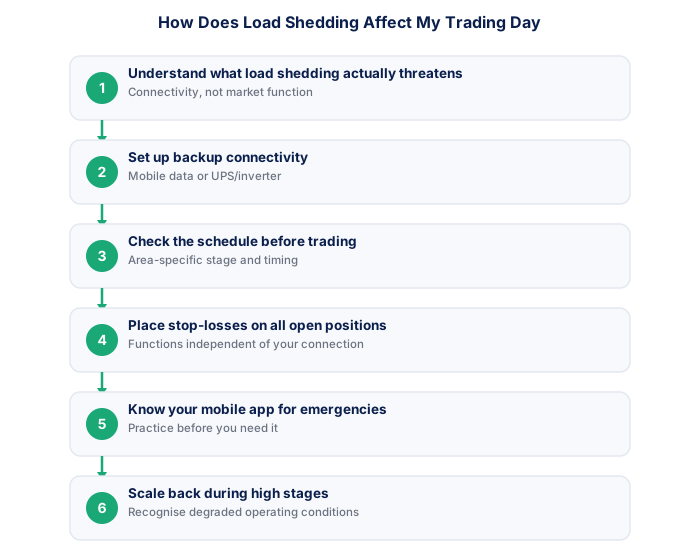
1. What load shedding actually threatens in your trading process
Load shedding does not affect the forex or CFD markets themselves in any way, they continue trading normally regardless of what is happening with South Africa's power grid. What it threatens is entirely on your side of the connection: your ability to monitor open positions, react to price movement, or place and close trades during a scheduled outage window.
This distinction matters because it changes where your risk actually sits. The danger is not that "the market does something unusual during load shedding", it is that you become unable to manage a position you already have open, which is a very different and more manageable problem once you plan around it directly.
2. Building genuinely reliable backup connectivity
A mobile data hotspot on a different network to your primary fibre or ADSL connection is the most common and reasonably reliable backup, since mobile towers typically run on generator or battery backup for at least part of a standard outage stage. Test this setup before you need it, not during your first higher-stage outage.
For traders who rely on trading as a significant income source, a small UPS (uninterruptible power supply) or inverter setup covering your router and one device is a more sound option, keeping you online through the full outage window rather than only through mobile data's more variable coverage.
- SARB economic calendar checked for the week
- Next Eskom load shedding schedule reviewed
- GNU stability news reviewed
- Stats SA data releases noted
- Credit agency review dates checked
- US/global events that move EM risk noted
3. Scheduling your trading around the load shedding calendar
Most South African traders check the current load shedding stage and schedule before opening new positions during a session, particularly when planning to hold through a period where an outage in your specific area is likely. Several free apps and utility websites provide area-specific schedules with reasonable, though not perfect, reliability.
Higher stages bring both longer individual outages and less predictable timing, since the schedule itself shifts more frequently at higher stages. During Stage 4 and above specifically, many active traders deliberately reduce position count or avoid opening new trades in the hour before a scheduled outage in their area.
| Event | Frequency | ZAR impact | Source |
|---|---|---|---|
| SARB MPC | 6x per year | High | resbank.co.za |
| Budget Speech | Annual (February) | Very high | treasury.gov.za |
| Credit reviews | Annual each agency | Very high | Agency sites |
| Stats SA CPI | Monthly | Medium | statssa.gov.za |
| Eskom stage | As needed | Low-medium | eskomsepush.com |
- SA context provides genuine informational edge
- ZAR pairs accessible via FSCA brokers in ZAR accounts
- Rand volatility creates larger intraday ranges
- 6 SARB meetings/year create regular macro setups
- Higher geopolitical risk than G10 pairs
- Load shedding creates unique operational disruptions
- SA rand liquidity thinner than major G10 pairs
- SA-specific news requires constant local monitoring
4. Protecting open positions specifically during outages
A stop-loss on every open position is a standard risk management practice generally, but it becomes specifically protective during load shedding, since it continues to function on the broker's server regardless of whether you personally have connectivity to monitor the position in real time.
Some traders also reduce position size or avoid holding positions through a scheduled outage window entirely if the instrument is known for sharp, sudden moves around news events, since being unable to react quickly during exactly that kind of movement is the specific scenario a backup connection cannot always fully cover.
5. Mobile-only trading during an outage
If your backup connectivity is mobile data on a phone rather than a full desktop setup, using your broker's mobile app to at least close or adjust a position, rather than attempting complex analysis on a small screen, is generally the more realistic goal during an active outage.
Familiarising yourself with your specific broker's mobile app before you need it under pressure, particularly how to quickly close a position or adjust a stop-loss, saves valuable time during an actual outage compared to learning the interface in the moment.
6. When it is genuinely better to simply stay out of the market
During Stage 6 or higher, or during periods where your specific area's schedule has become unreliable even relative to the published stage, some traders choose to significantly scale back activity or avoid new positions entirely until conditions stabilise, treating it similarly to how they would treat any other period of degraded personal risk management capacity.
This is not an admission of defeat, it is the same discipline that applies to any circumstance, illness, travel, unreliable equipment, that reduces your ability to manage risk properly. Recognising when your operating conditions do not support your normal trading approach is itself a risk management skill.
★ Why It Matters
Worth building a simple personal checklist for higher-stage load shedding days: confirm backup connectivity is charged and tested, check your area's current schedule, and consciously decide position sizing before the session starts rather than reacting mid-outage.
✕ Common mistakes
- Relying on a single internet connection with no backup at all. One point of failure means any outage removes your ability to manage open positions entirely.
- Opening new positions right before a scheduled outage without checking the calendar. Avoidable exposure to a period where you cannot react to adverse movement.
- Not testing backup connectivity until an actual emergency. Untested setups often reveal problems, like insufficient mobile signal, exactly when you can least afford it.
- Treating load shedding as a market risk rather than a personal connectivity risk. The distinction changes what mitigation actually helps, connectivity planning rather than market analysis.
How does load shedding affect this?
Load shedding creates two risks: operational (connectivity outage during active positions) and market (rand weakness during sustained high stages). The standard protection is pre-set stops at the broker level plus mobile data as a backup internet connection.
Key Takeaways
- Load shedding threatens trading mainly through lost internet connectivity and platform access during open positions, not through any change to how the markets themselves function.
- What load shedding actually threatens in your trading process.
- Building genuinely reliable backup connectivity.
- Scheduling your trading around the load shedding calendar.
- Protecting open positions specifically during outages.
Frequently asked follow-up questions
Does load shedding affect the JSE or only forex and CFD trading?
The JSE itself operates from data centres with sound backup power and is not directly affected; the risk during load shedding is specifically about your own connectivity and access, not the exchange's operation.
Should I close all positions before every scheduled outage?
Not necessarily, a properly placed stop-loss continues functioning without your active monitoring; closing everything before every outage may be excessive for shorter, well-predicted Stage 1 or 2 outages.
Is a generator worth it just for trading purposes?
For most retail traders a UPS or inverter covering router and one device is more proportionate; a full generator is a bigger investment generally justified by broader household needs rather than trading alone.
