i Short answer
Trading communities can provide genuine accountability and shared learning resources, but can also amplify overconfidence, herd behaviour, and unrealistic expectations if not engaged with critically.
📋 ON THIS PAGE
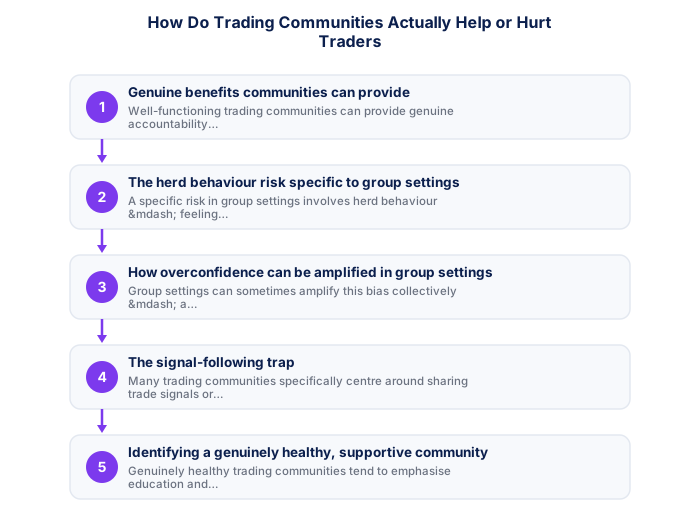
1. Genuine benefits communities can provide
Well-functioning trading communities can offer real accountability (sharing your journal or progress with others who understand the journey), exposure to analytical perspectives you might not encounter on your own, and emotional support during genuinely difficult periods, the kind covered elsewhere on trading psychology, from people who understand these challenges firsthand.
It's worth being selective and deliberate about which specific community you engage with, rather than joining the first one you encounter, applying the same evaluation approach used for trading educators generally, checking for genuine substance over hype, helps you find a community that delivers these real benefits rather than one that simply feels engaging in the moment.
2. The herd behaviour risk specific to group settings
A specific risk in group settings is herd behaviour, feeling pressure, whether explicit or just implicit through watching others' enthusiasm, to enter a trade or adopt a view simply because many community members are doing so, rather than because your own independent analysis actually supports it.
This can directly undermine disciplined, criteria-based trading, substituting social consensus for the kind of independent, predetermined decision-making that sound trading actually requires.
- FSCA-regulated broker verified at fsca.co.za
- Demo account tested for minimum 60 days
- Trading plan written: entry, exits, position sizing
- Risk per trade defined (1-2% of account)
- Backup internet connection tested for load shedding
- Tax implications understood
It's worth noticing this pressure specifically in the moment you feel it, watching other members enthusiastically discuss a developing trade creates a genuine, felt pull to participate that's worth recognising explicitly as social pressure rather than independent, criteria-based analysis of your own.
3. How overconfidence can be amplified in group settings
Group settings can sometimes amplify overconfidence bias collectively. A community riding a shared winning period might collectively build excessive confidence, reinforcing each other's bullish sentiment in a feedback loop that can persist even as warning signs emerge, since dissenting voices in an enthusiastic group face real social pressure to stay quiet.
It's worth being especially cautious of your own thinking during exactly these collectively confident periods, since a community-wide winning streak can feel like powerful, validating evidence, when it may simply reflect the same normal statistical variance discussed elsewhere on this site regarding losing and winning streaks generally.
4. The signal-following trap
Many trading communities centre around sharing trade signals or calls, creating the same problems as trading based on social media tips. Following someone else's trade without genuinely understanding the reasoning blocks the kind of skill development trading actually requires, regardless of how supportive and welcoming the community feels.
It's worth applying the same demo-testing discipline to any community-shared signal that you would to a strategy from any other external source, treating a fellow community member's trade idea as worth independently verifying, rather than trusting it simply because it came from within a trusted group.
| Item | Detail |
|---|---|
| Regulator | FSCA, fsca.co.za |
| Exchange control | SARB, resbank.co.za |
| Tax authority | SARS, sars.gov.za |
| JSE hours | 09:00-17:00 SAST Mon-Fri |
| Best forex session | 15:00-17:00 SAST |
| CGT annual exclusion | R50,000 (individuals) |
5. Identifying a genuinely healthy, supportive community
Genuinely healthy trading communities tend to emphasise education and independent skill development over signal-following, welcome honest discussion of losses and mistakes alongside wins, discourage excessive risk-taking or unrealistic expectations, and generally support disciplined, evidence-based practice rather than encouraging activity or excitement for its own sake.
It's worth observing a candidate community for a while before fully engaging, watching how members respond to a shared loss or a disagreement reveals more about a community's genuine health than how they celebrate wins, worth paying particular attention to this kind of less flattering moment.
6. Practical guidelines for engaging with communities safely
Practical guidelines for safer community engagement: keep your own independent analysis and decision-making process regardless of community sentiment; stay alert to herd behaviour and overconfidence amplification; and treat community discussion as one input for broader learning and perspective, not a substitute for your own accumulated skill, journaling, and disciplined practice.
Harmful dynamics involve herd behaviour and lost independent analysis.
Well-functioning trading communities provide genuine accountability and education, while harmful dynamics involve herd behaviour and pressure that can erode your own independent analysis.
★ Why It Matters
Worth observing in any community you're part of: whether members openly discuss losing trades as often as winning ones. Communities where only wins get shared tend to quietly distort everyone's sense of what's normal, even without anyone meaning to mislead.
✕ Common mistakes
- Joining a community that only shares winning trades. This quietly distorts what feels like normal performance for everyone involved.
- Adopting group consensus without your own independent analysis. Herd behaviour can override sound, individual judgement.
- Treating community membership as a substitute for personal accountability. Genuine improvement still depends on individual journaling and review.
- Not noticing when a community's culture encourages excessive risk-taking. Some group dynamics normalise risk levels that wouldn't hold up to scrutiny alone.
Key Takeaways
- Trading communities can provide accountability and shared learning, but can also amplify overconfidence, herd behaviour, and unrealistic expectations.
- Trading communities can provide genuine accountability and shared learning resources, but can also amplify overconfidence, herd behaviour, and unrealistic expectations if not engaged with critically.
- Genuine benefits communities can provide.
- The herd behaviour risk specific to group settings.
- How overconfidence can be amplified in group settings.
See also: Are Paid Trading Courses Worth It? and Should I Join a Paid Trading Discord or Telegram Group?.
Frequently asked follow-up questions
Should I avoid trading communities entirely?
Not necessarily. Many traders find real value in well-functioning communities, provided they engage critically and keep their own independent decision-making.
How can I tell if a community is becoming unhealthy?
Watch for growing pressure toward specific trades, dismissal of losses or risk discussion, and increasing emphasis on excitement or urgency over careful, independent analysis.
Are paid trading communities different from free ones in quality?
Not inherently. Quality depends on the community's culture and leadership rather than whether it charges a fee, similar to the quality variance seen among paid courses generally.
