i Short answer
Confirmation bias leads traders to favour information that supports a position they already hold, while dismissing or failing to notice contradicting evidence.
This can significantly distort otherwise objective technical and fundamental analysis.
📋 ON THIS PAGE
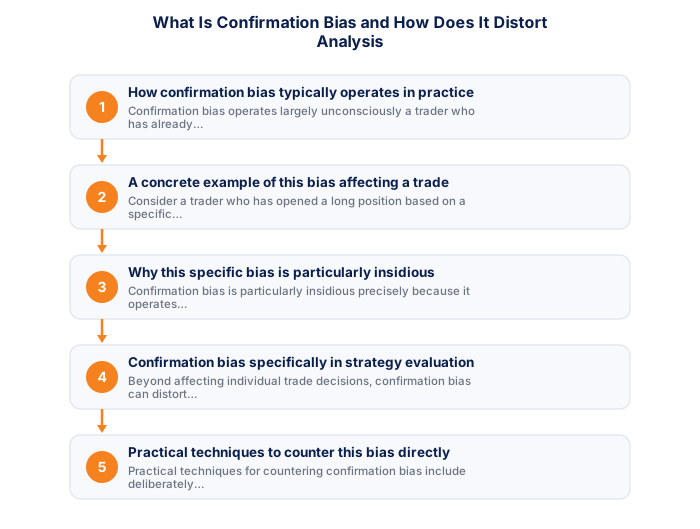
- How confirmation bias typically operates in practice
- A concrete example of this bias affecting a trade
- Why this specific bias is particularly insidious
- Confirmation bias specifically in strategy evaluation
- Practical techniques to counter this bias directly
- The role of a deliberate devil's advocate approach
1. How confirmation bias typically operates in practice
Confirmation bias operates largely unconsciously. A trader who's already formed a directional view on an instrument, whether from a technical setup, a fundamental thesis, or just a gut feeling, tends to notice and weight new information that supports that view more heavily, while failing to notice, or actively rationalising away, information that argues against it.
This isn't deliberate dishonesty or wilfully ignoring contrary evidence. The bias works at a more basic cognitive level, shaping which information a trader's attention gravitates toward and how readily they accept or scrutinise different pieces of evidence depending on whether it aligns with what they already believe.
2. A concrete example of this bias affecting a trade
Consider a trader who opened a long position based on a technical setup. As the trade develops, they might pay close attention to and readily accept any bullish news or signals, while dismissing bearish news as "noise" or finding reasons to discount contradicting indicators that, viewed without the existing position, might warrant genuine reconsideration.
This pattern can lead to holding losing positions far longer than sound, objective analysis would warrant. It connects to the loss-aversion and discipline challenges covered elsewhere, the trader isn't just struggling with the discomfort of accepting a loss, they're also unconsciously filtering incoming information in a way that obscures how clearly the evidence may be turning against their position.
- Emotional state is neutral
- Yesterday's results not influencing today
- Trading plan is open and reviewed
- Loss limit for today defined and accepted
- Phone notifications silenced
- Backup connectivity confirmed
- Written rules eliminate in-the-moment decisions
- Journalling creates a feedback loop for improvement
- Pre-session checks reduce emotionally-driven entries
- Regular breaks prevent compounding mistakes
- Building discipline requires active daily effort
- Losses immediately test emotional stability
- No external accountability in retail trading
- Social pressure to perform can override rules
3. Why this specific bias is particularly insidious
Confirmation bias is particularly insidious because it operates beneath conscious awareness. A trader experiencing it genuinely believes they're evaluating evidence objectively, since the bias affects which evidence even reaches conscious attention and how it gets interpreted, rather than showing up as an obvious distortion the trader could simply choose to correct once spotted.
That makes it considerably harder to counter through willpower or intention alone, unlike more recognisable emotional patterns such as revenge trading. Countering it effectively generally takes structural, process-based techniques rather than just resolving to "be more objective," which the bias itself tends to undermine precisely because it operates unconsciously.
4. Confirmation bias specifically in strategy evaluation
Beyond individual trade decisions, confirmation bias can distort the broader strategy evaluation and backtesting process. A trader who's already enthusiastic about a strategy concept may unconsciously favour historical periods or parameter combinations that happen to show favourable results, while explaining away less favourable periods as somehow atypical.
That's a particularly consequential version of the bias, since it can make a strategy look considerably more sound and reliable through this biased evaluation than its true, objectively-evaluated performance would show, undermining the rigorous edge verification that's essential before committing real capital to any strategy.
5. Practical techniques to counter this bias directly
Useful techniques for countering confirmation bias: deliberately seek out and seriously weigh information that contradicts your current position or thesis, rather than sticking to sources likely to confirm what you already think; predetermine specific, objective entry and exit criteria, which cuts down how much biased, in-the-moment interpretation can influence whether you hold or exit a trade; and keep detailed trading journal records of your reasoning at the time of entry, so you can honestly compare it later against how things actually played out, including any contradicting evidence you initially discounted.
These work by building in structural, predetermined safeguards rather than relying on in-the-moment willpower or self-awareness to overcome a bias that, by nature, largely operates outside conscious awareness.
6. The role of a deliberate devil's advocate approach
One practical technique some traders use is deliberately building the strongest possible counter-argument against their own current position or thesis before finalising a decision, explicitly asking "what's the best case for the opposite direction" and genuinely engaging with it rather than considering it superficially before dismissing it.
Doing this consistently as part of your trading routine helps surface contradicting evidence that confirmation bias might otherwise cause you to overlook entirely, providing a structural counterbalance to the bias's natural tendency to filter out exactly this kind of contrary information.
Confirmation bias systematically over-weights evidence that supports your view.
Objective analysis weights all available evidence equally. Confirmation bias systematically over-weights supporting evidence and explains away contrary signals, creating a distorted picture of market conditions.
★ Why It Matters
Worth testing: ask a trading peer to review your analysis on a setup you're already excited about, without telling them your conclusion first. An outside, less invested perspective often catches the contradicting evidence your own bias filtered out.
✕ Common mistakes
- Favouring information that supports a position already held. This can significantly distort otherwise objective technical and fundamental analysis.
- Treating agreement with your view as validation of its correctness. Agreement and correctness are not the same thing.
- Ignoring how confirmation bias compounds with existing open positions. Holding a position can intensify the pull toward supporting evidence specifically.
Key Takeaways
- Confirmation bias leads traders to favour information supporting their existing view while dismissing contradicting evidence. Learn how to counter it.
- Confirmation bias leads traders to favour information that supports a position they already hold, while dismissing or failing to notice contradicting evidence.
- This can significantly distort otherwise objective technical and fundamental analysis.
- How confirmation bias typically operates in practice.
- A concrete example of this bias affecting a trade.
See also: Why Is Trading Psychology So Important?.
Frequently asked follow-up questions
Can confirmation bias affect fundamental analysis as much as technical analysis?
Yes. It can affect any analytical approach, since it operates at the level of how information gets processed and weighted, regardless of whether that information is technical or fundamental.
Is confirmation bias the same as overconfidence bias?
Related but distinct. Confirmation bias is about how you process and weight information, while overconfidence bias is about overestimating your own skill and underestimating risk generally.
Can experienced traders eventually overcome confirmation bias entirely?
Most psychology research suggests it's a persistent human cognitive tendency rather than something experience alone eliminates. Ongoing, deliberate countermeasures stay valuable even for experienced traders.
