i Short answer
South Africa's Twin Peaks model splits financial sector oversight between the FSCA (market conduct) and the Prudential Authority (institutional stability).
For retail forex and CFD traders, most relevant protections flow through the FSCA's conduct-focused mandate.
📋 ON THIS PAGE
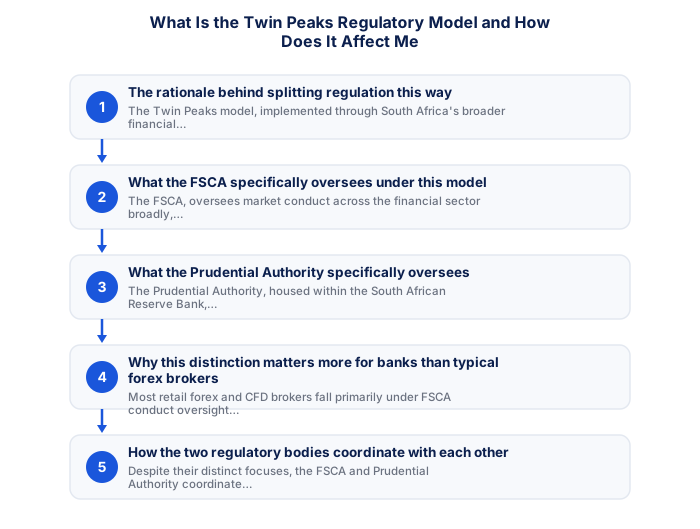
- The rationale behind splitting regulation this way
- What the FSCA specifically oversees under this model
- What the Prudential Authority specifically oversees
- Why this distinction matters more for banks than typical forex brokers
- How the two regulatory bodies coordinate with each other
- Practical implications for retail traders specifically
1. The rationale behind splitting regulation this way
The Twin Peaks model, implemented through South Africa's broader financial sector regulatory reform, reflects an international regulatory trend recognising that market conduct concerns (how firms treat customers, fair dealing, transparency) and prudential concerns (whether institutions remain financially sound and able to meet their obligations) benefit from dedicated, specialised regulatory attention rather than being handled by a single combined regulator attempting to address both simultaneously.
It's worth appreciating why this structural split makes regulatory sense, separating conduct oversight, how firms treat their customers, from prudential oversight, whether firms remain financially sound, lets each specialised regulator focus deeply on its particular area of expertise.
2. What the FSCA specifically oversees under this model
The FSCA oversees market conduct across the financial sector broadly, including licensing financial services providers, enforcing FAIS compliance, handling the complaints process, and generally ensuring fair treatment of financial services clients including the retail forex and CFD traders this site primarily addresses.
See also: What Is the FAIS Act and How Does It Relate to Trading?
See also: What Is a Broker's Best Execution Obligation?
It's worth understanding this as the specific regulatory body most directly relevant to your everyday experience as a retail trader, discussed throughout this site's legal content, the FSCA's conduct focus covers exactly the fair treatment and disclosure issues most relevant to your own trading relationship.
- FSCA-regulated broker verified at fsca.co.za
- Demo account tested for minimum 60 days
- Trading plan written: entry, exits, position sizing
- Risk per trade defined (1-2% of account)
- Backup internet connection tested for load shedding
- Tax implications understood
3. What the Prudential Authority specifically oversees
The Prudential Authority, housed within the South African Reserve Bank, focuses on the financial soundness of banks, insurers, and certain other systemically significant financial institutions, ensuring these entities maintain adequate capital and risk management to remain stable and able to meet their obligations, protecting broader financial system stability rather than focusing specifically on individual conduct-related consumer protection matters.
It's worth understanding this body's role as complementary rather than directly relevant to your own day-to-day trading concerns, the Prudential Authority focuses on institutional financial soundness generally, a genuinely important but more background consideration for typical retail CFD trading specifically.
4. Why this distinction matters more for banks than typical forex brokers
Most retail forex and CFD brokers fall primarily under FSCA conduct oversight rather than being subject to the same prudential capital adequacy regime applied to banks specifically, though some broker-specific capital requirements do exist under FSCA's own broader regulatory framework. This means the Prudential Authority's specific oversight is generally less directly relevant to typical retail forex trading than FSCA's conduct-focused regulation is.
It's worth appreciating why this split affects different financial institutions differently, banks face more substantial prudential oversight given the systemic risk they represent, while typical forex and CFD brokers fall predominantly under FSCA conduct regulation for most practical purposes.
| Item | Detail |
|---|---|
| Regulator | FSCA, fsca.co.za |
| Exchange control | SARB, resbank.co.za |
| Tax authority | SARS, sars.gov.za |
| JSE hours | 09:00-17:00 SAST Mon-Fri |
| Best forex session | 15:00-17:00 SAST |
| CGT annual exclusion | R50,000 (individuals) |
5. How the two regulatory bodies coordinate with each other
Despite their distinct focuses, the FSCA and Prudential Authority coordinate on matters affecting institutions subject to both forms of oversight, ensuring a coherent overall regulatory approach rather than these two bodies operating in complete isolation from each other, particularly relevant for larger financial institutions spanning both conduct and prudential regulatory concerns simultaneously.
It's worth appreciating this coordination as part of South Africa's broader effort to maintain a coherent, complete regulatory framework, discussed elsewhere on this site regarding the regulatory environment generally, rather than two entirely separate, disconnected systems.
6. Practical implications for retail traders specifically
For practical purposes, South African retail traders interacting with FSCA-regulated forex and CFD brokers should primarily focus on FSCA-related verification and complaint processes, since this is the regulatory body most directly relevant to the conduct-related protections, fair treatment, proper disclosure, complaints handling, that matter most for typical retail trading activity.
The FSCA handles conduct and the Prudential Authority handles financial soundness.
South Africa's Twin Peaks model separates market conduct regulation under the FSCA from prudential supervision of financial soundness under the Prudential Authority. For traders, the FSCA is the primary regulator.
★ Why It Matters
Worth knowing: if your concern is about a broker's marketing claims or fair treatment, that's an FSCA conduct matter. If your concern is about whether the broker itself remains financially solvent, that touches the Prudential Authority's separate mandate, worth knowing which body's focus actually matches your specific concern.
✕ Common mistakes
- Contacting the wrong regulatory body for a specific type of concern. Conduct issues belong to the FSCA; solvency concerns touch the Prudential Authority's separate mandate.
- Assuming this model means duplicate or redundant oversight. It splits, rather than duplicates, regulatory focus across two complementary mandates.
- Not understanding which mandate is actually relevant to your specific situation. This distinction saves time when you need to raise a genuine concern.
- Treating both regulatory bodies as interchangeable for any complaint type. Each addresses genuinely different aspects of financial sector oversight.
Key Takeaways
- South Africa's Twin Peaks model splits financial regulation between the FSCA for conduct and the Prudential Authority for financial soundness oversight.
- South Africa's Twin Peaks model splits financial sector oversight between the FSCA (market conduct) and the Prudential Authority (institutional stability).
- For retail forex and CFD traders, most relevant protections flow through the FSCA's conduct-focused mandate.
- The rationale behind splitting regulation this way.
- What the FSCA specifically oversees under this model.
See also: What Does FSCA Regulation Actually Protect Me From? and What Is the Companies Act and How Does It Relate to Brokers?.
Frequently asked follow-up questions
Does the Prudential Authority ever get involved with forex brokers?
Generally less directly than with banks and insurers, though specific circumstances involving systemically significant institutions could theoretically involve some prudential considerations.
Is Twin Peaks unique to South Africa?
No, similar regulatory structures separating conduct and prudential oversight exist in various other jurisdictions internationally, reflecting a broader global regulatory trend.
Which body should I contact for a complaint about my broker?
The FSCA is the appropriate body for conduct-related complaints about forex and CFD brokers.
When was the Twin Peaks model actually introduced in South Africa?
This reform took effect in 2018, splitting what was previously the Financial Services Board's combined mandate into these two separate, specialised regulatory bodies.
Does Twin Peaks affect how quickly regulatory decisions get made?
This varies by the specific type of matter. Conduct-focused issues affecting retail traders typically go through the FSCA specifically, without needing to involve the separate prudential body at all.
