i Short answer
Using built-in phone screen time tools to set deliberate app usage limits can help maintain disciplined, predetermined checking habits.
This supports healthier boundaries around trading.
📋 ON THIS PAGE
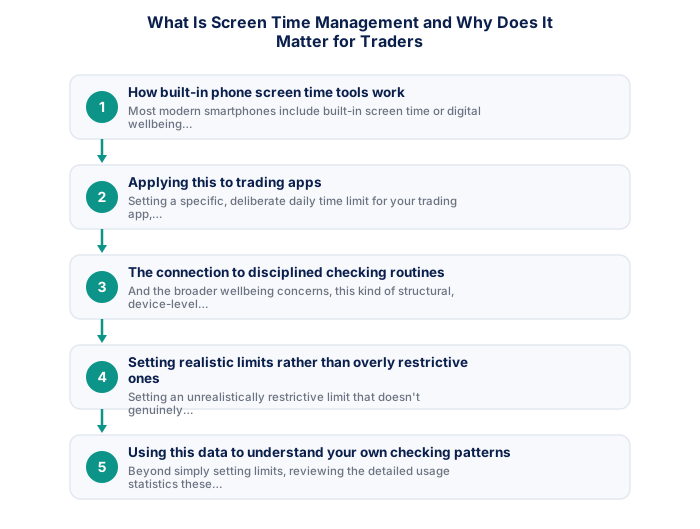
1. How built-in phone screen time tools work
Most modern smartphones include built-in screen time or digital wellbeing features allowing you to set specific daily time limits for individual apps, view detailed usage statistics showing how much time you've actually spent in each app, and receive notifications once you've reached a predetermined limit for a specific application.
It's worth exploring your specific device's full screen time feature set deliberately, most modern phones include genuinely capable built-in tools, worth confirming what's already available before assuming you need a separate, third-party app for this purpose.
2. Applying this specifically to trading apps
Setting a specific, deliberate daily time limit for your trading app, reflecting the realistic, predetermined checking routine, helps create a structural boundary supporting disciplined, bounded engagement rather than open-ended, unstructured checking throughout the day.
It's worth setting this limit specifically based on your own honest assessment of appropriate engagement, discussed elsewhere on this site regarding recognising excessive time on trading, rather than an arbitrary figure, a limit genuinely calibrated to your own situation is more likely to feel sustainable.
- FSCA-regulated broker verified at fsca.co.za
- Demo account tested for minimum 60 days
- Trading plan written: entry, exits, position sizing
- Risk per trade defined (1-2% of account)
- Backup internet connection tested for load shedding
- Tax implications understood
3. The connection to disciplined checking routines
And the broader wellbeing concerns, this kind of structural, device-level limit provides an additional layer of discipline beyond relying purely on willpower alone, similar in spirit to the structural safeguards as generally more reliable than willpower alone.
It's worth using screen time tools as reinforcement for the routine you've already decided on, discussed elsewhere on this site regarding weekend checking boundaries, rather than as the primary mechanism for building discipline from scratch, the underlying intention matters more than the tool alone.
4. Setting realistic limits rather than overly restrictive ones
Setting an unrealistically restrictive limit that doesn't genuinely accommodate your actual, legitimate trading needs, risks either being unhelpfully bypassed repeatedly or creating unnecessary friction for necessary trading activity, calibrating the limit to your own honest, realistic routine matters more than choosing an arbitrarily low figure.
It's worth starting with a genuinely achievable limit and adjusting gradually, rather than an aggressive restriction you're likely to override repeatedly, a limit you actually respect consistently provides more genuine value than a stricter one you frequently bypass.
| Item | Detail |
|---|---|
| Regulator | FSCA, fsca.co.za |
| Exchange control | SARB, resbank.co.za |
| Tax authority | SARS, sars.gov.za |
| JSE hours | 09:00-17:00 SAST Mon-Fri |
| Best forex session | 15:00-17:00 SAST |
| CGT annual exclusion | R50,000 (individuals) |
5. Using this data to understand your own checking patterns
Beyond simply setting limits, reviewing the detailed usage statistics these tools provide can reveal genuinely useful information about your own actual checking patterns, perhaps revealing that you're checking considerably more frequently than you realised, or at times of day that don't align with your intended, deliberate trading routine.
It's worth reviewing this data honestly and without judgement initially, simply observing your genuine pattern before deciding whether and how to adjust it, an objective baseline gives you a more accurate starting point than assuming you already know your own habits precisely.
6. Balancing this with genuine trading needs and flexibility
For traders following more active styles like day trading, a strict, low time limit may genuinely conflict with legitimate trading needs during active session hours, most screen time tools allow temporarily overriding a limit when necessary, supporting a balance between deliberate structure and the flexibility legitimate trading activity sometimes requires.
Structured screen time, sessions with clear start and end times, prevents the compulsive checking pattern that leads to decision fatigue, sleep disruption, and ultimately lower-quality trading decisions.
★ Why It Matters
Worth reviewing specifically: your phone's built-in screen time report for your trading app over the past week, many traders are surprised by the actual total once it's measured objectively rather than estimated from memory.
✕ Common mistakes
- Not using built-in phone tools to set deliberate limits. These removes reliance on willpower alone for managing checking habits.
- Assuming screen time management only matters for severe, extreme cases. Moderate, unmanaged checking habits also affect focus and decision quality.
- Treating all screen time as equally productive or necessary. A portion of typical screen time often reflects compulsive rather than deliberate checking.
The technical requirements for trading effectively from South Africa include considerations that international trading guides do not address. Backup power for your router and a mobile data connection as secondary internet are operational necessities rather than optional upgrades given South Africa's load shedding reality. For serious traders, a dedicated device used only for trading, not shared with general browsing, gaming, or other applications, reduces the risk of browser clutter, malware exposure, and the context-switching that degrades trading focus during active sessions.
Key Takeaways
- Using built-in phone screen time tools to set app usage limits can help maintain disciplined, predetermined checking habits rather than constant monitoring.
- Using built-in phone screen time tools to set deliberate app usage limits can help maintain disciplined, predetermined checking habits.
- This supports healthier boundaries around trading.
- How built-in phone screen time tools work.
- Applying this specifically to trading apps.
See also: How Do I Know If Trading Is Affecting My Sleep or Health? and What Is a Trading Widget and Are They Useful?.
Frequently asked follow-up questions
Will a screen time limit prevent me from closing an urgent position?
Most tools allow temporarily overriding a limit when needed, so this shouldn't prevent genuinely necessary access during an active session.
Should day traders avoid using screen time limits entirely?
Not necessarily; a limit calibrated to your actual active session hours can still provide useful structure outside those specific dedicated trading periods.
Are these tools available on all smartphones?
Most modern smartphones include some version of this functionality, though the specific features and terminology vary slightly between different operating systems.
