i Short answer
A VPS is a remote, continuously-running computer you rent to keep your trading platform or automated bot running, regardless of whether your own device is on.
This mainly benefits traders running automated systems that need to operate around the clock.
📋 ON THIS PAGE
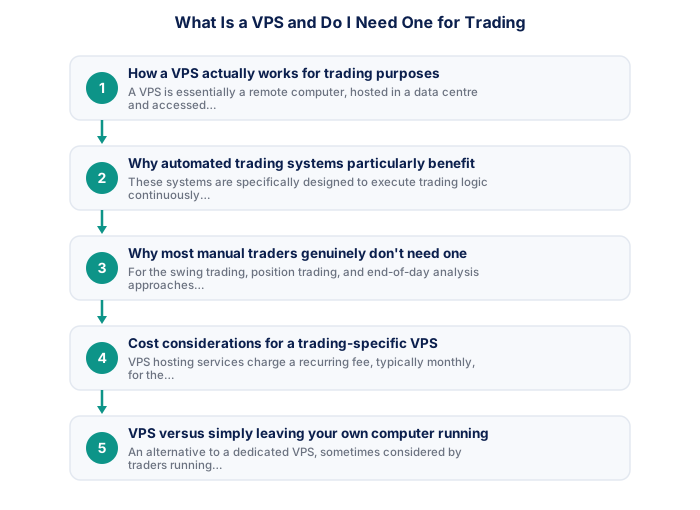
1. How a VPS actually works for trading purposes
A VPS is essentially a remote computer, hosted in a data centre and accessed over the internet, that runs continuously regardless of your own device's status. You install your trading platform (commonly MetaTrader) on this remote VPS instead of, or alongside, your own computer, and it keeps running and executing according to its configured logic even if your computer is off or your home internet drops.
That continuous operation matters most for any setup that needs to respond to market conditions at any moment regardless of your own availability, exactly the scenario automated trading bots are built for.
See also: What Is Algorithmic Trading and Can South Africans Use Trading Bots?
2. Why automated trading systems particularly benefit
These systems are built to execute trading logic continuously without your active presence, but that only works if the platform running the bot is itself continuously operational, something your own device, subject to being switched off, losing internet, or just being unavailable while you sleep or attend to other things, generally can't guarantee.
See also: A Trading VPS vs a Dedicated Laptop
A VPS closes that reliability gap, keeping your bot running and responding to market conditions regardless of your device's status, which is exactly why VPS hosting comes up so often in the automated trading community and rarely among manual traders.
- FSCA-regulated broker verified at fsca.co.za
- Demo account tested for minimum 60 days
- Trading plan written: entry, exits, position sizing
- Risk per trade defined (1-2% of account)
- Backup internet connection tested for load shedding
- Tax implications understood
3. Why most manual traders don't need one
Swing trading, position trading, and end-of-day analysis, the approaches that suit most retail traders, happen during specific, deliberate windows when you're actively present. You don't need your platform running continuously in the background making autonomous decisions, since execution depends on your own periodic engagement rather than unattended operation.
That means the core value a VPS offers, continuous, unattended operation, doesn't address a real need for these manual styles, making it an unnecessary added cost and complexity for most retail traders who aren't running automated systems.
4. Cost considerations for a trading-specific VPS
VPS hosting charges a recurring fee, usually monthly, for continuous server access and computing resources, with cost varying by processing power, memory, and other specs. It's a real, ongoing cost beyond your broker's own trading fees, worth weighing against the value it provides for your specific setup.
For traders who genuinely benefit from it, automated trading systems mainly, this cost is typically a reasonable investment given the reliability and continuous operation it buys. For manual traders without that need, it's an unnecessary expense with no real corresponding benefit.
| Item | Detail |
|---|---|
| Regulator | FSCA, fsca.co.za |
| Exchange control | SARB, resbank.co.za |
| Tax authority | SARS, sars.gov.za |
| JSE hours | 09:00-17:00 SAST Mon-Fri |
| Best forex session | 15:00-17:00 SAST |
| CGT annual exclusion | R50,000 (individuals) |
5. VPS versus simply leaving your own computer running
An alternative some smaller-scale automated traders consider is just leaving their own computer running continuously with the platform open. This avoids the VPS subscription cost but brings real reliability risk, since home internet, power supply, and a computer's own stability over extended continuous operation are generally less dependable than a data centre's infrastructure built for exactly this.
For serious automated setups, that reliability gap is usually enough to justify the VPS cost, though for very small-scale, lower-stakes experimentation, some traders start on their own always-on computer before graduating to dedicated VPS hosting as things scale up.
6. How to evaluate whether you genuinely need one
The practical question is simple: does your trading approach need continuous, unattended platform operation, or does it run through your own deliberate, periodic engagement during windows you're actively present for? If the former, typically automated trading, a VPS likely provides real value. If the latter, which describes most manual styles, it's likely unnecessary cost and complexity.
This ties into a broader principle: adopting any tool, a VPS included, should come from an identified need in your own approach, not just because it's available or commonly discussed in trading communities.
Platform reliability during high-volatility events is a more important consideration than the breadth of analytical features for most retail traders. South African traders have an additional reliability concern that traders in stable electricity markets do not face: load shedding requires a tested mobile platform backup for managing open positions during power outages. Testing the mobile backup specifically, the ability to view positions, modify stops, and close trades, before going live with real capital is a practical step that traders outside South Africa simply do not need to consider. The best platform is ultimately the one you can use confidently under adverse conditions, not the one with the most features under ideal conditions. Confirming that your broker's mobile app functions correctly on your specific mobile device and 4G connection takes five minutes and could prevent a significant connectivity-related loss.
Manual traders with a reliable dedicated device rarely need one.
A VPS is most useful for traders running automated strategies that need continuous 24/7 execution, independent of their own internet connection. Manual traders with a reliable setup rarely benefit enough to justify the cost.
★ Why It Matters
Worth testing before paying for a VPS: leave your laptop running uninterrupted for a full week and track how many times your internet or power actually failed. That gives you real data on whether a VPS would have actually prevented a missed trade, rather than guessing at a worst case.
✕ Common mistakes
- Assuming a VPS is necessary without testing your actual connection reliability first. A week of tracking your own uptime gives real, personal evidence either way.
- Choosing a VPS purely on price without checking server location. Latency to your broker's servers matters more than upfront cost for some strategies.
- Not testing the VPS setup before relying on it for live, unattended trading. Configuration issues are far cheaper to catch in testing than during live use.
- Treating a VPS as necessary for every trading style equally. It matters most for automated systems needing continuous uptime, less for manual, supervised trading.
Key Takeaways
- A VPS keeps your trading platform running continuously on a remote server, mainly benefiting automated trading bots rather than typical manual traders.
- A VPS is a remote, continuously-running computer you rent to keep your trading platform or automated bot running, regardless of whether your own device is on.
- This mainly benefits traders running automated systems that need to operate around the clock.
- How a VPS actually works for trading purposes.
- Why automated trading systems particularly benefit.
Frequently asked follow-up questions
Can I use a VPS even if I trade manually?
Yes, nothing stops you, though the real benefit for manual trading styles is typically minimal given how these approaches actually operate.
Are VPS services specifically designed for trading different from general-purpose VPS hosting?
Some providers specifically market trading-optimised hosting, often emphasising proximity to broker servers for execution speed, though general-purpose VPS hosting can work fine for this too.
Does using a VPS guarantee my automated trading bot will be profitable?
No. A VPS only handles continuous, reliable operation, it has no bearing on whether the underlying automated strategy is actually sound and profitable.
