i Short answer
Section 45 of the FAIS Act requires financial services providers to disclose their licensing status, conflicts of interest, and how they're remunerated.
This helps clients assess whether the advice they're receiving might be influenced by factors beyond their own best interests.
📋 ON THIS PAGE
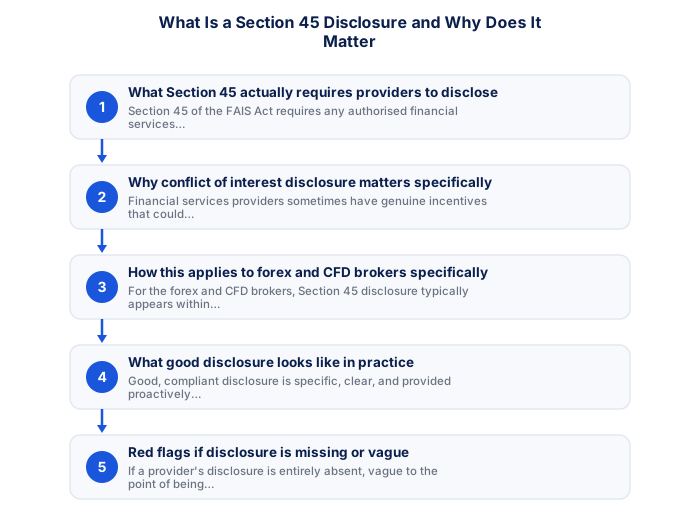
- What Section 45 actually requires providers to disclose
- Why conflict of interest disclosure matters specifically
- How this applies to forex and CFD brokers specifically
- What good disclosure looks like in practice
- Red flags if disclosure is missing or vague
- Your rights if proper disclosure wasn't provided
1. What Section 45 actually requires providers to disclose
Section 45 of the FAIS Act requires any authorised financial services provider to disclose, before or at the time advice is rendered, information including the provider's full name and contact details, confirmation of their FSCA licensing status, any actual or potential conflicts of interest relevant to the specific advice being given, and how the provider is remunerated, including any commission structures that could influence the advice provided.
This disclosure requirement exists as a core consumer protection mechanism within the broader FSCA regulatory framework, specifically designed to give clients the information needed to evaluate advice critically rather than assuming all advice is automatically neutral and disinterested.
2. Why conflict of interest disclosure matters specifically
Financial services providers sometimes have genuine incentives that could influence the specific advice or products they recommend, such as earning higher commission on certain products over others. Section 45 disclosure requires providers to surface these potential conflicts explicitly, rather than leaving clients to assume advice is given purely on merit without any commercial influence whatsoever.
Understanding the specific incentives a provider operates under helps you weigh their advice more critically and ask more informed follow-up questions.
- FSCA-regulated broker verified at fsca.co.za
- Demo account tested for minimum 60 days
- Trading plan written: entry, exits, position sizing
- Risk per trade defined (1-2% of account)
- Backup internet connection tested for load shedding
- Tax implications understood
3. How this applies to forex and CFD brokers specifically
For forex and CFD brokers, Section 45 disclosure typically appears within account opening documentation, terms and conditions, and sometimes a dedicated disclosure document provided before you begin trading. This should clarify the broker's FSCA licence number and explain how the broker earns revenue from your trading activity, including through spreads and any other fees.
4. What good disclosure looks like in practice
Good, compliant disclosure is specific, clear, and provided proactively rather than buried in lengthy terms and conditions you'd need to search for deliberately. It should clearly state the provider's licensing details, explain the general business model and how the provider profits from your activity, and flag any other relevant conflicts in plain, accessible language rather than dense legal jargon designed to obscure rather than inform.
| Item | Detail |
|---|---|
| Regulator | FSCA, fsca.co.za |
| Exchange control | SARB, resbank.co.za |
| Tax authority | SARS, sars.gov.za |
| JSE hours | 09:00-17:00 SAST Mon-Fri |
| Best forex session | 15:00-17:00 SAST |
| CGT annual exclusion | R50,000 (individuals) |
5. Red flags if disclosure is missing or vague
If a provider's disclosure is entirely absent, vague to the point of being uninformative, or actively resistant when you ask direct questions about licensing or remuneration, this represents a meaningful warning sign worth taking seriously, potentially indicating either non-compliance with FAIS requirements or a provider less committed to the transparency these regulations are designed to ensure.
6. Your rights if proper disclosure wasn't provided
If you believe a provider failed to give you the disclosure Section 45 requires, this can form the basis of a formal complaint through the FSCA complaints process, since failure to provide required disclosure represents a genuine compliance failure under FAIS rather than simply a minor administrative oversight.
It's also worth knowing that any FSCA-regulated broker operating in South Africa is bound by POPIA (the Protection of Personal Information Act), which governs how your personal and financial data must be collected, stored, and protected.
South Africa's financial services regulatory framework is more complete than many retail traders realise, with specific protections and obligations that go beyond simply choosing an FSCA-licensed broker. FICA requirements protect against money laundering and require brokers to verify your identity. FAIS governs the provision of financial advice and intermediary services, ensuring those who provide paid financial guidance are appropriately licensed and accountable. POPIA protects your personal data in the hands of financial services providers. Understanding which framework applies to a specific situation helps you exercise your rights effectively when something goes wrong.
A Section 45 disclosure under the FAIS Act requires a financial services provider to disclose any financial interest or conflict that could influence their advice, before that advice is provided.
South Africa's financial services regulatory framework for retail traders is complete but managing it requires awareness of which specific regulations apply to which activities. FAIS governs the provision of financial services and advice by licensed entities. FICA governs anti-money-laundering and client identity verification requirements. POPIA governs how your personal data is handled by financial services providers. Understanding which regulatory framework applies to a specific interaction with your broker or financial services provider helps you exercise your rights effectively and identify the appropriate channel for any regulatory complaint or query.
★ Why It Matters
Worth reading rather than skimming past: the remuneration disclosure section, since this reveals exactly how a financial services provider gets paid for serving you, commission, fees, or rebates, information that often explains incentives more clearly than anything else in the onboarding paperwork.
✕ Common mistakes
- Assuming all FSPs disclose remuneration in the same format. Specific structures and clarity can vary between providers.
- Treating disclosure documents as routine paperwork rather than useful information. They're specifically designed to reveal real incentives worth understanding.
- Not asking follow-up questions when a disclosure seems unclear. Clarifying directly is a reasonable, available step.
Key Takeaways
- Section 45 of the FAIS Act requires financial services providers to disclose specific information before rendering advice, helping you assess any conflicts of interest.
- Section 45 of the FAIS Act requires financial services providers to disclose their licensing status, conflicts of interest, and how they're remunerated.
- This helps clients assess whether the advice they're receiving might be influenced by factors beyond their own best interests.
- What Section 45 actually requires providers to disclose.
- Why conflict of interest disclosure matters specifically.
Frequently asked follow-up questions
Does Section 45 apply to all financial products, not just forex?
Yes, this disclosure requirement applies broadly across financial services regulated under FAIS, not specifically limited to forex or CFD trading alone.
Can I request this disclosure directly if I haven't received it?
Yes, you can and should request this information directly from any financial services provider, and a properly licensed provider should readily supply it.
Does disclosure of a conflict of interest mean the advice is bad?
Not necessarily, disclosure simply makes the potential influence transparent, allowing you to weigh the advice accordingly rather than assuming it's automatically compromised.
Does this disclosure need to be provided in writing?
Generally yes, written disclosure is the standard expectation, since this creates a clear, verifiable record of what was actually disclosed and when, rather than relying on an informal verbal mention.
Is Section 45 disclosure required even for a single, one-off piece of advice?
Yes, the requirement applies whenever advice is rendered, regardless of whether this represents an ongoing relationship or a single specific interaction.
