i Short answer
A currency converter shows the current exchange rate for simple reference purposes, distinct from a trading platform that lets you open leveraged positions.
These serve genuinely different practical functions despite both involving currency exchange rates. Try our Currency Converter Calculator for a quick reference conversion.
📋 ON THIS PAGE
- What a simple currency converter actually does
- What a trading platform additionally provides beyond this
- When you might just need a converter, not a platform
- The pricing difference between the two for the same conversion
- Can a converter be used to inform trading decisions
- Choosing the right tool for your specific need
1. What a simple currency converter actually does
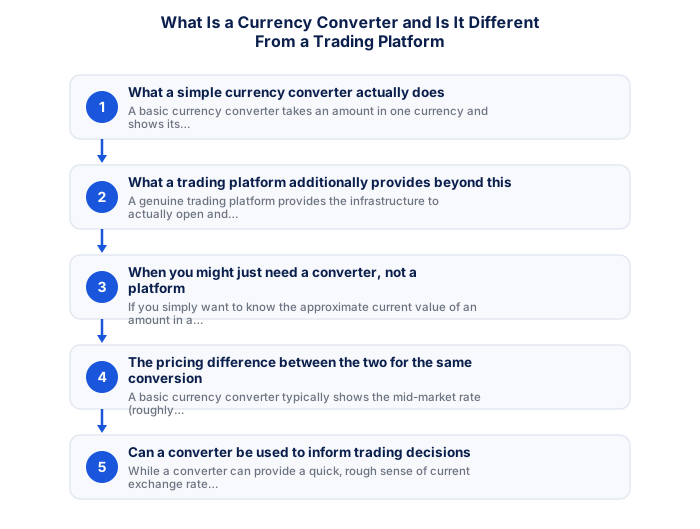
A basic currency converter takes an amount in one currency and shows its approximate equivalent value in another currency, based on the current reference exchange rate, typically used for purposes like understanding the approximate cost of an international purchase, travel budgeting, or simply general currency awareness, without any trading functionality attached.
2. What a trading platform additionally provides beyond this
A genuine trading platform provides the infrastructure to actually open and manage live or demo trading positions using margin and leverage, including order placement, position monitoring, and account management functionality entirely beyond a simple converter's basic reference function.
- Two-factor authentication enabled
- Unique password not shared with other sites
- Broker mobile app installed and tested
- Mobile data backup connection tested
- Price alerts set for active instruments
- Broker emergency number saved in phone
- Know how to close all positions in under 30 seconds
- Desktop: full charting, multi-monitor, all order types
- Mobile: real-time monitoring and load shedding backup
- Mobile: price alerts when away from desk
- Desktop: useless during load shedding without UPS
- Mobile: limited charting for detailed analysis
- Mobile: higher risk of fat-finger errors
- Full charting and analysis
- Best for trade entry
- Multi-monitor support
- More order types available
- Monitor and manage on the go
- Load shedding backup use
- Push price alerts
- Limited charting tools
3. When you might genuinely just need a converter, not a platform
If you simply want to know the approximate current value of an amount in a different currency, for budgeting an international trip, or understanding what a foreign price tag roughly translates to in Rand, a simple converter serves this purpose perfectly well, without requiring any of the additional trading infrastructure a full platform provides.
| Feature | MT4 | MT5 |
|---|---|---|
| Broker availability | Very wide | Growing |
| EA library | Largest available | Smaller but growing |
| Timeframes | 9 built-in | 21 built-in |
| Asset classes | Forex and CFDs | Forex, CFDs, stocks |
| Mobile app | Good | More modern UI |
4. The pricing difference between the two for the same conversion
A basic currency converter typically shows the mid-market rate (roughly between bid and ask), while actually trading or exchanging currency through a broker or bank involves the spread discussed elsewhere, meaning the rate you'd actually receive when genuinely trading differs slightly from a converter's simple reference figure.
5. Can a converter be used to inform trading decisions
While a converter can provide a quick, rough sense of current exchange rate levels, genuine trading analysis requires the more complete charting and analytical tools a proper trading platform provides, rather than relying on a simple converter's basic reference rate alone for making actual trading decisions.
6. Choosing the right tool for your specific need
Recognising whether your specific need is simple reference information (use a converter) or genuine trading capability with full analytical tools (use a trading platform) helps you select the appropriately matched tool, rather than either over-complicating a simple reference need or under-equipping yourself for genuine trading analysis and execution.
A trading platform shows live bid and ask prices and executes real trades.
A currency converter shows indicative exchange rates for reference only. A trading platform shows live bid and ask prices with the spread visible, and actually executes real trades.
★ Why It Matters
Worth double-checking specifically: confirm the converter's rate source and update frequency before relying on it for anything time-sensitive, some free converters update only once daily, which is fine for general reference but meaningfully stale for anything related to actual trading decisions.
✕ Common mistakes
- Confusing simple currency reference with an actual tradeable platform. These serve fundamentally different functions despite both involving exchange rates.
- Not checking a converter's specific update frequency before relying on it. This detail determines whether it's suitable for anything time-sensitive.
- Assuming converter rates reflect what you'd actually receive in a real transaction. Real transactions often include additional fees or spread not shown in a basic converter.
South African traders have a natural analytical advantage on rand-paired currencies because they observe the domestic drivers of ZAR directly and continuously. The technical relationships between major currency pairs and the USD/ZAR, particularly the negative correlation between USD/ZAR and risk-on periods, become more predictable once you understand which component of USD/ZAR movement is driven by global USD strength and which is driven by SA-specific fundamental factors. Building this analytical separation into your daily market review produces more precise ZAR trading hypotheses than treating USD/ZAR as a single undifferentiated signal.
Key Takeaways
- A currency converter shows the current exchange rate for reference purposes, distinct from a trading platform that allows actually opening leveraged positions.
- A currency converter shows the current exchange rate for simple reference purposes, distinct from a trading platform that lets you open leveraged positions.
- These serve genuinely different practical functions despite both involving currency exchange rates.
- What a simple currency converter actually does.
- What a trading platform additionally provides beyond this.
For your own website, the currency converter widget and the live forex rates widget are both free to embed and require no API key.
See also: What Is a Trading Session Clock and How Does It Help?.
Frequently asked follow-up questions
Are currency converters free to use?
Yes, most basic currency converter tools are freely available online without any cost or account requirement.
Can I use a trading platform's quoted price as a general currency converter?
Yes, technically the live price shown on a trading platform can serve this reference purpose too, though a dedicated, simpler converter is often more convenient for purely non-trading reference needs.
Does the exchange rate shown in news reports match trading platform prices exactly?
Generally close, though minor timing differences and the specific rate convention used (mid-market versus bid or ask) can produce small discrepancies between these different sources.
