i Short answer
Rollover rate refers to the interest rate differential applied when a position remains open overnight, determining whether you pay or receive a swap charge.
📋 ON THIS PAGE
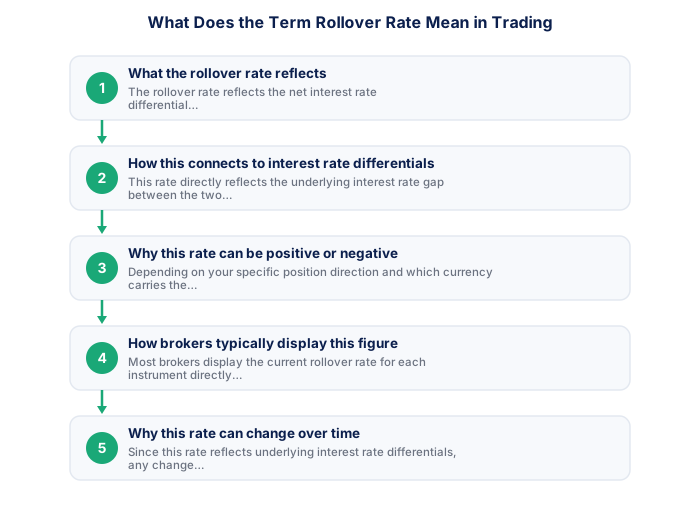
1. What the rollover rate specifically reflects
The rollover rate is the net cost or credit applied to a forex or CFD position held open past the broker's daily rollover time, typically around midnight server time. It reflects the interest rate differential between the two currencies in a forex pair, or the relevant funding rate for other instruments, adjusted for the broker's own margin on the transaction.
In forex specifically, every position involves borrowing one currency to buy another. The interest rate on the borrowed currency and the interest rate on the purchased currency differ, and that differential is what the rollover rate captures. If you're long a currency that carries a higher interest rate than the one you're short, you may receive a small credit each night. If you're long the lower-rate currency, you pay.
The rollover rate is sometimes called a swap rate or overnight financing charge, and the terminology varies by broker and instrument type. All of these terms describe the same underlying mechanism: the daily cost or credit associated with maintaining a leveraged position across the rollover time.
| Rollover Type | Effect on Your Account |
|---|---|
| Positive | You receive a small credit for holding overnight |
| Negative | You pay a small charge for holding overnight |
2. How this connects to interest rate differentials
The interest rate differential driving the rollover rate is the same one that underlies carry trade strategies, deliberate long positions in high-interest-rate currencies funded by short positions in low-interest-rate currencies. The rollover rate is, in effect, the daily accrual of the carry the position generates.
When the SARB adjusts South Africa's repo rate, it changes the carry dynamic on all ZAR-involving positions. A higher SARB rate relative to the Fed funds rate makes being long ZAR more attractive in carry terms; a lower relative rate makes it less so. These dynamics feed into how institutional positioning in ZAR evolves over time.
| Lot type | Size | USD/ZAR pip value | Min recommended account |
|---|---|---|---|
| Standard | 100,000 units | ~R1.00 | R100,000+ |
| Mini | 10,000 units | ~R0.10 | R10,000+ |
| Micro | 1,000 units | ~R0.01 | R1,000+ |
| Nano | 100 units | ~R0.001 | R100+ |
- V = Pip value in account currency
- E = Current exchange rate of quote vs account currency
- L = Lot size (100,000 standard / 10,000 mini / 1,000 micro)
- USD/ZAR example = 1 pip = R1 per standard lot
- Leveraged instrument
- Long and short available
- Overnight financing applies
- No ownership of asset
- Typically unleveraged
- Physical currency received
- No daily financing
- Currency ownership
Central bank policy divergence between major economies can shift rollover rates significantly. The ECB and Fed divergence period of recent years produced substantial changes in the overnight financing rates on EUR/USD positions, making rollover costs a more material consideration for position traders during that period than in the preceding years of aligned near-zero rates.
3. Why this rate can be positive or negative
Whether the rollover rate produces a credit or a charge depends on your position direction relative to the interest rate differential. Long the higher-rate currency and you typically receive a small nightly credit. Long the lower-rate currency and you typically pay a small nightly charge. These two sides of the same trade have opposite signs.
Brokers adjust these rates for their own margin, the credit you receive is somewhat less than the theoretical rate differential, and the charge you pay is somewhat more. This broker margin is the business rationale for providing the position; it's also why the rollover rate isn't a pure arbitrage on interest rate differentials.
For some pairs during certain rate environments, both sides of the trade result in a charge rather than one credit and one debit. This happens when the broker's margin exceeds the interest differential, meaning no net positive carry exists on either direction. Understanding which situation applies to your specific pair at the current time requires checking the broker's published rates directly.
4. How brokers typically display this figure
Most platforms display the rollover rate for each instrument on the trade ticket or in the instrument specification section, usually shown as two separate figures, one for long positions and one for short positions, quoted in the instrument's base currency per lot or as a percentage. The figures may be updated daily or periodically as underlying interest rates change.
MetaTrader users can find swap rates in the Market Watch section by right-clicking any instrument and selecting Symbols, then Swap. Most web platforms display them in an instrument details or trading conditions section. The exact location varies by platform, but the information should be straightforwardly accessible without a support inquiry.
Some platforms also show the estimated rollover cost for your specific proposed trade size before you enter the position. This pre-trade display of estimated cost is useful for planning purposes, particularly if you're considering holding a position across multiple nights.
5. Why this rate can change over time
Rollover rates change as underlying interest rates change. Central bank rate decisions that shift the differential between two currencies directly affect the overnight rate on positions in that pair. A Fed rate hike that widens the USD premium over EUR changes the EUR/USD rollover rates, traders long EUR start paying more, and those long USD receive more.
Beyond central bank decisions, broker adjustments to their own margin on these rates can also shift the quoted rollover. Brokers review and update their swap rates periodically, and the rate you see today may differ from what you'll pay next month if market or operational conditions change.
For longer-duration positions, swing trades or positions held for weeks, tracking rollover accumulation as rates evolve is part of managing the full cost of the trade. A position that was marginally profitable before rollover costs becomes unprofitable if rates shift meaningfully and you're paying rather than receiving the differential.
6. Checking your specific position's rollover rate
Before holding any position overnight, particularly if you're considering an extended hold over days or weeks, checking your broker's currently published rollover rate for that specific instrument and direction is straightforward risk management. The rate is displayed in the platform; using it to calculate estimated nightly cost prevents surprises on your account statement.
For position trades where rollover accumulates over many nights, a rough calculation helps assess whether the expected price move justifies the carrying cost. A position expecting a 200 pip move over three weeks needs to be assessed with the nightly rollover rate included in the cost-benefit analysis.
Worth knowing specifically for your traded pairs: rollover rates can flip from a credit to a charge depending on which currency you're long versus short. A trader who is normally long USD/ZAR and receives a carry credit in calm conditions may face a different rate environment if SARB policy shifts relative to US rates, regularly checking the current published rate rather than assuming it's unchanged is sound practice.
✕ Common mistakes
- Assuming rollover is always a cost rather than checking the specific direction. Depending on the pair and your position direction, you can actually receive a credit.
- Ignoring the Wednesday triple-charge convention many brokers apply. Overnight holds on this specific day can cost considerably more.
- Not checking your specific broker's rollover rates before holding positions overnight regularly. Rates vary meaningfully between providers.
- Treating rollover as negligible without calculating its effect on longer-held positions. It can add up meaningfully over an extended holding period.
Key Takeaways
- Rollover rate refers to the specific interest rate differential applied when a position remains open overnight, directly determining swap charges or credits.
- Rollover rate refers to the interest rate differential applied when a position remains open overnight, determining whether you pay or receive a swap charge.
- What the rollover rate specifically reflects.
- How this connects to interest rate differentials.
- Why this rate can be positive or negative.
Frequently asked follow-up questions
Does rollover rate apply to every single instrument I might trade?
This specifically applies to instruments involving overnight financing. Checking your specific instrument's specification confirms whether this applies.
Can I avoid rollover charges by closing positions before the rollover time?
Yes, closing your position before the specific daily rollover cutoff avoids this charge for that particular day.
Is the rollover rate the same across all brokers for the same instrument?
Specific rates can vary somewhat between brokers, making it worth checking your specific provider's current rate directly.
Does weekend rollover work differently from a normal weeknight?
Many brokers apply a triple rollover charge or credit on a specific weeknight to account for the weekend when markets are closed. Checking your specific broker's policy confirms which night this applies.
Can rollover rates ever change without notice?
Given their connection to underlying interest rates, these can change following central bank decisions; checking current rates periodically rather than assuming a fixed, permanent figure is advisable.
